Major Confrontation Between Military Recruitment Officers and Civilians in Lviv Under Investigation by Multiple Security Agencies
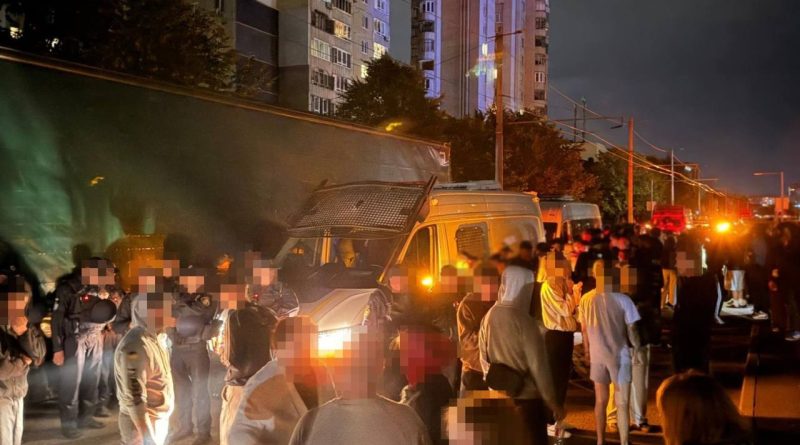
A significant incident involving military recruitment officers, local police, and approximately 200 civilians in the Sykhiv district of Lviv has escalated into a major investigation conducted by both the National Police and the Security Service of Ukraine (SBU). The confrontation, which has garnered widespread attention across Ukraine, has now received formal legal assessment as authorities work to determine the circumstances and identify those responsible for the violent escalation that left law enforcement personnel injured.
According to preliminary reports, the incident began during what appeared to be a routine mobilization operation by the Territorial Recruitment Center (TCC) in one of Lviv’s most densely populated residential districts. The situation rapidly deteriorated when a large crowd of civilians gathered and confronted the recruitment officers, leading to a chaotic scene that required significant police intervention. Investigators have now identified an individual who allegedly attacked a high-ranking official from the district police department during the altercation.
The Territorial Recruitment Centers, known by their Ukrainian acronym TCC, have become increasingly controversial since Russia’s full-scale invasion of Ukraine in February 2022. These centers are responsible for military conscription and mobilization efforts, playing a crucial role in maintaining Ukraine’s armed forces during the ongoing conflict. However, their operations have sometimes led to tense encounters with civilians, particularly as the war has extended beyond its third year and the need for personnel has intensified. The centers have the authority to issue summons and, in certain circumstances, detain draft-eligible men for processing.
Lviv, Ukraine’s largest western city with a population of approximately 720,000, has served as a relative safe haven throughout the conflict due to its distance from the front lines. The city has absorbed hundreds of thousands of internally displaced persons from eastern and southern Ukraine, significantly increasing its population and placing additional strain on local resources and infrastructure. The Sykhiv district, where the incident occurred, is one of the city’s largest residential areas, characterized by Soviet-era apartment blocks and a working-class demographic that has grown substantially since the war began.
The involvement of the SBU in the investigation signals the seriousness with which Ukrainian authorities are treating this incident. The Security Service typically handles cases involving threats to national security, state interests, and serious crimes that could undermine the country’s defense capabilities. Their participation suggests that investigators may be examining whether the confrontation was spontaneous or potentially organized, and whether any participants had intentions beyond simply protesting the recruitment operation. Ukraine has been vigilant about Russian attempts to foment internal discord and undermine mobilization efforts through various means, including disinformation campaigns and provocateur activities.
The legal framework surrounding military mobilization in Ukraine has evolved significantly since the beginning of the full-scale invasion. In April 2024, President Volodymyr Zelensky signed an updated mobilization law that lowered the conscription age from 27 to 25 and introduced stricter requirements for military-age men to update their registration data. The law also expanded the powers of TCC officials while simultaneously attempting to address widespread complaints about abusive or illegal recruitment practices. Human rights organizations and civil society groups have documented numerous cases of alleged misconduct by recruitment officers, creating a complex environment where legitimate concerns about rights violations intersect with the urgent national security imperative of maintaining military strength.
The attack on the district police official adds another layer of complexity to the investigation. Ukrainian law enforcement has faced the challenging task of balancing public order maintenance with the sensitive nature of mobilization operations. Police officers are often present during TCC activities to ensure safety and legal compliance, placing them in difficult positions when tensions arise between recruitment officers and civilians. The identification of the alleged attacker represents a significant development, though authorities have not yet released details about the individual’s identity or potential motivations.
This incident in Lviv reflects broader tensions across Ukraine regarding mobilization policies and their implementation. Public opinion surveys have shown mixed feelings among Ukrainians about conscription practices, with many supporting the need for military personnel while expressing concerns about the methods used to enforce mobilization. The government has acknowledged these challenges and has taken steps to reform TCC operations, including dismissing officials accused of corruption or abuse and implementing oversight mechanisms. However, incidents like the one in Sykhiv demonstrate that significant work remains to build public trust in the mobilization system while ensuring Ukraine can maintain the military forces necessary to defend against Russian aggression.