How Russians Are Taught to Hate Ukrainians: Revelations from Prisoners of War
The psychological machinery of war extends far beyond the battlefield, reaching deep into the minds of ordinary soldiers long before they ever pick up a weapon. Recent interviews with Russian prisoners of war captured in Ukraine have revealed disturbing patterns of systematic indoctrination that shape how Russian military personnel view their Ukrainian neighbors – a carefully constructed worldview built on Kremlin-manufactured myths and historical distortions that persist even after soldiers experience the reality of combat and captivity.
According to a detailed investigation by Foreign Policy, Russian servicemen held in Ukrainian detention facilities continue to express beliefs rooted in state propaganda, even after witnessing firsthand the contradictions between official narratives and ground reality. Prisoners repeatedly cited familiar talking points: that Ukraine is controlled by “Nazis,” that the Russian-speaking population was being “genocided,” and that the military operation was necessary to “liberate” their Slavic brothers. These narratives, researchers note, are not spontaneous beliefs but the product of years of deliberate information warfare conducted through state-controlled media, educational institutions, and military training programs.
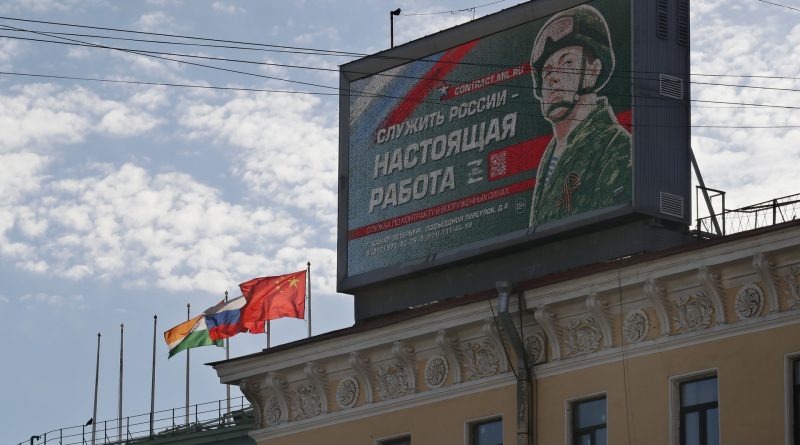
The roots of this systematic dehumanization campaign stretch back well before the full-scale invasion of February 2022. Since Russia’s annexation of Crimea in 2014 and the beginning of the conflict in eastern Ukraine’s Donbas region, Russian state media has consistently portrayed Ukraine as a failed state hijacked by Western-backed extremists. Television programs, which remain the primary news source for most Russians, particularly in rural areas where military recruitment is heaviest, have broadcast countless hours of content depicting Ukrainians as either victims of a “fascist junta” or willing collaborators in an anti-Russian conspiracy orchestrated by NATO and the United States.
Military training compounds this media saturation with direct ideological instruction. Former prisoners described mandatory political education sessions where officers presented Ukraine’s post-2014 government as illegitimate and dangerous. Historical revisionism plays a central role in this curriculum – soldiers are taught that Ukraine has no genuine national identity separate from Russia, that the Ukrainian language is merely a dialect, and that any assertion of Ukrainian independence represents a Western plot to weaken the Russian state. This narrative conveniently ignores centuries of distinct Ukrainian cultural development, the brutal history of Soviet-era suppression of Ukrainian identity, and the democratic choices made by Ukrainian citizens themselves.
What makes these findings particularly significant is their implications for future accountability. International legal experts monitoring the conflict have noted that the persistence of ideological beliefs among prisoners raises complex questions about individual responsibility versus systemic indoctrination. War crimes tribunals, whether conducted domestically in Ukraine or through international mechanisms, will need to grapple with the extent to which soldiers genuinely believed they were conducting a liberation rather than an invasion. However, legal precedent from Nuremberg to the Yugoslav tribunals has established that following orders – or believing propaganda – does not absolve individuals of responsibility for criminal acts.
The psychological phenomenon at work has been studied extensively by experts in authoritarian systems. When individuals are immersed in a closed information environment where alternative viewpoints are systematically suppressed, cognitive dissonance becomes increasingly difficult to process. Even when confronted with evidence that contradicts their beliefs – such as Ukrainian civilians who clearly do not welcome “liberation” or the absence of the “Nazi” infrastructure they were told existed – many prisoners rationalize these contradictions rather than abandoning their worldview. This defense mechanism, researchers explain, protects individuals from the psychologically devastating realization that they may have participated in unjustified violence.
For Ukraine, these revelations present both challenges and opportunities. Understanding the depth of indoctrination helps explain the often-brutal behavior of Russian forces toward civilians and prisoners, while also suggesting that simple exposure to reality may not be sufficient to deradicalize captured soldiers. Some Ukrainian programs have attempted to provide prisoners with access to independent media and opportunities to communicate with family members through uncensored channels, hoping that extended exposure to alternative information might begin to erode propagandistic beliefs.
As the conflict continues with no clear end in sight, the question of how millions of Russian citizens have been psychologically prepared for war against a neighboring nation they once considered brothers takes on increasing urgency. The testimonies of prisoners offer a window into a society where truth has been systematically replaced by narrative, where historical memory has been weaponized, and where the groundwork for violence was laid through screens and classrooms long before the first shots were fired. For those who will eventually judge the actions of this war, understanding this context will be essential – not to excuse, but to comprehend how ordinary people can be transformed into instruments of destruction.