
Ukraine’s Ambassador to Israel Comments on Iranian Ship Attack: ‘We Fight the Other Side of the Same Axis of Evil’
Ukraine’s Ambassador to Israel has made striking remarks regarding the recent attack on an Iranian vessel, drawing a direct connection between the conflicts faced by both nations. In his statement, the ambassador emphasized that Ukraine and Israel are essentially combating different manifestations of the same threat — what he termed the “axis of evil” that connects Iran, Russia, and their allied networks across multiple theaters of conflict.
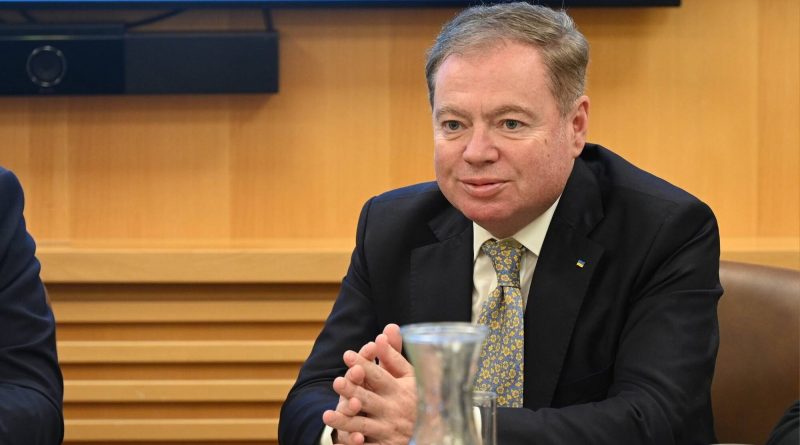
The diplomatic statement comes amid heightened tensions in the Middle East and ongoing speculation about the attack on the Iranian ship. Ambassador Yevgen Korniychuk’s comments reflect Kyiv’s broader strategy of aligning itself with nations that share concerns about Iranian influence and its partnership with Russia. This rhetorical positioning underscores Ukraine’s efforts to build international coalitions against what it perceives as interconnected authoritarian threats.
In addressing accusations leveled by Tehran, Foreign Minister Andrii Sybiha categorically rejected Iranian claims as groundless. Iran has repeatedly accused various parties of targeting its maritime assets and infrastructure, though concrete evidence supporting these allegations has often been disputed by the accused nations. The Iranian government has faced numerous challenges to its shipping operations in recent years, with several incidents attributed to covert operations by regional adversaries.
The concept of an “axis of evil” connecting Iran and Russia has gained significant traction in Ukrainian diplomatic circles since the full-scale Russian invasion began in February 2022. Iran’s provision of Shahed drones to Russian forces has been a particular point of contention, with these unmanned aerial vehicles causing substantial damage to Ukrainian civilian infrastructure, power stations, and residential areas. Western intelligence agencies estimate that Iran has supplied thousands of these drones to Moscow, fundamentally changing the dynamics of the conflict.
Israel has historically maintained a complex balancing act regarding the Russia-Ukraine conflict, given its security coordination with Moscow over Syrian airspace and its significant Russian-speaking population. However, the deepening Iran-Russia military partnership has created new pressure points in Israeli foreign policy calculations. The transfer of advanced weapons technology between Tehran and Moscow represents a convergence of threats that both Ukraine and Israel have sought to highlight on the international stage.
The broader geopolitical implications of this diplomatic alignment extend beyond immediate military concerns. Both nations have emphasized the need for Western powers to recognize the interconnected nature of authoritarian challenges, from Eastern Europe to the Middle East. Ukrainian officials have consistently argued that weakening Russian capabilities indirectly affects Iran’s regional ambitions, and vice versa. This narrative has found receptive audiences in Washington, London, and other Western capitals increasingly concerned about the formation of an anti-Western bloc.
Maritime security in the region has become an increasingly contentious issue, with various incidents targeting commercial and military vessels raising tensions among regional powers. The strategic importance of shipping lanes connecting the Persian Gulf, Red Sea, and Mediterranean has made naval operations a critical component of broader regional competition. As these dynamics continue to evolve, statements from Ukrainian diplomats positioning their nation’s struggle within this larger framework represent a calculated effort to maintain international attention and support for Kyiv’s defense against Russian aggression, now entering its fourth year.