Ukrainian Air Assault and Naval Commanders Publicly Back Chief Syrskyi Amid Growing Protests
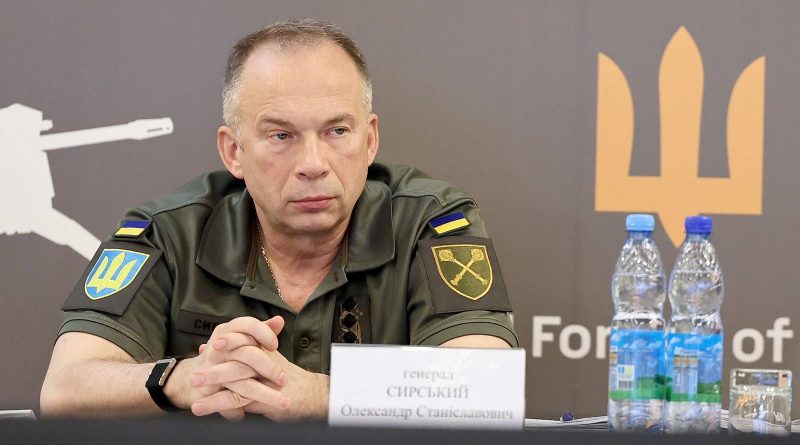
In a significant display of military unity during turbulent times, the commanders of Ukraine’s Air Assault Forces and Naval Forces have publicly declared their support for General Oleksandr Syrskyi, the Commander-in-Chief of the Armed Forces of Ukraine. The statements come as street protests continue in several Ukrainian cities, with demonstrators demanding changes in military leadership and mobilization policies. Lieutenant General Oleh Apostol, commander of the Air Assault Forces, directly addressed servicemembers, urging them not to allow themselves to be drawn into political disputes that could undermine military cohesion.
The public backing represents a rare instance of senior military officials making explicitly political statements in support of their commanding officer. General Apostol’s message emphasized the importance of maintaining focus on the primary mission of defending Ukraine against Russian aggression, rather than becoming entangled in domestic political controversies. His appeal reflects growing concerns within the military establishment that internal divisions could compromise operational effectiveness at a critical juncture in the ongoing conflict, now entering its fourth year since Russia’s full-scale invasion in February 2022.
General Syrskyi, who assumed command in February 2024 after President Volodymyr Zelensky dismissed the popular General Valerii Zaluzhnyi, has faced persistent criticism from various quarters. His appointment was controversial from the start, as Zaluzhnyi had become a folk hero to many Ukrainians for his leadership during the successful defense of Kyiv and the Kharkiv counteroffensive. Syrskyi, a veteran commander with extensive experience including the defense of Bakhmut, has been associated with costly attritional warfare tactics that some critics argue result in unnecessarily high casualty rates among Ukrainian forces.
The protests that prompted these statements of support have been building for several weeks, driven by a combination of war weariness, concerns about mobilization practices, and frustration with what some perceive as strategic stagnation on the front lines. Demonstrators have gathered in Kyiv, Lviv, Odesa, and other major cities, calling for greater transparency in military decision-making and accountability for tactical failures. Some protest groups have specifically demanded Syrskyi’s removal, echoing sentiments expressed by certain military volunteers and their families who have lost loved ones in recent operations.
The naval commander’s support adds particular weight to the show of solidarity, given the Ukrainian Navy’s remarkable achievements despite operating without major surface vessels. Under creative leadership, Ukrainian forces have effectively challenged Russian naval dominance in the Black Sea using domestically produced maritime drones, forcing the Russian Black Sea Fleet to relocate much of its operations away from Crimea. This success story stands as one of the most significant Ukrainian military accomplishments of the war and demonstrates the innovative approaches that have characterized Ukrainian resistance against a numerically superior adversary.
Military analysts suggest that the commanders’ public statements serve multiple purposes beyond simply expressing personal loyalty to Syrskyi. They signal to both domestic and international audiences that the Ukrainian military remains unified and focused despite internal pressures. For Ukraine’s Western partners, who have provided tens of billions of dollars in military assistance, the appearance of stability within the command structure is crucial for maintaining continued support. Any perception of serious internal divisions could potentially affect decisions about future aid packages and weapons deliveries that Ukraine desperately needs to sustain its defensive operations.
The situation highlights the delicate balance Ukraine must maintain between democratic accountability and military effectiveness during wartime. While civilian oversight of the military remains a fundamental principle, the country’s leadership faces the challenge of managing legitimate public concerns without allowing them to compromise operational security or unit cohesion. General Apostol’s appeal to keep soldiers out of political disputes reflects an understanding that military effectiveness depends on maintaining clear chains of command and preventing factional divisions within the ranks.
As Ukraine enters another challenging phase of the conflict, with ongoing Russian pressure along multiple sections of the front line and uncertainty about future Western support levels, the unity displayed by senior commanders may prove essential. The coming months will test whether this show of solidarity translates into improved battlefield outcomes and whether the military leadership can address the underlying concerns driving public protests while maintaining the operational focus necessary to defend the nation against continued Russian aggression.