
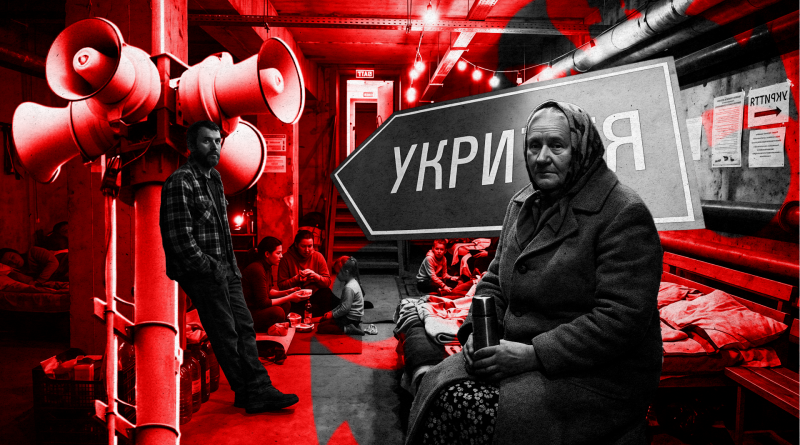
Kyiv Without Shelters? Why Thousands Remain Home During Ballistic Missile Strikes
As Russia continues its relentless aerial campaign against Ukraine’s capital, a troubling reality has emerged: thousands of Kyiv residents are unable to reach protective shelters during ballistic missile attacks. With warning times measured in mere minutes and many designated shelters either inaccessible or inadequate, the city’s civil defense infrastructure faces unprecedented challenges. The question of where millions of dollars allocated for shelter modernization have gone remains largely unanswered, leaving residents to make life-or-death decisions with each air raid siren.
The fundamental problem lies in the physics of modern warfare. Unlike cruise missiles or Iranian-made Shahed drones, which can take hours to reach their targets and provide substantial warning time, ballistic missiles travel at hypersonic speeds. When launched from Russian territory, these weapons can strike Kyiv in as little as 8 to 12 minutes. For residents living in high-rise apartment buildings common throughout the city, this timeframe is simply insufficient to reach ground-level shelters, let alone underground metro stations that have served as the primary refuge during attacks.
Urban planning decisions made during the Soviet era compound these challenges. Kyiv’s residential neighborhoods were designed with specific civil defense considerations, including basement shelters in most apartment blocks. However, decades of neglect, privatization of building management, and lack of maintenance have rendered many of these shelters unusable. Some have been converted into storage facilities or commercial spaces, while others suffer from flooding, structural damage, or simply locked doors. Residents report arriving at designated shelter locations only to find them inaccessible, forcing them to seek alternatives or return home.
The psychological toll of constant alerts has also contributed to shelter fatigue among the population. Since February 2022, Kyiv has experienced thousands of air raid warnings, with some lasting several hours. Many residents, particularly those who must work or care for family members, have begun making calculated decisions about which warnings to heed. This dangerous adaptation to wartime conditions means that when genuine threats materialize, significant portions of the population remain exposed. Medical professionals have noted increased cases of anxiety disorders and sleep deprivation related to the unpredictable nature of attacks.
Questions about financial accountability have added a political dimension to the shelter crisis. Ukrainian authorities allocated substantial funds for shelter modernization and the development of a comprehensive alert system following the full-scale invasion. However, investigative journalists and civic activists have documented numerous cases where allocated resources failed to reach their intended destinations. Some shelters that received renovation funding remain in disrepair, while contracts for emergency equipment and supplies have been awarded to companies with questionable track records. The State Audit Service has initiated several investigations, though results have been slow to materialize amid wartime priorities.
International partners have attempted to address the shelter gap through various assistance programs. The United States, European Union, and individual NATO members have provided funding and expertise for civil defense improvements. Mobile alert applications, developed with Western technical support, now provide geo-targeted warnings that can specify threat types and recommended actions. Yet technology alone cannot overcome the fundamental infrastructure deficits that leave millions of residents vulnerable. Experts from civil defense organizations have recommended a combination of approaches, including rapid-deployment community shelters, reinforced safe rooms within residential buildings, and improved early warning systems that can detect launches earlier in their trajectory.
The human cost of inadequate protection continues to mount with each successful strike. Recent attacks have killed and wounded civilians in residential areas, with many victims caught in apartments or on streets far from any shelter. Survivors describe the terrifying experience of hearing explosions with no safe place to hide, while first responders face the grim task of extracting casualties from damaged buildings. As Ukraine enters its fourth year of full-scale war, the shelter question represents not just a logistical challenge but a test of governmental accountability and the social contract between citizens and the state that is supposed to protect them.
Looking ahead, urban planners and defense officials are exploring longer-term solutions that could better protect civilian populations. These include mandatory shelter requirements for new construction, public-private partnerships to maintain existing infrastructure, and decentralized warning systems that account for the specific vulnerabilities of different neighborhoods. Whether these initiatives can be implemented quickly enough to save lives remains uncertain, but the ongoing attacks ensure that the question of civilian protection will remain at the forefront of Ukrainian political discourse for years to come.