
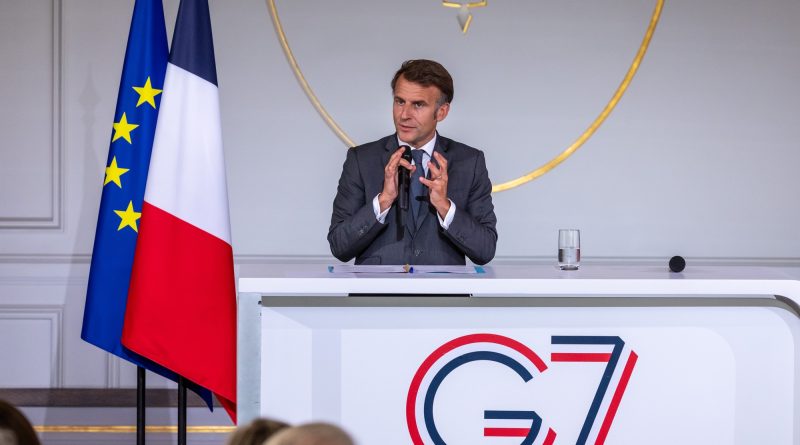
Macron Officially Invites Zelensky to G7 Summit in France
French President Emmanuel Macron has extended an official invitation to Ukrainian President Volodymyr Zelensky to attend the upcoming G7 summit, scheduled to take place from June 15 to 17 in the picturesque town of Évian-les-Bains in eastern France. This invitation underscores the continued commitment of the world’s leading democratic economies to supporting Ukraine amid its ongoing conflict with Russia, now entering its fourth year. The gathering of world leaders in the historic spa town along the shores of Lake Geneva promises to be a significant diplomatic event with Ukraine’s future at the center of discussions.
The Group of Seven, comprising the United States, Canada, France, Germany, Italy, Japan, and the United Kingdom, has served as a crucial platform for coordinating Western support for Ukraine since Russia’s full-scale invasion began in February 2022. Zelensky’s presence at previous G7 summits has become a powerful symbol of solidarity, with the Ukrainian leader using these gatherings to rally continued military, financial, and humanitarian assistance for his nation. His participation in Évian will mark another opportunity to address world leaders directly and reinforce the urgency of sustained international support.
Évian-les-Bains, famous globally for its mineral water and Belle Époque architecture, holds particular historical significance for international diplomacy. The town hosted the Évian Accords in 1962, which ended the Algerian War of Independence, and the G8 summit in 2003 during Jacques Chirac’s presidency. By selecting this location, France aims to evoke a sense of diplomatic heritage while providing a secure and scenic setting for high-stakes negotiations. The town’s position on the French-Swiss border also offers logistical advantages, with proximity to Geneva’s international airport and established security infrastructure.
This year’s summit comes at a critical juncture for Ukraine and its Western allies. With military aid packages from various nations under constant debate in domestic legislatures, and questions about long-term defense commitments growing more pressing, the G7 meeting provides an essential forum for reaffirming collective resolve. France, as the host nation, has positioned itself as a leading voice for robust European support of Ukraine, with Macron repeatedly advocating for stronger measures including the potential deployment of European troops for training and rear-guard operations on Ukrainian soil.
The invitation to Zelensky also reflects the evolving nature of G7 summits, which have increasingly included guest nations and leaders to address pressing global challenges. In recent years, the group has expanded its discussions beyond traditional economic coordination to encompass security concerns, climate change, and emerging threats to the rules-based international order. Ukraine’s participation has transformed from an emergency response to an institutionalized feature of these gatherings, signaling that Kyiv’s integration with Western democratic structures continues to deepen even as the military conflict persists.
Analysts suggest that the Évian summit will likely address several critical issues concerning Ukraine, including the status of frozen Russian assets potentially being used to fund reconstruction, new military aid commitments, and progress toward Ukraine’s aspirations for European Union and NATO membership. The gathering also provides an opportunity for Zelensky to hold bilateral meetings with individual G7 leaders, including potential discussions with representatives of the new American administration, which has signaled a different approach to the conflict than its predecessor.
As France prepares to host what promises to be one of the most consequential G7 summits in recent memory, the invitation to Zelensky sends a clear message that Ukraine remains at the forefront of the Western alliance’s priorities. The scenic backdrop of Évian, with its snow-capped Alpine views and tranquil lakefront setting, will contrast sharply with the grave matters under discussion. Yet this juxtaposition serves as a reminder of what the international community seeks to preserve: a peaceful, stable European order where diplomacy, not military aggression, determines the fate of nations. The summit’s outcomes could shape not only Ukraine’s immediate future but also the broader trajectory of international relations for years to come.