
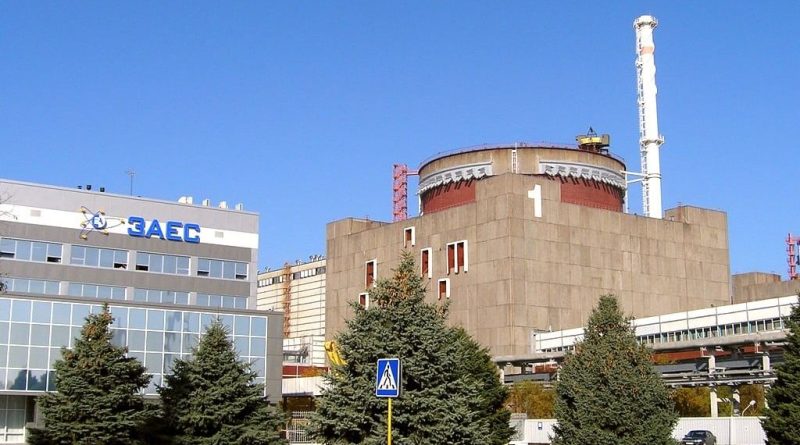
IAEA Must Verify Russia’s Claims About Alleged Attack on Zaporizhzhia Nuclear Power Plant, Ukrainian Regulator Demands
Ukraine’s State Nuclear Regulatory Inspectorate has called upon the International Atomic Energy Agency (IAEA) to conduct a thorough verification of Russian claims regarding an alleged drone attack on the Zaporizhzhia Nuclear Power Plant. The demand comes after Rosatom, Russia’s state nuclear corporation, announced that a Ukrainian unmanned aerial vehicle had supposedly struck the facility, raising immediate concerns about nuclear safety in the war-torn region. Ukrainian defense forces have categorically denied the allegations, dismissing them as another example of Russian disinformation designed to shift international attention away from Moscow’s own actions at the occupied plant.
The Zaporizhzhia Nuclear Power Plant, Europe’s largest nuclear facility with six reactors capable of generating approximately 6,000 megawatts of electricity, has been under Russian military control since March 2022, shortly after the full-scale invasion of Ukraine began. The plant, located on the southern bank of the Dnipro River near the city of Enerhodar, has become a constant source of international concern due to repeated shelling incidents and the presence of military equipment within its perimeter. The IAEA has maintained a permanent monitoring mission at the site since September 2022, with inspectors working under extremely challenging conditions to assess safety protocols and document any violations of nuclear security standards.
Ukrainian authorities have expressed growing frustration with what they describe as Russia’s pattern of making false accusations about attacks on nuclear infrastructure while simultaneously using the plant as a military shield. The State Nuclear Regulatory Inspectorate emphasized that any claims of attacks on such a critical facility must be independently verified by international observers rather than accepted at face value from the occupying power. This latest incident underscores the delicate balance the IAEA must maintain in its monitoring role, as the agency attempts to ensure nuclear safety while navigating the complex political dynamics of an active conflict zone.
The history of nuclear incidents and near-misses at Zaporizhzhia since the Russian occupation began has kept the international community on edge. External power supplies to the plant have been cut multiple times, forcing operators to rely on emergency diesel generators to maintain cooling systems for the reactor cores and spent fuel pools. Nuclear experts worldwide have warned that any prolonged loss of power could lead to a meltdown scenario reminiscent of the Fukushima disaster in 2011, though on a potentially larger scale given the size of the Zaporizhzhia facility. The plant’s six VVER-1000 pressurized water reactors require constant cooling even when shut down, making reliable electricity supply absolutely critical.
IAEA Director General Rafael Grossi has made multiple visits to the Zaporizhzhia plant since the beginning of the conflict, repeatedly calling for the establishment of a nuclear safety and security protection zone around the facility. However, these diplomatic efforts have thus far failed to produce concrete results, with both sides accusing the other of endangering the plant. The agency’s inspectors on the ground have reported hearing explosions near the facility on numerous occasions but have often been unable to determine the source or responsible party due to the limitations of their mandate and access restrictions imposed by Russian forces controlling the site.
The Ukrainian defense forces’ categorical denial of the alleged drone attack reflects Kyiv’s consistent position that it would never deliberately target nuclear infrastructure on its own territory. Ukrainian officials have pointed out the logical inconsistency in Russia’s accusations, noting that any nuclear incident at Zaporizhzhia would primarily affect Ukrainian territory and population. Military analysts suggest that such accusations from Moscow often serve as potential pretexts for escalation or as propaganda tools designed to portray Ukraine as an irresponsible actor on the international stage. The timing of such claims frequently coincides with periods of increased international scrutiny of Russian actions in Ukraine.
As the conflict continues with no end in sight, the fate of the Zaporizhzhia Nuclear Power Plant remains one of the most pressing safety concerns of the entire war. The international community continues to call for demilitarization of the facility and the withdrawal of all military personnel and equipment from its grounds. Until such measures are implemented, the IAEA’s monitoring mission represents the only independent presence capable of providing accurate information about conditions at the plant. The Ukrainian regulator’s demand for verification of Russia’s latest claims highlights the ongoing need for transparent, fact-based reporting on nuclear safety issues in the midst of armed conflict, where information warfare has become as significant as military operations on the ground.