Zelensky Receives Briefings from Three Top Generals on Military Supply Chain Solutions
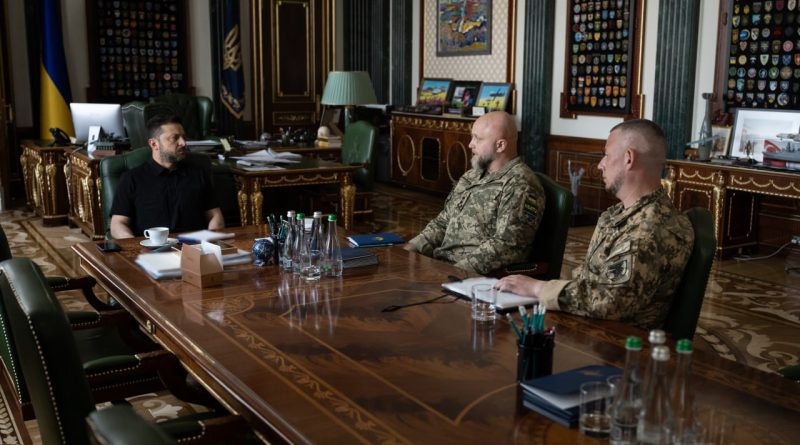
Ukrainian President Volodymyr Zelensky convened a critical meeting with three of the country’s top military commanders to address ongoing challenges in supplying frontline troops. Generals Drapatyi, Horbatiuk, and Apostol each presented detailed reports and proposed solutions aimed at resolving logistical bottlenecks that have complicated military operations in various sectors of the ongoing conflict with Russia. The meeting underscores the continued prioritization of supply chain efficiency as Ukraine enters its fourth year of full-scale war.
The briefings focused on streamlining the delivery of ammunition, equipment, and essential supplies to combat units deployed across the extensive front line, which stretches over 1,000 kilometers from the Kharkiv region in the northeast to the Kherson region in the south. Each general brought specific expertise and regional knowledge to the table, offering perspectives on how to overcome the unique challenges faced by their respective commands. President Zelensky reportedly engaged actively with the proposals, asking pointed questions about implementation timelines and resource requirements.
The issue of military logistics has become increasingly critical as the war has evolved from the initial rapid maneuver phase into a grinding attritional conflict. Western allies have provided substantial military aid packages, including sophisticated weapons systems, armored vehicles, and millions of rounds of ammunition. However, getting these supplies from border entry points to frontline positions remains a complex undertaking that requires coordination across multiple command structures, careful route planning to avoid Russian strikes, and maintenance of aging Soviet-era transport infrastructure.
General Drapatyi, who commands ground forces, has been particularly focused on ensuring that infantry and mechanized units receive adequate supplies of small arms ammunition, anti-tank weapons, and protective equipment. His proposals reportedly included measures to decentralize supply depots, reducing the vulnerability of concentrated storage facilities to Russian missile and drone attacks. This approach mirrors tactics successfully employed by NATO forces in previous conflicts and reflects lessons learned during the early months of the war when several large ammunition depots were destroyed by precision strikes.
General Horbatiuk’s presentation addressed the integration of newly received Western equipment into existing supply chains, a challenge complicated by the diversity of platforms now in Ukrainian service. Ukrainian forces currently operate equipment from more than a dozen NATO countries, each with different maintenance requirements, spare parts specifications, and ammunition types. Creating efficient logistics systems that can service such a varied fleet requires sophisticated planning and extensive training programs for technical personnel. The general proposed establishing specialized maintenance hubs and standardizing inventory management systems across commands.
The meeting with General Apostol focused on emerging technologies and innovative solutions to traditional supply problems. Ukrainian forces have increasingly relied on commercial drones, civilian vehicles, and improvised solutions to supplement official supply channels. Formalizing and scaling these grassroots innovations while maintaining accountability and preventing waste has become a priority for military leadership. Apostol’s recommendations reportedly included creating dedicated units responsible for evaluating and implementing field-tested innovations across the broader force structure.
President Zelensky’s direct involvement in logistics discussions reflects the elevated importance of supply chain management in modern warfare. Historical examples demonstrate that armies often win or lose wars based on their ability to sustain operations rather than purely tactical prowess. Napoleon’s Grande Armée was destroyed not by Russian military victories but by the collapse of its supply lines during the 1812 retreat from Moscow. Similarly, German forces on the Eastern Front in World War II repeatedly saw offensive operations stall due to logistical constraints. Ukraine’s leadership appears determined to avoid such pitfalls by addressing supply challenges proactively.
The outcomes of these high-level discussions will likely influence Ukrainian military operations in the coming months as both sides prepare for potential summer offensives and defensive operations. With Western support continuing but facing political uncertainties in key donor countries, maximizing the efficiency of available resources has taken on added urgency. The proposals presented by Generals Drapatyi, Horbatiuk, and Apostol represent the military’s assessment of how best to sustain combat effectiveness while navigating an increasingly complex operational environment. Implementation of approved measures is expected to begin immediately, with progress reports scheduled for future presidential briefings.