Polish Foreign Minister on Historical Reckoning: Only Marginal Groups Question Guilt
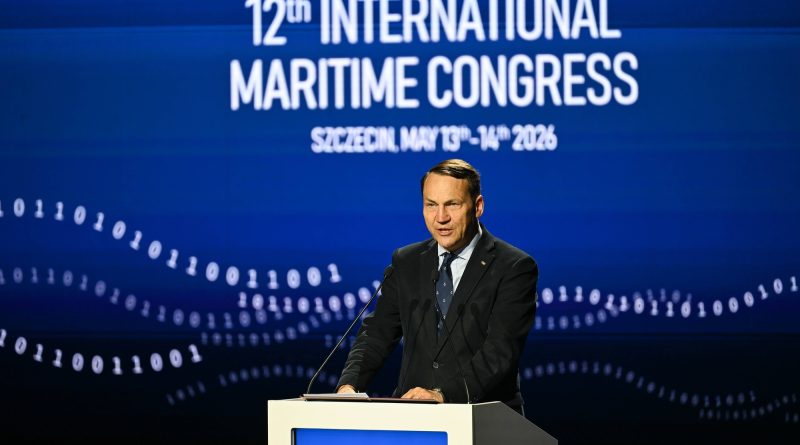
Polish Foreign Minister Radosław Sikorski has weighed in on the complex historical tensions between Poland and Ukraine, suggesting that a recent decision by Ukrainian President Volodymyr Zelensky has not benefited bilateral relations between the two neighboring nations. The diplomatic friction centers on the sensitive issue of historical memory and the acknowledgment of past atrocities, a topic that continues to cast shadows over otherwise strengthening ties between Warsaw and Kyiv.
Sikorski’s remarks come at a particularly delicate moment in Polish-Ukrainian relations, as both countries navigate the challenges posed by Russia’s ongoing invasion of Ukraine while simultaneously grappling with unresolved historical grievances. Poland has emerged as one of Ukraine’s most steadfast supporters since the 2022 Russian invasion, providing military equipment, humanitarian aid, and hosting millions of Ukrainian refugees. However, the historical wounds dating back to World War II continue to periodically strain this partnership.
The central historical issue at the heart of this diplomatic tension involves the Volhynia massacre of 1943-1944, during which Ukrainian nationalist forces, primarily the Ukrainian Insurgent Army (UPA), killed tens of thousands of Polish civilians in what is now western Ukraine. Polish historians estimate the death toll at between 50,000 and 100,000 ethnic Poles, while some Ukrainian scholars dispute these figures. This tragic chapter remains one of the most painful episodes in Polish collective memory and has become a recurring point of contention in bilateral discussions.
Sikorski emphasized that within Poland, only marginal political circles question the established historical consensus regarding responsibility for these wartime atrocities. The Polish foreign minister’s statement underscores Warsaw’s expectation that Ukraine engage more directly with this difficult history, potentially through official acknowledgment or symbolic gestures of reconciliation. Polish officials have long called for Ukraine to permit the exhumation and proper burial of Polish victims, a process that has faced bureaucratic obstacles on the Ukrainian side.
The historical disputes between Poland and Ukraine extend beyond government-to-government relations and touch on deeply held national narratives in both countries. In Ukraine, figures associated with the UPA, including its leader Stepan Bandera, are often commemorated as freedom fighters who resisted both Nazi German and Soviet occupation. In Poland, however, these same figures are viewed through the lens of the ethnic cleansing that occurred under their command. This fundamental difference in historical interpretation has repeatedly complicated efforts at reconciliation.
Despite these historical tensions, pragmatic considerations have largely prevailed in recent years. Poland’s strategic interest in preventing Russian expansion westward has aligned with Ukraine’s desperate need for Western support. Warsaw has facilitated the transfer of significant military hardware, including tanks and fighter jets, and has served as a crucial logistics hub for international aid flowing into Ukraine. The Polish public has also demonstrated remarkable solidarity, with ordinary citizens opening their homes to Ukrainian refugees fleeing the conflict.
Analysts suggest that resolving these historical disputes will require careful diplomatic navigation from both sides. Some experts recommend the establishment of joint historical commissions, similar to those that helped reconcile German-Polish relations in the decades following World War II. Others argue that the immediate security challenges facing both nations should take precedence, with historical reconciliation pursued as a longer-term project. Sikorski’s recent comments indicate that Poland continues to seek a balance between supporting Ukraine’s sovereignty and pressing for acknowledgment of historical injustices.
The path forward for Polish-Ukrainian relations will likely depend on both countries’ ability to separate contemporary security cooperation from historical grievances. As Ukraine continues its fight for territorial integrity and eventual European integration, maintaining strong ties with Poland remains essential. For Warsaw, supporting Kyiv serves both moral and strategic purposes, even as it insists on historical truth-telling. The coming months will test whether these two nations can build upon their wartime partnership to establish a more comprehensive reconciliation that addresses the painful chapters of their shared past.