European Union Must Designate Representative for Russia Negotiations, Italian Prime Minister Declares
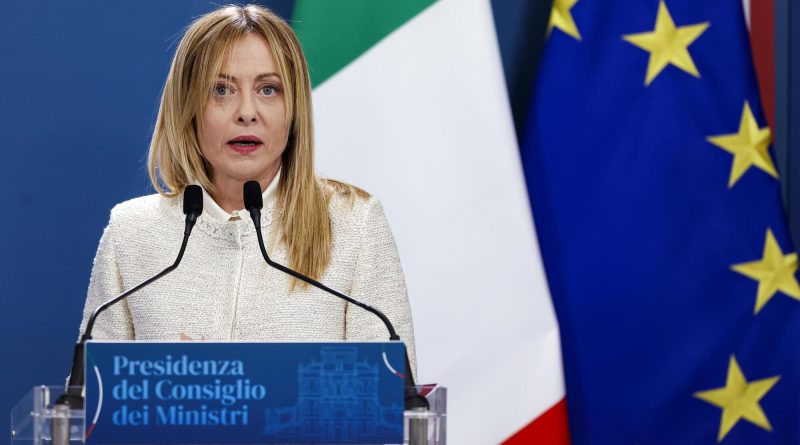
Italian Prime Minister Giorgia Meloni has called for the European Union to establish a unified negotiating position with Russia, stating that none of the current diplomatic formats possess the legitimacy to speak on behalf of all European nations. The statement comes amid ongoing discussions about potential peace negotiations to end the conflict in Ukraine, which has now stretched beyond three years and fundamentally reshaped European security architecture.
Meloni’s remarks highlight a significant institutional gap in European diplomacy at a critical juncture. As various peace initiatives emerge from different quarters — including proposals from the United States, individual European nations, and international bodies — the lack of a single European voice has become increasingly apparent. The Italian leader’s call reflects growing concerns among EU member states that Europe risks being sidelined in negotiations that will directly affect its security and economic interests for decades to come.
The question of who speaks for Europe in matters of war and peace has deep historical roots. The European Union, despite its economic integration and shared institutions, has traditionally struggled to present a unified foreign policy front. The Common Foreign and Security Policy, established by the Maastricht Treaty in 1993, was designed to coordinate member states’ positions on international affairs, but major decisions still require unanimous consent — a threshold that often proves difficult to achieve on contentious issues. The current High Representative for Foreign Affairs, Josep Borrell, technically serves as the EU’s chief diplomat, but his mandate has limitations when it comes to speaking definitively for all 27 member states on matters as significant as potential peace terms with Russia.
Italy’s position in this debate carries particular weight given the country’s complex relationship with Russia prior to the 2022 invasion of Ukraine. Under previous governments, Italy maintained relatively warm economic ties with Moscow, particularly in the energy sector, with Russian gas comprising a significant portion of Italian imports. However, since taking office in October 2022, Meloni has firmly aligned her government with Western allies in supporting Ukraine, while also emphasizing the eventual need for diplomatic solutions. Her right-wing coalition government has approved military aid packages to Kyiv despite some internal disagreements, demonstrating Italy’s commitment to the collective European response.
The timing of Meloni’s statement is particularly significant as diplomatic activity surrounding the Ukraine conflict has intensified in recent months. The United States, under various administrations, has pursued different approaches to potential negotiations, sometimes appearing to move independently of European allies. This has created anxiety in Brussels and other European capitals about being presented with fait accompli terms that may not adequately address European security concerns. France and Germany, traditionally the EU’s leading powers, have at times pursued their own diplomatic initiatives, such as the earlier Minsk agreements, but these efforts have not always represented broader European consensus.
Analysts suggest that establishing a legitimate European negotiating position would require addressing several fundamental questions: What minimum security guarantees would Europe require? What role should NATO play in any post-conflict settlement? How would economic relations with Russia be structured in the aftermath of unprecedented sanctions? These issues divide member states, with Eastern European countries like Poland and the Baltic states generally taking harder lines against Russia than some Western European nations. Any designated European representative would need clear parameters and the genuine backing of all member states to negotiate effectively.
The institutional mechanics of creating such a negotiating mandate present their own challenges. Some experts have suggested empowering the European Commission President or the European Council President to take on this role, while others argue for the creation of a special envoy position with explicit authorization from all member states. Historical precedents, such as the contact groups formed during the Yugoslav Wars of the 1990s, offer potential models but also cautionary tales about the limitations of ad hoc diplomatic arrangements. Whatever format emerges, Meloni’s intervention underscores a growing recognition that Europe must act cohesively or risk seeing its interests subordinated to those of other global powers in shaping the post-conflict order that will define European security for generations.