Ukraine Maintains Registry of Pro-War Athletes in Fight Against Russian and Belarusian Sports Participation
Ukraine has developed a comprehensive strategy to prevent Russian and Belarusian athletes from competing in international sporting events, with the Ministry of Youth and Sports maintaining a detailed registry of athletes who have publicly supported the ongoing war. This systematic approach represents one of the most organized efforts by any nation to hold athletes accountable for their political statements and to pressure international sports federations into taking action against those who endorse military aggression.
The registry serves as a crucial tool in Ukraine’s diplomatic efforts within the global sports community. Ukrainian officials compile evidence of public statements, social media posts, and appearances at pro-war rallies by Russian and Belarusian athletes. This documentation is then shared with international sports federations, national Olympic committees, and event organizers worldwide, with the goal of securing disqualifications and competition bans for athletes who have demonstrated support for the invasion of Ukraine.
The initiative comes against the backdrop of ongoing debates within the International Olympic Committee and various international sports federations about the status of Russian and Belarusian competitors. Following Russia’s full-scale invasion of Ukraine in February 2022, many international sports bodies initially imposed blanket bans on athletes from both countries. However, as time has progressed, some organizations have begun allowing these athletes to compete under neutral flags, a compromise that Ukraine has consistently opposed as insufficient.
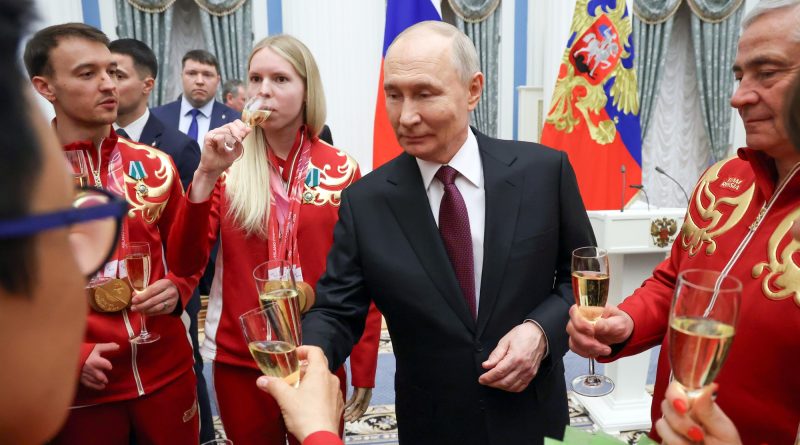
Ukraine’s position is that neutral status does not adequately address the situation, particularly when individual athletes have actively voiced support for military actions against Ukrainian civilians and infrastructure. The ministry argues that allowing such athletes to compete, even without national symbols, legitimizes their stance and undermines the principles of fair play and human dignity that international sport claims to uphold. Officials point to specific cases where athletes have appeared at pro-government rallies, worn symbols supporting the military operation, or made public statements endorsing the invasion.
The historical context of sports and politics intertwining is not new. During the Cold War era, athletic competitions often served as proxy battlegrounds for ideological conflicts. The 1980 Moscow Olympics saw a significant boycott led by the United States following the Soviet invasion of Afghanistan, while the Soviet bloc retaliated by boycotting the 1984 Los Angeles Games. More recently, Russia faced sanctions following the state-sponsored doping scandal that led to athletes competing under the Russian Olympic Committee banner rather than their national flag at the Tokyo 2020 and Beijing 2022 Olympic Games.
International sports organizations remain divided on how to handle the current situation. The International Olympic Committee has advocated for a pathway that allows individual athletes who meet specific criteria to compete as neutrals, arguing that blanket bans punish individuals for the actions of their governments. However, critics of this approach, including Ukrainian officials and athletes from multiple nations, contend that the criteria for neutral status are often poorly enforced and fail to screen out athletes who actively support the war. Several high-profile cases have emerged where athletes granted neutral status were later found to have made pro-war statements.
The Ukrainian ministry’s approach has gained support from several allied nations and sports organizations. Poland, the Baltic states, and Nordic countries have been particularly vocal in supporting stricter measures against Russian and Belarusian athletic participation. Some national federations have gone further, refusing to compete against athletes from these countries regardless of their neutral status, leading to logistical complications at international events.
As international competitions continue, including preparations for future Olympic Games and world championships across various disciplines, the debate shows no signs of resolution. Ukraine maintains that its registry and advocacy efforts have successfully resulted in numerous disqualifications and has prevented athletes with documented pro-war positions from competing on the world stage. The ministry continues to update its database and work with international partners to ensure that support for military aggression carries meaningful consequences in the realm of international sport, viewing this effort as an extension of the broader struggle for accountability and justice.