
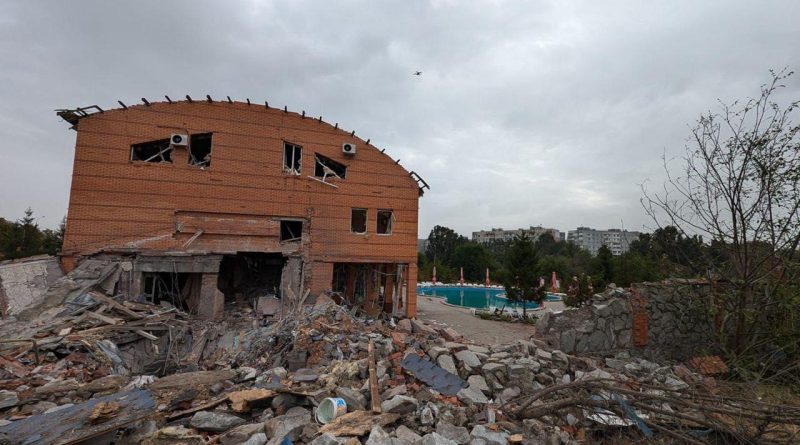
Ukraine’s Tourism Industry Devastated: 462 Tourist Sites Damaged Due to War
The ongoing conflict in Ukraine has inflicted catastrophic damage on the nation’s tourism sector, with official reports confirming that 462 tourist sites have been damaged or destroyed since Russia’s full-scale invasion began in February 2022. This staggering figure represents not only an economic blow to the country but also a profound loss of cultural heritage that has been accumulated over centuries of Ukrainian history. The systematic destruction of museums, historical monuments, hotels, and recreational facilities has fundamentally altered the landscape of Ukrainian tourism, which before the war was experiencing steady growth and attracting millions of visitors annually.
Among the regions most severely affected, the Zaporizhzhia Oblast stands out with a devastating loss of approximately 95% of its tourism infrastructure. This southeastern region, which borders the Sea of Azov and was historically known for its unique combination of industrial heritage and natural attractions, has been transformed into a frontline territory where fierce fighting continues. The region was home to numerous resorts along the Azov coastline, historical sites related to the Cossack heritage, and the famous Khortytsia Island, one of the largest river islands in Europe and a site of immense historical significance to Ukrainian national identity.
Prior to the Russian invasion, Ukraine’s tourism industry was showing promising development trends. In 2021, the country welcomed approximately 4.3 million international visitors, generating significant revenue and employment opportunities across various regions. The sector contributed roughly 5% to the national GDP and employed hundreds of thousands of workers in hospitality, transportation, and related services. Popular destinations included the historic cities of Lviv and Kyiv, the Carpathian Mountains, the Black Sea coastal resorts, and numerous UNESCO World Heritage Sites that showcased Ukraine’s rich cultural tapestry spanning from ancient civilizations to medieval kingdoms and modern European heritage.
The destruction extends far beyond mere statistics and encompasses irreplaceable cultural treasures. Museums housing priceless artifacts, churches and monasteries dating back centuries, memorial complexes honoring victims of past conflicts, and architectural monuments representing various historical periods have all suffered damage or complete destruction. International cultural organizations, including UNESCO, have documented these losses and have deployed missions to assess the damage, calling for international support in preservation efforts and eventual restoration. The deliberate targeting of cultural sites has raised serious concerns about potential violations of international humanitarian law, which explicitly protects cultural property during armed conflicts under the 1954 Hague Convention.
The economic implications of this destruction are multifaceted and will persist long after the conflict ends. Tourism-dependent communities have lost their primary source of income, forcing mass displacement and economic migration. Small business owners who invested in hotels, restaurants, and tour operations have seen their life’s work reduced to rubble. The reconstruction costs are estimated to reach billions of dollars, and the process of rebuilding will require not only financial resources but also extensive expertise in heritage conservation and restoration. International partners, including the European Union and various cultural foundations, have already pledged support for future reconstruction efforts, recognizing that preserving Ukraine’s cultural heritage is essential for the nation’s recovery and European cultural identity as a whole.
Despite the overwhelming destruction, Ukrainian authorities and cultural workers have undertaken heroic efforts to preserve what remains of the nation’s tourism and cultural assets. Museums have evacuated collections to safer locations in western Ukraine and abroad, volunteers have documented damaged sites using modern digital technologies, and local communities have protected monuments with sandbags and protective structures where possible. The Ministry of Culture and Tourism has been maintaining detailed records of all damages, preparing for eventual insurance claims and international legal proceedings. These documentation efforts will prove crucial for both reconstruction planning and holding responsible parties accountable for the destruction of protected cultural property.
Looking toward the future, experts suggest that Ukraine’s tourism sector will require a comprehensive national strategy for recovery that addresses both infrastructure reconstruction and reputation rebuilding. Some analysts propose that certain damaged sites could become memorial complexes, serving as reminders of the war’s devastation while attracting a new form of memorial tourism. Others emphasize the importance of sustainable reconstruction that incorporates modern environmental standards and accessibility features. Whatever path Ukraine chooses, the restoration of its tourism infrastructure will be essential for economic recovery, national healing, and the preservation of cultural heritage for future generations. The international community’s continued support and attention to this issue remains crucial as Ukraine fights not only for its territorial integrity but also for the survival of its cultural identity.