
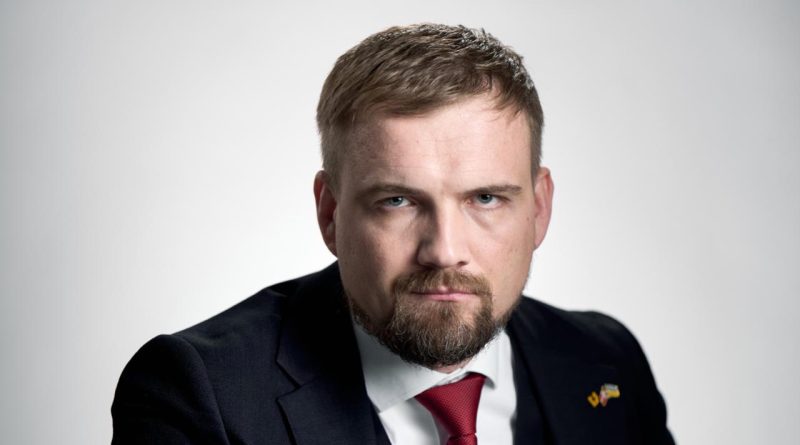
Infozahyst CEO Warns: ‘We Risk Becoming Just a Testing Ground’ – Ukraine’s Electronic Warfare Industry at a Crossroads
Yaroslav Kalinin, the Chief Executive Officer of Infozahyst, one of Ukraine’s leading electronic warfare companies, has issued a stark warning about the future of the country’s defense technology sector. In a recent interview, Kalinin addressed critical issues facing Ukrainian defense manufacturers, including the geopolitical implications of electronic warfare, intellectual property theft, NATO integration challenges, and a judicial system that he claims fails to protect domestic innovations. His comments come at a pivotal moment when Ukraine’s defense industry is simultaneously experiencing unprecedented growth and facing existential threats to its long-term sustainability.
Electronic warfare, or EW, has emerged as one of the most decisive factors in modern combat, and nowhere is this more evident than on the Ukrainian battlefield. Since Russia’s full-scale invasion began in February 2022, both sides have engaged in an unprecedented electronic arms race. Ukrainian forces have developed sophisticated jamming systems capable of neutralizing Russian drones, disrupting communications, and protecting critical infrastructure from guided munitions. Kalinin emphasized that electronic warfare has become a tool of geopolitics itself, with nations increasingly recognizing that dominance in the electromagnetic spectrum can determine the outcome of conflicts before conventional weapons are even deployed.
The Infozahyst CEO expressed deep concern about what he termed ‘technological piracy’ – the unauthorized copying and reproduction of Ukrainian electronic warfare innovations by both foreign competitors and domestic actors. Ukraine’s defense sector has developed numerous breakthrough technologies born from the harsh realities of active combat, creating systems that have been battle-tested in ways that no laboratory simulation could replicate. However, Kalinin argues that these innovations are being systematically stolen or reverse-engineered, with Ukrainian companies receiving little legal protection or compensation. This intellectual property theft threatens to undermine the very companies that have kept Ukraine competitive on the modern battlefield.
The relationship between Ukraine’s defense industry and NATO presents both opportunities and challenges that Kalinin addressed candidly. While NATO membership remains a strategic goal for Ukraine, and interoperability with Alliance systems is essential, the integration process has exposed vulnerabilities in Ukraine’s domestic manufacturing base. Western defense contractors, backed by decades of institutional support and robust legal frameworks, often have advantages that Ukrainian companies struggle to match. Kalinin suggested that without deliberate policies to protect and nurture domestic innovation, Ukraine risks becoming dependent on foreign technology rather than contributing its own expertise to collective defense arrangements.
Perhaps most troubling in Kalinin’s assessment is his critique of Ukraine’s judicial system and its failure to protect Ukrainian technological developments. Despite the country’s ongoing efforts toward legal reform and European integration, intellectual property cases involving defense technology often languish in courts for years, with outcomes that favor well-connected parties over legitimate innovators. This legal uncertainty creates a chilling effect on investment and research, as companies question whether their developments will be protected. The CEO noted that competitor nations have recognized this vulnerability and actively exploit it, knowing that Ukrainian courts offer little deterrent against technology theft.
The warning that Ukraine might become ‘just a testing ground’ carries profound implications for the country’s future. While Ukrainian soil has indeed become an invaluable proving ground for new military technologies – with lessons being studied by defense establishments worldwide – the benefits of this painful experience should accrue to Ukraine itself. If domestic companies cannot commercialize their innovations, if intellectual property is freely pirated, and if legal systems fail to provide recourse, then Ukraine’s technological advances will ultimately benefit foreign manufacturers who can study Ukrainian successes and failures from a safe distance. Kalinin’s concern is that Ukraine will bear all the costs of innovation while others reap the rewards.
The path forward, according to the Infozahyst leadership, requires coordinated action on multiple fronts. Strengthening intellectual property protections, reforming judicial processes for technology disputes, and creating strategic policies that balance NATO integration with domestic industry development are all essential steps. As Ukraine continues to defend its sovereignty, the parallel battle to secure its technological future may prove equally consequential. The innovations born from this conflict have the potential to establish Ukraine as a major player in the global defense technology market – but only if the foundations are laid now to protect and commercialize these hard-won advances.