These Machines Are My Life: How Scientists from Kharkiv Rebuilt a Laboratory Destroyed by a Russian Missile
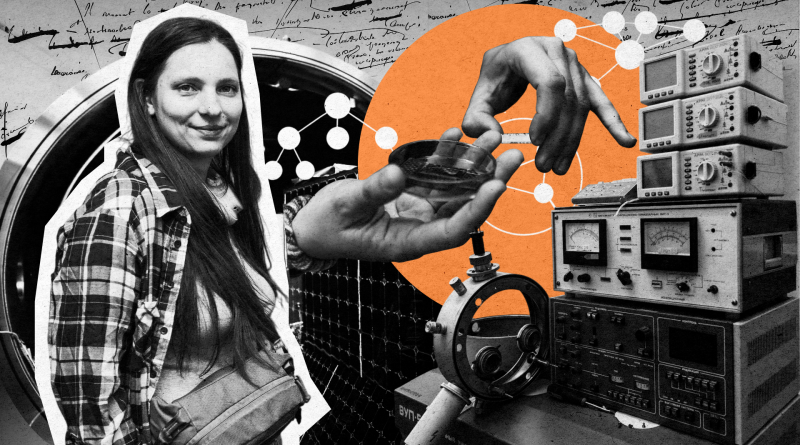
In the early morning hours of August 2022, a Russian S-300 missile struck the Institute of Single Crystals in Kharkiv, Ukraine, destroying decades of scientific work in an instant. For Dr. Ksenia Minakova, a researcher who had dedicated her career to this laboratory, the explosion didn’t just destroy equipment and experiments—it shattered a lifetime of scientific achievement. Yet what happened in the months that followed would become a remarkable story of resilience, international solidarity, and the unbreakable spirit of Ukrainian science.
The Institute of Single Crystals, one of the largest research institutions in Eastern Europe specializing in crystal growth and materials science, had been a cornerstone of Ukrainian scientific excellence since Soviet times. Dr. Minakova had spent years developing specialized research programs within its walls, working with sophisticated equipment that took decades to acquire and calibrate. When the missile struck, it obliterated her laboratory completely, leaving behind twisted metal, shattered glass, and the ruins of countless research projects. “These machines are my life,” Minakova would later say, surveying the devastation that had consumed years of her work.
The attack on the institute was part of a broader Russian campaign targeting civilian infrastructure in Kharkiv, Ukraine’s second-largest city located just 40 kilometers from the Russian border. Since the full-scale invasion began in February 2022, the city has endured relentless bombardment, with educational and scientific institutions frequently caught in the crossfire. The deliberate or indiscriminate targeting of such facilities represents not just physical destruction but an assault on Ukraine’s intellectual future—an attempt to cripple the nation’s capacity for innovation and development for generations to come.
Rather than surrender to despair, Dr. Minakova and her colleagues made an extraordinary decision: they would rebuild. The process began almost immediately, with scientists carefully sifting through rubble to salvage whatever equipment could be repaired. International partners, including research institutions from Poland, Germany, France, and the United States, responded with an outpouring of support. Donated equipment, funding, and technical expertise began flowing into Kharkiv, even as missiles continued to fall on the city. Scientists worked in shifts, often interrupted by air raid sirens that sent them scrambling to shelters.
The reconstruction effort highlighted both the challenges and the determination of Ukraine’s scientific community during wartime. Many researchers had fled the country or relocated to safer regions in western Ukraine, creating a brain drain that threatened the nation’s research capacity. Those who remained, like Dr. Minakova, faced constant danger, unreliable electricity, and the psychological toll of working under bombardment. Yet they persisted, driven by a conviction that abandoning their work would mean surrendering to Russian aggression. The laboratory became a symbol of resistance—proof that Ukrainian science could not be destroyed by missiles.
The global scientific community’s response to the crisis has been unprecedented. Organizations such as the European Research Council, various national academies of science, and individual universities have created emergency programs specifically designed to support Ukrainian researchers. Some have offered temporary positions abroad, while others have focused on sending resources directly to institutions still operating inside Ukraine. This international solidarity has proven crucial for facilities like the Institute of Single Crystals, allowing them to acquire replacement equipment that would otherwise be impossible to obtain during wartime.
By late 2023, Dr. Minakova’s laboratory had been substantially rebuilt, though the work continues. New equipment stands where the ruins once lay, and research programs have resumed, adapted to the realities of war. The restored facility represents more than just scientific infrastructure—it embodies Ukraine’s refusal to let the invasion define its future. For Dr. Minakova, who chose to remain in Kharkiv despite the danger, the rebuilt laboratory is both a professional workspace and a personal statement of defiance. “They can destroy our buildings,” she has said, “but they cannot destroy our knowledge or our determination to continue.” Her story has become an inspiration for scientists across Ukraine, demonstrating that even in the darkest circumstances, the pursuit of knowledge can endure.