
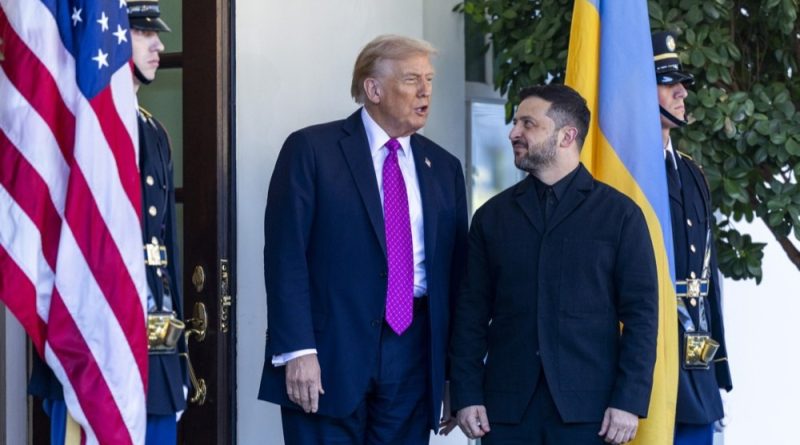
Trump and Zelensky Likely to Cross Paths at G7 Summit in Potential High-Stakes Encounter
Ukrainian President Volodymyr Zelensky and U.S. President Donald Trump are expected to encounter each other at the upcoming G7 summit, according to sources speaking to Ukrainian public broadcaster Suspilne. While no official bilateral meeting has been formally scheduled between the two leaders, the likelihood of them crossing paths at the gathering of world leaders presents a significant diplomatic opportunity amid ongoing tensions between Washington and Kyiv over the handling of the war in Ukraine.
The potential meeting comes at a critical juncture in Ukrainian-American relations, which have experienced considerable strain since Trump’s return to the White House in January 2025. The Trump administration has taken a notably different approach to the conflict compared to the Biden presidency, emphasizing negotiations with Russia and questioning the scale of continued military assistance to Ukraine. These policy shifts have created uncertainty in Kyiv about the future of American support, making any face-to-face interaction between the two presidents particularly consequential.
The G7 summit, which brings together leaders from the United States, United Kingdom, France, Germany, Italy, Canada, and Japan, has historically served as a crucial platform for coordinating Western policy on major global issues. Since Russia’s full-scale invasion of Ukraine in February 2022, the annual gathering has become an important venue for demonstrating allied unity in support of Kyiv. Previous summits have seen announcements of significant aid packages, coordinated sanctions against Moscow, and statements of unwavering support for Ukrainian sovereignty. However, the dynamics of this year’s summit may prove markedly different given the evolving American position on the conflict.
Relations between Trump and Zelensky have a complicated history dating back to Trump’s first term in office. The two leaders became entangled in the 2019 impeachment controversy when Trump was accused of pressuring Zelensky to investigate political rival Joe Biden in exchange for military aid. While Trump was ultimately acquitted by the Senate, the episode cast a long shadow over their relationship. Since returning to power, Trump has publicly criticized Ukraine on multiple occasions and suggested that Zelensky should have done more to prevent the war, comments that have not been well received in Kyiv.
The informal nature of any potential encounter at the G7 presents both opportunities and challenges for Ukrainian diplomacy. On one hand, a casual meeting on the sidelines allows for a less pressured environment where both leaders might find common ground without the weight of formal negotiations. On the other hand, the absence of a scheduled bilateral meeting could be interpreted as a diplomatic slight, signaling Washington’s diminished prioritization of the Ukraine relationship. European allies attending the summit will likely watch any Trump-Zelensky interaction closely, as it may provide insights into the future direction of transatlantic coordination on Ukraine policy.
Ukrainian officials have consistently sought to maintain open channels of communication with the Trump administration despite the public tensions. Zelensky has walked a careful diplomatic line, expressing willingness to engage with American proposals for ending the conflict while firmly maintaining Ukraine’s territorial integrity as a non-negotiable principle. The Ukrainian leader has also worked to strengthen ties with European partners, recognizing that the continent’s support will remain crucial regardless of fluctuations in American policy. This multi-track approach reflects Kyiv’s understanding that the path to a sustainable peace requires broad international backing.
As the G7 summit approaches, international observers and diplomats are keenly awaiting any signals about the state of Western unity on Ukraine. The gathering represents one of the few occasions where major world leaders interact in person, making even unplanned encounters potentially significant. Whether Trump and Zelensky engage in substantive discussions or merely exchange diplomatic pleasantries, their interaction will be scrutinized for clues about the trajectory of one of the most consequential geopolitical relationships of the current era. The stakes extend far beyond the two individuals involved, potentially shaping the course of the ongoing conflict and the broader European security architecture for years to come.