
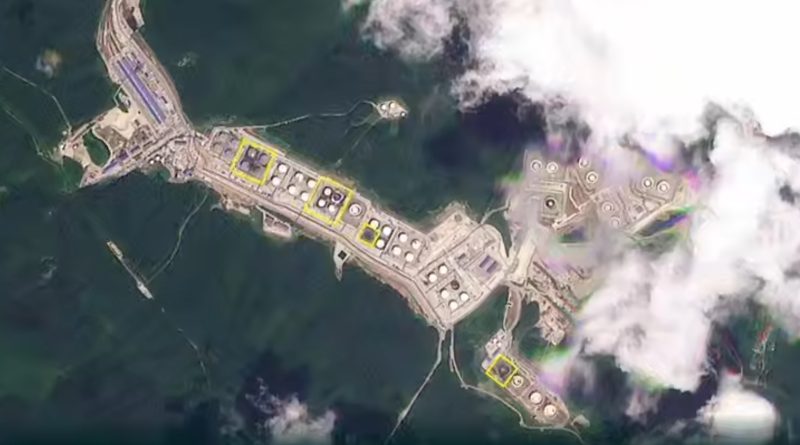
Satellite Imagery Reveals Extensive Damage to Grushevaya Oil Terminal in Novorossiysk Following Drone Strikes
Recent satellite imagery has revealed significant destruction at the Grushevaya oil storage facility in Novorossiysk, Russia, with analysts now confirming that between 10 and 15 storage tanks have been damaged or completely destroyed in what appears to be a series of coordinated drone attacks. The facility, one of Russia’s major oil export terminals located on the Black Sea coast, has become a repeated target in recent months as Ukraine continues its campaign to disrupt Russian energy infrastructure and revenue streams that fund military operations.
The Grushevaya terminal serves as a critical component of Russia’s southern oil export network, handling millions of tons of petroleum products annually. The facility’s strategic importance stems from its direct connection to the Caspian Pipeline Consortium (CPC) terminal and its role in facilitating crude oil shipments to international markets through the Black Sea. Industry experts estimate that disruptions to operations at this location could affect approximately 1-2% of Russia’s total oil export capacity, translating to significant financial losses for the Russian government.
Analysis of the satellite photographs, which have been circulating among open-source intelligence communities, shows clear evidence of fire damage, collapsed tank structures, and extensive burn marks across multiple sections of the storage facility. The progressive nature of the damage suggests that the terminal has been struck on multiple occasions, with each successive attack adding to the cumulative destruction. Fire containment efforts appear to have been challenged by the scale of the blazes, with some tanks showing evidence of catastrophic structural failure consistent with prolonged exposure to intense heat.
The targeting of Russian oil infrastructure represents a strategic shift in Ukraine’s approach to the conflict, moving beyond purely defensive operations to strike at economic assets that sustain Russia’s war machine. Military analysts note that such attacks serve multiple purposes: they reduce Russian revenue from oil exports, strain emergency response resources, create logistical challenges for fuel supply to military units, and demonstrate Ukraine’s growing long-range strike capabilities. The use of domestically produced drones for these operations has proven particularly cost-effective compared to the value of the targets destroyed.
Novorossiysk itself has emerged as one of the most frequently targeted locations in this infrastructure campaign. The port city, home to approximately 350,000 residents, hosts Russia’s largest commercial seaport and a major naval base for the Black Sea Fleet. The concentration of strategic assets in this area makes it a natural focal point for Ukrainian operations aimed at degrading Russian military and economic capabilities. Local authorities have reportedly implemented enhanced air defense measures, though the continued success of drone strikes suggests these defenses remain insufficient against Ukraine’s evolving tactics.
The international energy market has been closely monitoring these developments, as sustained damage to Russian export infrastructure could have broader implications for global oil supply chains. While Russia has demonstrated resilience in maintaining export volumes despite ongoing attacks, industry observers note that cumulative damage to storage and transportation facilities will eventually constrain capacity if repairs cannot keep pace with destruction. European nations that previously relied heavily on Russian energy imports have largely completed their transition to alternative suppliers, but any significant disruption to global oil availability could still affect prices worldwide.
Russian officials have not publicly commented on the full extent of damage at the Grushevaya facility, consistent with a broader pattern of limited official acknowledgment of successful Ukrainian strikes on domestic territory. Independent verification through commercial satellite imagery has become essential for tracking the true impact of these operations. As the conflict continues with no clear resolution in sight, analysts expect Ukraine to maintain pressure on Russian energy infrastructure as a key element of its strategic approach to degrading Russian military capabilities and economic resources.