Russians May Want Peace, But Putin and His Inner Circle Show No Signs of It – Ukrainian Chief of General Staff
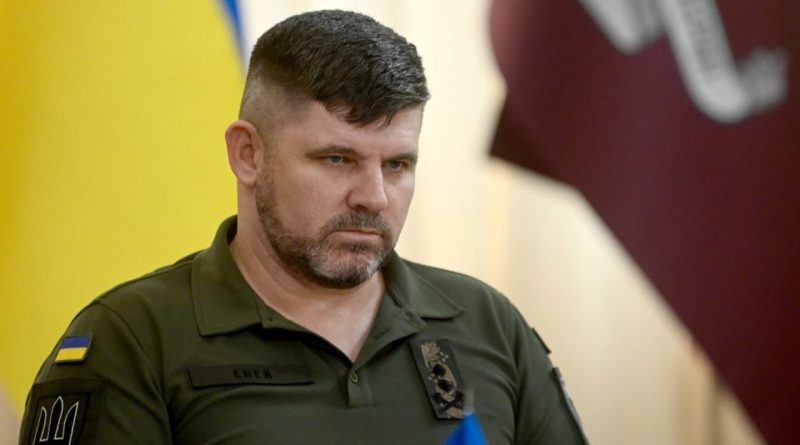
The ongoing diplomatic efforts to end the war in Ukraine have hit a significant roadblock, with Ukraine’s top military commander offering a stark assessment of the Kremlin’s true intentions. Lieutenant General Anatoly Gnatov, Chief of the General Staff of the Armed Forces of Ukraine, addressed the current state of negotiations in an exclusive interview with LIGA.net, providing insight into why peace talks have effectively stalled despite mounting international pressure for a resolution.
General Gnatov drew a clear distinction between the sentiments of ordinary Russian citizens and the actions of their government. While acknowledging that many Russians may genuinely desire an end to the conflict that has claimed hundreds of thousands of lives and devastated entire regions, he emphasized that Russian President Vladimir Putin and his close associates have demonstrated no genuine commitment to achieving peace. This disconnect between public sentiment and state policy has been a recurring theme throughout the three-year conflict, with independent polling suggesting war fatigue among Russian civilians even as the Kremlin continues to mobilize resources for military operations.
The stalling of negotiations comes at a critical juncture in the conflict. Since Russia launched its full-scale invasion in February 2022, multiple attempts at diplomatic resolution have failed to produce lasting results. The Istanbul talks in March 2022 came closest to a potential agreement before collapsing amid mutual accusations of bad faith. Since then, the conflict has evolved into a grinding war of attrition, with front lines largely stabilized but fighting continuing to exact a devastating toll on both sides. Western military analysts estimate that combined casualties now exceed half a million soldiers, making this the bloodiest European conflict since World War II.
The Ukrainian General Staff’s assessment reflects broader concerns within the international community about Russia’s negotiating posture. Western intelligence agencies have repeatedly reported that Putin’s inner circle remains committed to achieving their original objectives in Ukraine, which included regime change in Kyiv and the effective neutralization of Ukrainian sovereignty. Despite significant military setbacks, including the failed advance on Kyiv and the loss of previously occupied territories around Kharkiv, the Russian leadership has shown no willingness to compromise on its core demands. This intransigence has frustrated diplomatic initiatives launched by various international actors, including China, African nations, and most recently, discussions involving the United States.
Historical precedent suggests that Russian negotiating tactics often involve prolonged talks while military operations continue unabated. During the Minsk agreements of 2014 and 2015, which aimed to resolve the conflict in eastern Ukraine, Russia participated in extended diplomatic processes while simultaneously providing military support to separatist forces. Former German Chancellor Angela Merkel later acknowledged that these agreements were partly intended to buy time for Ukraine to strengthen its defenses, while Russian officials have suggested they never intended to fully implement the accords. This history of diplomatic maneuvering has made Ukrainian officials particularly skeptical of Russian peace overtures.
The current military situation adds another layer of complexity to any potential negotiations. Ukrainian forces continue to defend against Russian advances in the Donbas region while maintaining their own positions in Russia’s Kursk Oblast, captured during a surprise offensive in August 2024. This territorial exchange has created unusual leverage dynamics, with both sides holding cards that could theoretically facilitate a negotiated settlement. However, General Gnatov’s comments suggest that technical military considerations are secondary to the fundamental question of political will in Moscow. Without genuine commitment from Russia’s leadership to end hostilities, tactical arrangements and territorial discussions remain largely theoretical exercises.
International observers have noted that sanctions pressure and economic challenges have yet to fundamentally alter the Kremlin’s calculus. Russia’s economy has been placed on a war footing, with military spending consuming an increasingly large share of the national budget. While this has created significant strain, the regime has demonstrated remarkable resilience in adapting to Western financial restrictions. Energy exports to China and India have partially offset lost European markets, and domestic production has ramped up to replace imported goods. This economic adaptability has reduced Western leverage and diminished hopes that financial pressure alone would force Moscow to the negotiating table in good faith.
As the conflict enters its fourth year, the Ukrainian military leadership remains focused on maintaining defensive capabilities while pursuing any genuine opportunities for diplomacy. General Gnatov’s candid assessment serves as a reminder that sustainable peace requires willing partners on both sides. Until Putin and his inner circle demonstrate concrete actions toward de-escalation rather than mere rhetorical gestures, the prospects for meaningful negotiations remain dim. The international community continues to grapple with how to bridge this fundamental gap between Russian words and actions, while Ukrainian forces prepare for the possibility of prolonged conflict.