
A Nation in Search of Freedom: Why the United States Has Debated Its Identity for 250 Years
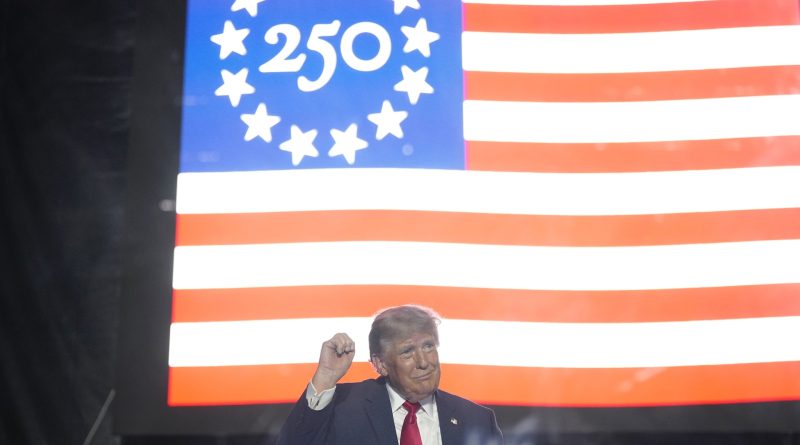
As the United States approaches its 250th anniversary in 2026, the nation finds itself engaged in the same fundamental debates that have defined its existence since the signing of the Declaration of Independence in 1776. Questions about what it means to be American, who belongs to the national community, and what role the country should play on the world stage continue to spark passionate disagreement across political, cultural, and generational lines. This ongoing conversation about national identity is not a sign of weakness or decline, but rather a defining characteristic of a nation built on ideals rather than ethnic homogeneity or ancient territorial claims.
The founding of the United States represented a radical experiment in self-governance that challenged the prevailing political order of the 18th century. Unlike European nations that traced their origins to shared ancestry, common language, or centuries of territorial continuity, America was founded on a set of philosophical principles articulated in its founding documents. The Declaration of Independence proclaimed that “all men are created equal” and endowed with “unalienable rights” to “life, liberty, and the pursuit of happiness.” This creedal foundation meant that American identity would always be defined by adherence to ideas rather than birthright, creating an inherently dynamic and contested notion of national belonging.
The tension between America’s stated ideals and its lived reality has been a source of both national shame and transformative change throughout the country’s history. The Constitution that established the framework for democratic governance also enshrined the institution of slavery, counting enslaved persons as three-fifths of a person for purposes of congressional representation while denying them any political rights. This original contradiction would eventually tear the nation apart in the Civil War of 1861-1865, which claimed over 600,000 lives and fundamentally reshaped American society. The subsequent Reconstruction amendments promised equal citizenship regardless of race, yet the implementation of Jim Crow laws across the South created a system of racial apartheid that would persist for nearly a century.
The Civil Rights Movement of the 1950s and 1960s represented another pivotal moment in America’s ongoing struggle to reconcile its founding principles with the treatment of its citizens. Led by figures like Martin Luther King Jr., Rosa Parks, and John Lewis, this movement forced the nation to confront the gap between its democratic aspirations and the reality of systematic discrimination. The passage of the Civil Rights Act of 1964 and the Voting Rights Act of 1965 marked significant legal victories, but as contemporary debates about voting access, criminal justice reform, and racial equality demonstrate, the conversation about who fully participates in American democracy remains unfinished.
Immigration has served as another central battleground in the ongoing negotiation of American identity. The nation famously describes itself as a “nation of immigrants,” yet attitudes toward newcomers have fluctuated dramatically over time. The 19th century saw waves of Irish, German, Italian, and Eastern European immigrants face discrimination and nativist backlash, including the Know-Nothing movement of the 1850s. The Chinese Exclusion Act of 1882 represented the first significant restriction on immigration based on national origin, reflecting racial anxieties that would later manifest in the restrictive quota systems of the 1920s. The Immigration and Nationality Act of 1965 abolished national-origin quotas and opened the door to increased immigration from Asia, Latin America, and Africa, fundamentally reshaping the demographic composition of the country.
Today, debates about immigration continue to reflect deeper anxieties about cultural change and national identity. The United States is projected to become a “majority-minority” nation by 2045, meaning that non-Hispanic whites will constitute less than half of the total population. This demographic shift has prompted soul-searching about whether American identity can truly transcend racial and ethnic categories, or whether the nation’s commitment to pluralism has inherent limits. Scholars like political scientist Samuel Huntington have warned about the challenges of maintaining national cohesion amid increasing diversity, while others argue that the ability to incorporate newcomers into a shared civic culture represents America’s greatest strength.
America’s relationship with the wider world has also been a source of persistent identity debates. From George Washington’s famous warning against “entangling alliances” in his Farewell Address to the interventionist policies of the 20th and 21st centuries, Americans have struggled to define their country’s proper role in international affairs. The emergence of the United States as a global superpower following World War II brought new responsibilities and new questions about whether American power should be used to spread democratic values abroad. The Cold War framed American identity in opposition to Soviet communism, providing a unifying external enemy that temporarily muted internal divisions.
The end of the Cold War and subsequent events—including the September 11 attacks, the wars in Iraq and Afghanistan, and the rise of China as a peer competitor—have complicated America’s self-understanding. Some advocate for a return to a more restrained foreign policy focused on narrow national interests, while others insist that American leadership remains essential to maintaining global order and advancing human rights. These foreign policy debates are ultimately connected to deeper questions about American exceptionalism: Is the United States a unique nation with a special mission in the world, or simply one country among many pursuing its own interests?
As the United States prepares to celebrate its semiquartermillennial, the debates about national identity show no signs of resolution—nor should they. The genius of the American experiment lies precisely in its openness to reinterpretation and reform. Each generation has been called to expand the meaning of founding ideals, extending rights and recognition to groups previously excluded. The abolitionists, suffragettes, labor organizers, and civil rights activists who pushed America closer to its stated principles were often denounced as radicals in their time but are now celebrated as patriots. The ongoing arguments about American identity, far from threatening the nation’s survival, represent the continuation of a conversation that began in Philadelphia in 1776 and will continue for as long as the republic endures.