“They Wanted to Leave – And Rightly So”: Zelensky Responds to Protests Against Fedorov’s Dismissal
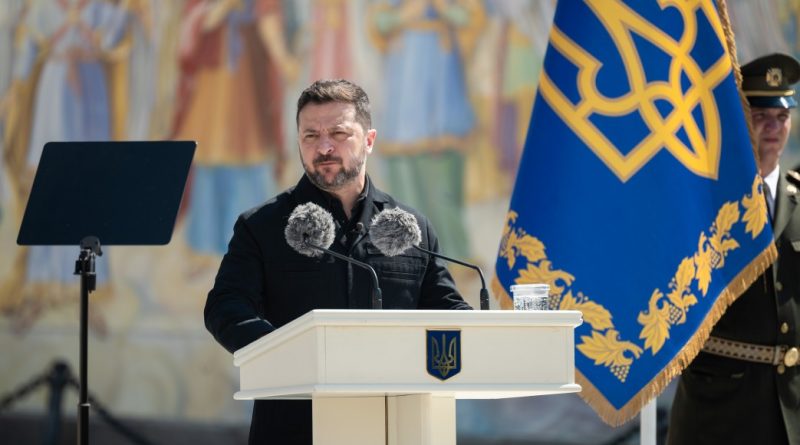
Ukrainian President Volodymyr Zelensky has publicly addressed the growing wave of protests that erupted following the dismissal of Mykhailo Fedorov, the country’s Minister of Digital Transformation. In his characteristic direct communication style, Zelensky acknowledged the public outcry while maintaining that certain aspects of the personnel decision must remain confidential due to national security concerns during the ongoing war with Russia.
Speaking to journalists, the President emphasized that he “understands” and “hears” the voices of protesters who took to the streets in several Ukrainian cities. However, he deliberately avoided providing detailed explanations for the controversial decision, citing the need to protect sensitive information from Russian intelligence. “There are secrets from the Russians,” Zelensky stated, suggesting that the full reasoning behind Fedorov’s removal involves classified matters related to Ukraine’s digital warfare capabilities and infrastructure.
Mykhailo Fedorov, who served as Deputy Prime Minister and Minister of Digital Transformation since 2019, became one of the most internationally recognized figures in Zelensky’s government. At just 34 years old, he spearheaded Ukraine’s remarkable digital revolution, transforming the country into what many tech experts called “the world’s most digital government.” Under his leadership, Ukraine launched the Diia app, a groundbreaking platform that allowed citizens to access over 120 government services from their smartphones, including digital passports, driver’s licenses, and even wartime applications for reporting enemy positions.
Fedorov’s ministry played a crucial role in Ukraine’s resistance efforts following the full-scale Russian invasion in February 2022. He famously appealed directly to tech giants like Elon Musk for Starlink terminals, which proved essential for maintaining communications when traditional infrastructure was destroyed. His team also orchestrated an “IT Army” of volunteer hackers who conducted cyberattacks against Russian targets, and he successfully lobbied dozens of international technology companies to cease operations in Russia as part of sanctions efforts.
The protests against Fedorov’s dismissal reflect the deep appreciation many Ukrainians hold for the digital services that have become integral to daily life, especially during wartime. The Diia application has been downloaded by over 20 million users – roughly half of Ukraine’s population – and has processed billions of hryvnias in government payments, including assistance to internally displaced persons and families of fallen soldiers. For many citizens, the app represents a rare example of efficient, corruption-free government service delivery in a country that has historically struggled with bureaucratic inefficiency.
Political analysts suggest that Zelensky’s response to the protests demonstrates the delicate balance he must maintain between democratic accountability and wartime operational security. Dr. Olena Halushka, a board member at the Anti-Corruption Action Centre in Kyiv, noted that public trust in government institutions remains crucial for Ukraine’s resilience, but so does protecting strategic digital assets from enemy interference. The digital transformation ministry oversees not only civilian services but also critical cybersecurity infrastructure and military-adjacent communication systems that have proven vital to Ukraine’s defense capabilities.
The controversy surrounding Fedorov’s departure also highlights broader questions about governance transparency during extended military conflicts. While wartime leaders throughout history have invoked national security to limit public discourse on sensitive personnel matters, democratic societies expect reasonable accountability even during crises. Zelensky’s acknowledgment of the protesters’ right to demonstrate, combined with his refusal to provide complete explanations, represents an attempt to navigate these competing demands. The President’s phrase “they wanted to leave – and rightly so” has been interpreted by some observers as a cryptic suggestion that the departure may have been at least partially voluntary, though official statements have not clarified this point.
As Ukraine continues to fight for its survival while simultaneously maintaining democratic institutions, decisions like Fedorov’s removal will likely continue to generate public debate. The incident underscores how the war has complicated normal political processes, forcing both leaders and citizens to accept unprecedented levels of uncertainty in governmental affairs. Whatever the classified reasons behind this personnel change, the protests demonstrate that Ukrainians remain engaged citizens who expect their voices to be heard, even as they understand that some answers must wait until peace returns to their country.