How Weaker States Defeat Stronger Ones: Three Crucial Lessons from the War in Ukraine
The future of warfare has arrived, and it looks nothing like what military strategists anticipated just a decade ago. The ongoing conflict in Ukraine has fundamentally challenged conventional wisdom about military superiority, demonstrating that smaller nations can effectively resist and even counter the advances of seemingly overwhelming opponents. According to analysis published by The Economist, the war in Ukraine offers three critical lessons about how new technologies are dismantling the traditional advantages held by global superpowers, while simultaneously exposing the fatal miscalculations of world leaders who failed to adapt to this new reality.
When Russia launched its full-scale invasion of Ukraine in February 2022, many military analysts predicted a swift Russian victory. With one of the world’s largest armies, vast reserves of armor and artillery, and what was considered the second most powerful military on the planet, Russia appeared poised to overwhelm its smaller neighbor within weeks, if not days. Yet more than two years later, Ukraine continues to resist, having inflicted unprecedented losses on Russian forces and demonstrating remarkable resilience. This outcome has forced a fundamental reassessment of what constitutes military power in the 21st century.
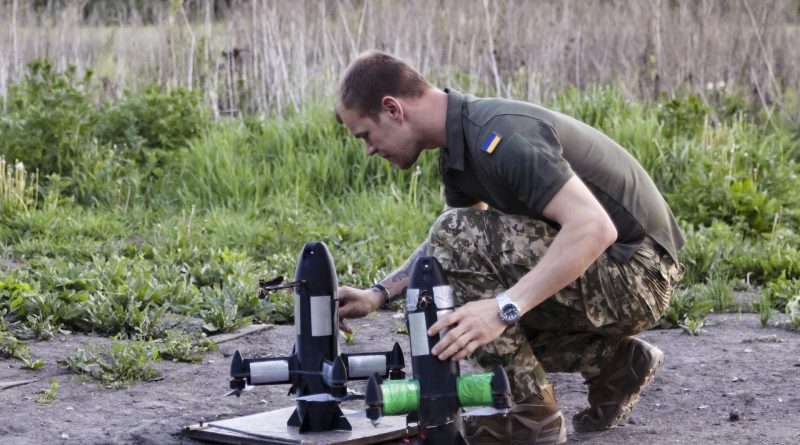
The first major lesson emerging from Ukraine is the democratization of precision warfare through affordable technology. Drones, once the exclusive domain of wealthy nations with advanced military-industrial complexes, have become ubiquitous on the Ukrainian battlefield. Small, commercially available quadcopters costing mere hundreds of dollars are being used to conduct reconnaissance, direct artillery fire, and even carry out precision strikes against tanks worth millions. Ukraine has pioneered the use of first-person view (FPV) drones as guided munitions, creating a new category of weapon that combines the precision of guided missiles with the affordability of improvised explosives. This technological shift means that expensive, heavily armored vehicles—long considered the backbone of modern armies—have become increasingly vulnerable to attacks from operators positioned miles away.
The proliferation of these technologies has created what military theorists call a “transparent battlefield,” where concealment has become nearly impossible. Satellite imagery, thermal sensors, and networks of cheap drones provide continuous surveillance, making traditional maneuver warfare extraordinarily dangerous. Russian tank columns that would have been devastating in previous conflicts now represent concentrated targets rather than unstoppable forces. Historical parallels can be drawn to previous military revolutions: just as the machine gun transformed infantry tactics in World War I, and guided missiles changed naval warfare in the latter half of the 20th century, drones and networked sensors are reshaping ground combat in ways that favor defenders and smaller forces.
The second crucial lesson involves the power of decentralized command and Western support networks. Ukraine’s military has demonstrated remarkable adaptability, operating with a mission-command philosophy that empowers lower-level officers to make tactical decisions without waiting for orders from above. This stands in stark contrast to Russia’s rigid, top-down command structure, which has repeatedly proven slow to adapt to changing battlefield conditions. When Russian generals have been killed—an unprecedented number of flag officers have fallen in this conflict—entire operations have stalled due to the inability of subordinates to act independently. Ukraine, by contrast, has shown that a well-trained, motivated force with decentralized authority can outmaneuver a larger opponent through speed, flexibility, and initiative.
Western military assistance has played a crucial role, but not in the way many expected. Rather than deploying troops directly, NATO countries have provided intelligence, training, and sophisticated weapon systems that have enabled Ukraine to leverage its own capabilities. HIMARS rocket systems, for example, allowed Ukraine to strike Russian ammunition depots and command posts far behind the front lines, disrupting logistics and communications. Patriot air defense systems have protected critical infrastructure from missile attacks. This model of support—providing advanced capabilities without direct intervention—may represent a template for how powerful nations assist smaller allies in future conflicts while avoiding direct confrontation.
The third lesson concerns the critical importance of industrial capacity and sustained warfare. Initial Western assessments underestimated the war’s duration and the consumption rate of ammunition, vehicles, and equipment. Both sides have discovered that modern high-intensity warfare devours resources at rates not seen since World War II. Artillery shells, anti-tank missiles, and drones are consumed by the thousands daily. This has exposed a critical weakness in Western defense planning: decades of peace dividends and just-in-time manufacturing have left arsenals depleted and production lines inadequate for sustained conflict. Russia, despite heavy sanctions, has managed to maintain production through its own industrial base and assistance from countries like Iran and North Korea, highlighting how economic resilience and manufacturing capacity remain fundamental to military power.
Perhaps the greatest error made by world leaders, particularly in Moscow, was the fundamental miscalculation of political will. Russian planners assumed that Ukraine’s government would collapse quickly, that Western unity would fracture, and that economic pressure would force a rapid settlement. Instead, they encountered a Ukrainian population unified in resistance, a Western alliance that has remained surprisingly cohesive, and a conflict that has strengthened rather than weakened NATO. This miscalculation reflects a broader failure to understand that in modern warfare, the will of populations to resist—amplified by social media, international attention, and moral clarity about the conflict—can prove more decisive than raw military capability. The wars of the future, it seems, will be won not just by those with the most advanced weapons, but by those who best understand how to combine technology, adaptability, industrial strength, and national determination into a coherent strategy for sustained resistance.