
US Military Quietly Escorts Nearly 70 Vessels Through Strait of Hormuz in Three Weeks
In a significant display of naval power and strategic coordination, the United States military has successfully escorted approximately 70 commercial vessels through the strategically vital Strait of Hormuz over a three-week period, according to a report by The New York Times. This operation, conducted largely out of public view, represents a substantial commitment of American naval resources to ensure the safe passage of international shipping through one of the world’s most critical maritime chokepoints. US officials have confirmed that some of the designated routes for commercial vessels were deliberately plotted at safe distances from Iranian territorial waters, minimizing the risk of confrontation or interference.
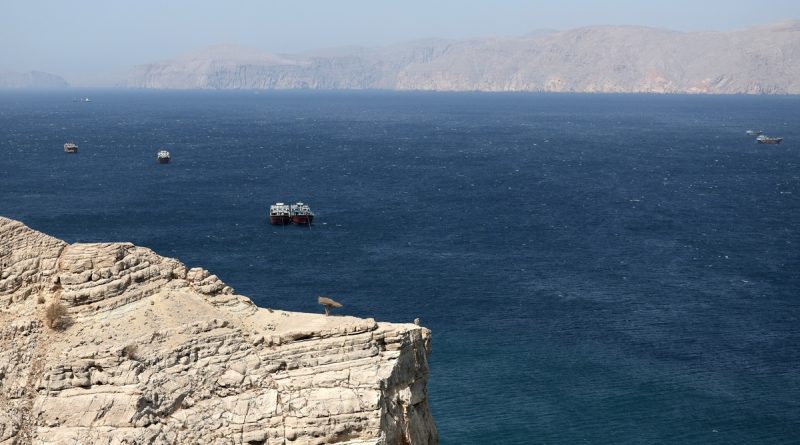
The Strait of Hormuz, a narrow passage connecting the Persian Gulf to the Gulf of Oman and the Arabian Sea, handles roughly 20 percent of the world’s daily oil consumption. At its narrowest point, the strait is only 21 miles wide, with shipping lanes in each direction measuring just two miles across. This geographical constraint makes it an ideal location for potential disruption and has historically been a flashpoint for regional tensions. Iran, which controls the northern shore of the strait, has repeatedly threatened to close this vital waterway in response to international pressure, particularly regarding its nuclear program and economic sanctions.
The quiet nature of this escort operation reflects a calculated approach by US military planners to maintain security without escalating tensions in the region. Unlike more publicized naval operations that often serve as diplomatic signals or deterrent displays, this convoy protection effort appears designed to accomplish its primary mission of safeguarding commercial shipping while avoiding unnecessary provocations. The operation involved coordination between multiple branches of the US military, including the Navy’s Fifth Fleet, which maintains its headquarters in Bahrain and is responsible for naval operations across approximately 2.5 million square miles of area including the Persian Gulf, Red Sea, and parts of the Indian Ocean.
Historical context adds weight to the significance of these escort missions. Tensions in the Strait of Hormuz have flared periodically over the decades, with notable incidents including the 1987-1988 Operation Earnest Will, during which US warships protected Kuwaiti oil tankers reflagged as American vessels during the Iran-Iraq War. More recently, the summer of 2019 saw a series of attacks on commercial tankers in the region, which the United States attributed to Iran, though Tehran denied involvement. In January 2020, following the US killing of Iranian General Qasem Soleimani, fears of a potential closure of the strait reached a fever pitch, causing brief spikes in global oil prices and renewed concerns about energy security.
Maritime security experts note that the routing of vessels at safe distances from Iranian waters represents a pragmatic approach to risk management. By establishing corridors that maximize the distance between commercial ships and potential threats, convoy coordinators can reduce the possibility of incidents while still completing the passage efficiently. This methodology draws on decades of experience in naval convoy operations and reflects lessons learned from various regional conflicts. The presence of US naval assets also serves as a deterrent against opportunistic attacks by non-state actors, including pirates or militant groups that have occasionally operated in these waters.
The economic implications of maintaining free navigation through the Strait of Hormuz cannot be overstated. Countries throughout Asia, including China, Japan, South Korea, and India, depend heavily on oil shipments transiting this waterway. European nations similarly rely on Persian Gulf energy exports, making the strait’s security a matter of global economic concern. Any significant disruption to shipping through the Hormuz could trigger dramatic increases in oil prices, potentially destabilizing financial markets and affecting consumers worldwide. The International Energy Agency has long maintained contingency plans for potential Hormuz closures, though such scenarios remain highly unlikely given the mutual economic interests at stake.
Looking ahead, the success of this escort operation may establish a template for future maritime security efforts in contested waterways. As geopolitical tensions continue to simmer in various regions around the world, the ability to quietly and effectively protect commercial shipping while avoiding unnecessary escalation represents a valuable capability. For the United States, maintaining this balance between security provision and diplomatic restraint remains a key challenge in its approach to the Middle East. The operation also underscores the continued importance of naval power projection in an era when attention often focuses on newer domains of conflict such as cyberspace or space-based assets.