Budanov: There Are Serious and Intelligent People in Russia Who Know How to Analyze
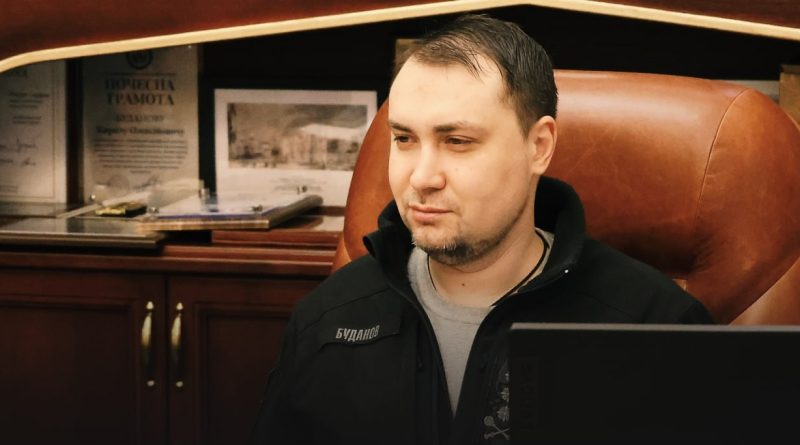
The head of Ukraine’s Main Intelligence Directorate (HUR), Kyrylo Budanov, has made striking observations about the internal dynamics within Russia, suggesting that despite the country’s apparent stability, there are growing signs of systemic instability that even Russia’s own analytical minds are beginning to recognize. In recent statements, Budanov acknowledged that while Russians have historically demonstrated resilience in weathering economic downturns, the current situation presents something qualitatively different — what he described as the emergence of threats to the stability of the entire system.
Budanov’s assessment carries significant weight given his position at the helm of Ukraine’s intelligence apparatus, which has been actively monitoring Russian internal affairs since the full-scale invasion began in February 2022. His acknowledgment that “there are serious and intelligent people in Russia who know how to analyze” represents a nuanced view that moves beyond simple characterizations of Russian society. This perspective suggests that within Russia’s political and economic elite, there exists a faction capable of objectively assessing the country’s trajectory — and what they see may be causing concern.
The economic dimension of Budanov’s analysis touches on a critical aspect of the ongoing conflict. Russia has faced unprecedented Western sanctions since 2022, including restrictions on its central bank, exclusion from SWIFT banking systems for major institutions, and comprehensive export controls on technology. Despite initial predictions of economic collapse, Russia’s economy has shown unexpected resilience, adapting through parallel imports, trade redirection toward China and India, and massive government spending on military production. However, economists have noted that this apparent stability comes at a significant cost — depleting the National Wealth Fund, triggering inflation, and creating long-term structural weaknesses.
The historical context of Russian economic endurance is relevant here. Russians have survived the chaos of the 1990s following the Soviet collapse, the 1998 financial crisis, and various oil price shocks. This collective memory of hardship has often been cited as a source of societal resilience that allows the Kremlin to maintain public support despite declining living standards. However, Budanov’s reference to “sprouts of threats to system stability” suggests that the current pressures may be qualitatively different from past economic challenges.
Intelligence analysts and political scientists have long debated what conditions might eventually lead to meaningful change within Russia’s power structures. Some experts point to historical precedents where military failures abroad contributed to domestic political upheaval — the Russo-Japanese War of 1905 and the Soviet-Afghan War being frequently cited examples. Others emphasize the importance of elite fragmentation, noting that authoritarian systems rarely fall due to popular uprising alone but rather through splits within the ruling class. Budanov’s comments about intelligent analysts within Russia may be hinting at precisely this kind of emerging division.
The timing of these observations is particularly noteworthy. As the war in Ukraine approaches its fourth year, Russia faces mounting challenges on multiple fronts. Military casualties continue to accumulate, requiring increasingly aggressive mobilization efforts. The defense industry, while ramped up significantly, struggles with component shortages and quality control issues. Meanwhile, Russia’s international isolation has deepened, with even traditional partners like China and India maintaining careful distance from full endorsement of Moscow’s actions. These cumulative pressures may be what Budanov refers to when speaking of threats to systemic stability.
Western intelligence assessments have generally aligned with the view that Russia faces serious long-term challenges, even if short-term collapse remains unlikely. The key question that analysts continue to debate is whether these pressures will eventually force a change in Russian policy, or whether the system can continue to absorb shocks indefinitely. Budanov’s suggestion that thoughtful observers within Russia itself are beginning to recognize these dangers adds an important dimension to this ongoing discussion.
Ultimately, Budanov’s remarks serve as a reminder that the situation in Russia is more complex than simple narratives might suggest. The existence of clear-eyed analysts within the Russian system who understand their country’s predicament does not guarantee policy change, but it does indicate that the information necessary for reassessment exists within decision-making circles. Whether such analysis will influence Russia’s course remains one of the most consequential uncertainties of the current geopolitical moment.