Trade Simplification and €50 Million Financial Aid: European Union Backs Armenia Ahead of Elections
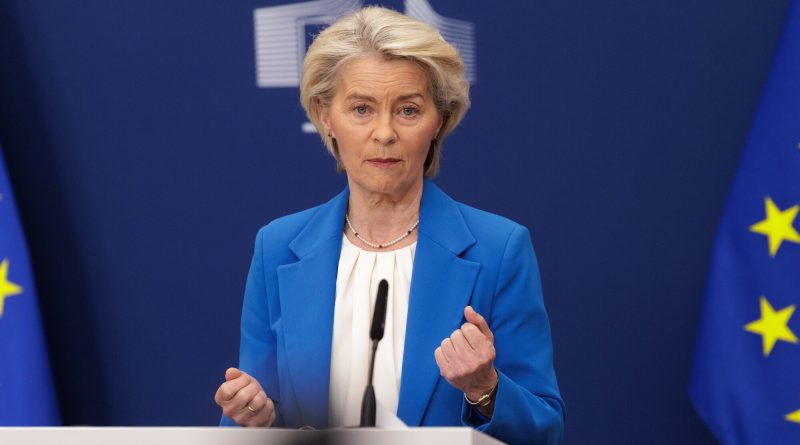
In a significant diplomatic development that underscores the shifting geopolitical landscape in the South Caucasus, European Commission President Ursula von der Leyen has announced a substantial support package for Armenia, including trade simplification measures and €50 million in financial assistance. The announcement comes at a politically sensitive time, just weeks before Armenia’s scheduled parliamentary elections, and carries particular weight given von der Leyen’s explicit criticism of Russia’s intentions toward the small Caucasian nation.
During her visit to Yerevan, von der Leyen made pointed remarks about Moscow’s regional ambitions, stating that Russia seeks to use Armenia for its own strategic purposes. This frank assessment from the EU’s top executive marks a notable escalation in European rhetoric regarding Russian influence in the post-Soviet space and signals Brussels’ determination to offer Yerevan a viable alternative to its traditional security and economic partnerships with Moscow.
The €50 million financial assistance package represents a concrete commitment to Armenia’s economic stability during a period of significant transition. This funding is expected to support various sectors of the Armenian economy, including infrastructure development, democratic institution building, and economic diversification efforts. The trade simplification measures, meanwhile, aim to reduce bureaucratic barriers and facilitate smoother commercial exchanges between Armenia and EU member states, potentially opening new markets for Armenian goods and services that have traditionally been oriented toward Russia and other former Soviet republics.
Armenia’s relationship with the European Union has been evolving rapidly over the past several years, accelerating dramatically following the 2020 Nagorno-Karabakh war and Russia’s perceived failure to adequately support its treaty ally during and after the conflict. The six-week war with Azerbaijan resulted in significant territorial losses for Armenian-backed forces, and many in Yerevan felt abandoned by Moscow, which maintained close ties with both countries and ultimately brokered a ceasefire that many Armenians viewed as humiliating. This disillusionment has driven Prime Minister Nikol Pashinyan’s government to actively seek closer ties with Western institutions.
The timing of the EU’s announcement is particularly significant given the upcoming Armenian elections. While European officials have been careful to frame the support as part of ongoing partnership development rather than electoral interference, the message to Armenian voters is clear: the European path offers tangible benefits and genuine partnership. This stands in contrast to Russia’s approach, which has increasingly been characterized by coercive economic measures and political pressure when former Soviet states seek to diversify their international relationships, as witnessed in Georgia, Ukraine, and Moldova.
Historical context is essential to understanding the magnitude of this geopolitical shift. Armenia has been a member of the Russian-led Collective Security Treaty Organization (CSTO) and the Eurasian Economic Union, making it one of Moscow’s closest allies in the region. Russian military bases have been stationed on Armenian territory for decades, and Russian border guards have patrolled Armenia’s frontiers with Turkey and Iran. However, the CSTO’s failure to respond to Azerbaijani incursions into Armenian territory in 2021 and 2022 severely damaged the alliance’s credibility in Armenian eyes, prompting Yerevan to freeze its participation in the organization.
The European Union’s increased engagement with Armenia also reflects broader strategic calculations in Brussels. As the bloc seeks to reduce Russian influence along its periphery and establish itself as a credible security actor, supporting democratic governments in the post-Soviet space has become a priority. Armenia, with its relatively functional democratic institutions following the 2018 Velvet Revolution that brought Pashinyan to power, represents an opportunity for the EU to demonstrate that partnership with Europe can deliver concrete results. The €50 million package, while modest compared to EU support for Ukraine, nonetheless represents a meaningful investment in a country of approximately three million people facing significant economic challenges.
Looking ahead, the success of EU-Armenia relations will likely depend on multiple factors, including the election results, the resolution of ongoing tensions with Azerbaijan over border demarcation and transport corridors, and Russia’s response to Armenia’s Western pivot. Moscow has already expressed displeasure at Yerevan’s changing orientation, and economic pressure or other forms of retaliation cannot be ruled out. Nevertheless, von der Leyen’s visit and the accompanying support package demonstrate that the European Union is prepared to stand with Armenia as it navigates this complex transition period, offering both symbolic solidarity and practical assistance in the face of regional uncertainties.