Several Military Units Lose Independent Combat Training Authorization Following Inspections, Says Ukrainian Commander-in-Chief Syrskyi
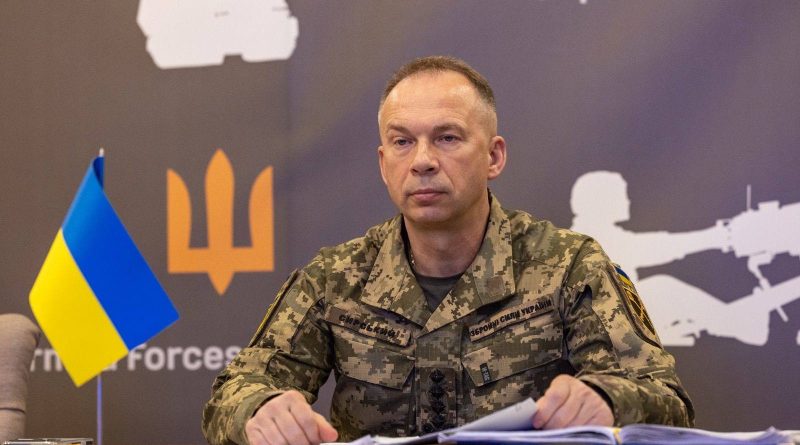
Ukrainian Commander-in-Chief Oleksandr Syrskyi has announced that a number of military units have been stripped of their authorization to conduct independent basic combat training following comprehensive inspections. The decision comes as part of an ongoing effort to standardize and elevate the quality of military preparation across all Ukrainian armed forces, ensuring that every soldier receives training that meets rigorous national standards before deployment to active combat zones.
In his statement, Syrskyi emphasized that the quality of military training must correspond to unified high standards across all branches and units of the Ukrainian military. This announcement signals a significant shift toward centralized oversight of training programs, which have historically varied considerably in quality and methodology between different units and regional commands. The move reflects lessons learned during more than three years of full-scale warfare against Russian forces.
The inspection process that led to these revocations examined multiple aspects of training programs, including instructor qualifications, equipment availability, curriculum adherence, and the practical skills demonstrated by recently trained personnel. Units that failed to meet the established benchmarks will now be required to send their recruits to certified training centers operated by the Armed Forces of Ukraine or allied partner nations. This ensures that all soldiers receive consistent, high-quality preparation regardless of their assigned unit.
Basic combat training, known by its Ukrainian acronym BZVP (Bazova Zahalnoviiskova Pidhotovka), forms the foundation of every soldier’s military education. This training typically covers essential skills including weapons handling, tactical movement, first aid, communication protocols, and survival techniques. Since the beginning of the full-scale Russian invasion in February 2022, Ukraine has faced the enormous challenge of rapidly expanding its military while maintaining training quality – a balance that has proven difficult to achieve uniformly across all formations.
The decision to revoke independent training rights reflects a broader professionalization effort within the Ukrainian military that has accelerated since Syrskyi assumed the role of Commander-in-Chief in February 2024. Upon taking command, Syrskyi inherited both the successes and challenges of Ukraine’s military transformation, including inconsistencies in how different units prepared their personnel for combat. International military advisors from NATO countries have repeatedly emphasized the importance of standardized training as a prerequisite for effective combined arms operations and interoperability with Western allies.
Western partners, including the United States, United Kingdom, Germany, and other NATO members, have invested heavily in training Ukrainian forces both domestically and at facilities across Europe. Programs such as the UK-led Operation Interflex have trained tens of thousands of Ukrainian recruits, setting benchmarks that domestic training programs are now expected to match. By enforcing strict standards, Ukrainian military leadership aims to ensure that soldiers trained domestically receive preparation equivalent to those who undergo instruction abroad.
The enforcement of training standards also addresses concerns raised by frontline commanders who have occasionally received reinforcements inadequately prepared for the realities of modern warfare. Combat in Ukraine has evolved dramatically since 2022, with drone warfare, electronic warfare, and precision artillery fundamentally changing tactical requirements. Training programs must continuously adapt to these evolving threats, and units unable to keep pace with these changes pose risks not only to their own personnel but to broader operational effectiveness. Syrskyi’s announcement indicates that military leadership is prioritizing quality over the speed of personnel throughput, even as manpower remains a critical concern for Ukrainian forces defending against ongoing Russian offensives.
Looking ahead, the affected units will likely undergo remediation processes to regain their training authorization, while successful training centers may see increased capacity demands. This reorganization represents another step in Ukraine’s ongoing transformation from a post-Soviet military structure toward a more modern, NATO-compatible force capable of sustaining prolonged defensive operations and eventually transitioning to offensive capabilities when conditions permit.