Drones, Missiles, and Electronic Warfare: How Ukraine Risks Losing Control of Its Own Defense Innovation Breakthrough
In a paradox born of wartime necessity, Ukraine has emerged as one of the world’s most innovative defense technology hubs, yet now faces the very real prospect of watching its homegrown innovations slip beyond its borders. While government officials deliberate over the complex regulatory frameworks needed to govern weapons exports, Ukrainian defense manufacturers are already establishing business operations abroad, potentially taking with them the intellectual property and manufacturing capabilities that could define the country’s post-war economy.
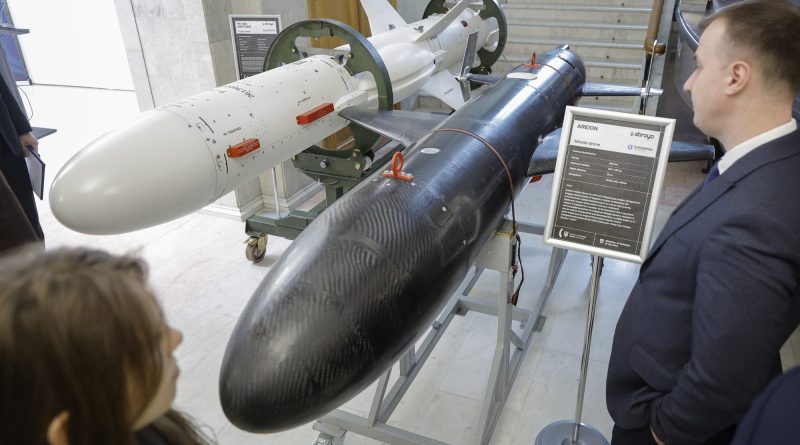
The scale of Ukraine’s defense technology revolution cannot be overstated. Since the full-scale Russian invasion began in February 2022, the country has transformed from a nation with a modest defense industrial base into a global leader in unmanned aerial systems, electronic warfare solutions, and innovative missile technologies. Ukrainian companies have developed drones capable of striking targets hundreds of kilometers away, sophisticated jamming systems that can neutralize Russian equipment, and cost-effective loitering munitions that have fundamentally changed modern battlefield dynamics. This technological leap has been driven by desperate necessity, battlefield feedback loops measured in days rather than years, and an entrepreneurial spirit that has flourished despite—or perhaps because of—the existential threat facing the nation.
The regulatory vacuum surrounding weapons exports has created a peculiar situation. Ukraine’s defense industry operates in a gray zone where innovation outpaces legislation. Traditional arms export controls, designed for conventional weapons systems and established defense contractors, struggle to address the rapidly evolving landscape of dual-use technologies, software-defined weapons, and decentralized manufacturing networks. Many Ukrainian defense startups began as volunteer initiatives or small tech companies that pivoted to military applications, operating outside the traditional defense procurement ecosystem. Now, as these companies seek to scale and secure their futures, they find themselves navigating an uncertain legal landscape that provides little clarity on what they can and cannot do with their innovations.
Historical precedent offers sobering lessons about the consequences of failing to protect defense innovations. After the Soviet Union’s collapse, Ukraine inherited one of the world’s largest military-industrial complexes, including the capacity to produce intercontinental ballistic missiles, advanced aircraft, and naval vessels. Much of this capability was lost through a combination of economic hardship, brain drain, and deliberate policy choices—including the controversial decision to surrender nuclear weapons in exchange for security guarantees that proved worthless. The engineers and scientists who once designed some of the world’s most advanced weapons systems found employment in Russia, China, and Western nations, taking their expertise with them. Ukraine cannot afford to repeat this pattern with its new generation of defense technologies.
The business logic driving Ukrainian companies abroad is straightforward and compelling. Operating in an active war zone creates obvious challenges: facilities can be destroyed by Russian strikes, supply chains are disrupted, and recruiting talent becomes increasingly difficult as the military draws from the same pool of technically skilled workers. Meanwhile, foreign governments and defense companies are eager to access Ukrainian battlefield-tested technologies. Countries across Europe, the Middle East, and Asia have expressed strong interest in acquiring Ukrainian drone systems and electronic warfare capabilities. For Ukrainian entrepreneurs facing uncertain domestic conditions, the temptation to relocate core operations to safer jurisdictions with access to larger markets and more stable financing is powerful.
The stakes extend far beyond individual companies or even the defense sector. Ukraine’s drone and electronic warfare innovations represent potential foundations for a post-war economic recovery. The skills, manufacturing processes, and intellectual property developed under fire could anchor a thriving high-tech industry that provides well-paying jobs and positions Ukraine as a key player in the global defense market. Countries like Israel and South Korea have successfully leveraged defense industries into broader economic development, creating ecosystems that spawn civilian technology applications and attract foreign investment. Ukraine has the opportunity to follow a similar path—but only if it retains control over its defense innovations.
Government officials face difficult tradeoffs in addressing this challenge. Heavy-handed export controls could stifle innovation and drive companies underground or offshore even faster. Yet a complete absence of regulation risks allowing critical technologies to proliferate to adversaries or be acquired by foreign entities with no obligation to support Ukraine’s defense needs. Some experts have proposed creating special economic zones for defense production, offering tax incentives and regulatory clarity in exchange for commitments to maintain operations in Ukraine. Others suggest establishing sovereign wealth fund-style investment vehicles that would take equity stakes in promising defense startups, ensuring the state benefits from their success regardless of where manufacturing occurs.
The window for action may be closing rapidly. Each month that passes without clear policy frameworks is another month during which Ukrainian companies make irreversible decisions about where to base their operations, where to file their patents, and which foreign partners to bring into their ownership structures. The innovation advantage Ukraine has built through tremendous sacrifice and ingenuity is a wasting asset if not properly cultivated and protected. The question facing Ukrainian leadership is not whether the country can afford to implement comprehensive defense industry policies—it is whether Ukraine can afford the consequences of failing to do so.