Ukraine’s Intelligence Chief Budanov Questions Possibility of US-Russia Economic Reset Amid Ongoing War
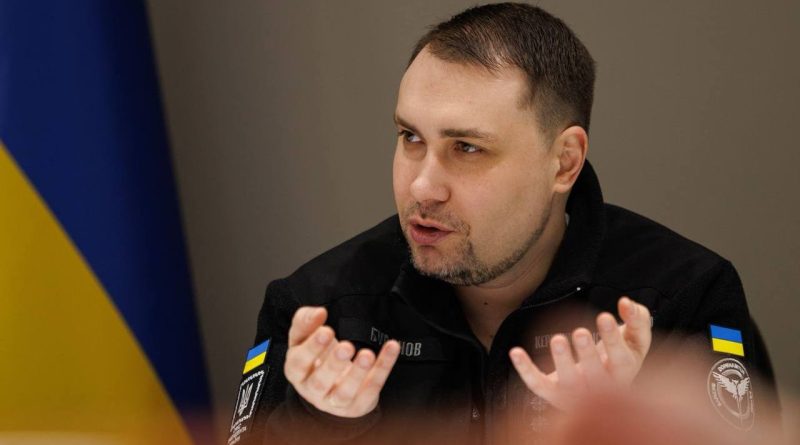
The head of Ukraine’s Main Intelligence Directorate (HUR), Kyrylo Budanov, has weighed in on the increasingly discussed topic of whether the United States and Russia could normalize their economic relations without first achieving a resolution to the ongoing conflict in Ukraine. Speaking in the context of peace settlement discussions, Budanov offered a skeptical assessment of any potential rapprochement between Washington and Moscow while hostilities continue to devastate Ukrainian territory and claim lives on both sides of the front lines.
Budanov’s comments come at a particularly sensitive moment in international diplomacy, as various world leaders and diplomatic channels have been exploring potential pathways to end the conflict that began with Russia’s full-scale invasion of Ukraine in February 2022. The question of economic ties between the world’s two largest nuclear powers has become increasingly relevant as some political voices in Washington have suggested that restoring business relationships with Russia could serve American economic interests, particularly in energy and commodities sectors.
The relationship between the United States and Russia has undergone dramatic transformations since the end of the Cold War. During the 1990s and early 2000s, Western businesses eagerly expanded into Russian markets, with American companies establishing significant presences in sectors ranging from energy to consumer goods. However, this trajectory shifted dramatically following Russia’s annexation of Crimea in 2014, which triggered the first wave of Western sanctions. The 2022 invasion prompted an unprecedented escalation of economic restrictions, with the United States, European Union, and their allies implementing sweeping sanctions targeting Russian banks, oligarchs, energy exports, and technology transfers.
Economic analysts have noted that the current sanctions regime represents one of the most comprehensive attempts to economically isolate a major world power in modern history. Russian assets worth hundreds of billions of dollars have been frozen in Western financial institutions, while major multinational corporations have withdrawn from the Russian market entirely. The question Budanov addressed touches on whether these measures could be reversed or relaxed independent of the military situation on the ground, a prospect that Ukrainian officials view with considerable concern.
From Kyiv’s perspective, any normalization of US-Russia economic relations without a just and lasting peace settlement would represent a significant betrayal of Ukrainian interests and sacrifice. Ukrainian officials have consistently argued that sanctions must remain in place not merely as punishment for Russian aggression, but as leverage to compel Moscow to negotiate seriously and withdraw its forces from occupied territories. The concern among Ukrainian leadership is that economic pragmatism might eventually override solidarity, particularly if political winds shift in Washington or if European energy concerns intensify during winter months.
Historical precedent offers mixed lessons on this question. During the Cold War, economic engagement with the Soviet Union was sometimes pursued as a tool of diplomacy, with the theory that trade relationships could moderate Soviet behavior and create mutual dependencies that would reduce the risk of conflict. However, critics of this approach point out that economic ties did not prevent aggression in cases ranging from the Soviet invasion of Afghanistan to more recent Russian military interventions in Georgia and Syria. The debate over whether commerce promotes peace or simply enriches authoritarian regimes remains unresolved among foreign policy experts.
Budanov’s statement also reflects broader Ukrainian anxieties about the durability of Western support as the conflict extends into its third year. With attention spans shortening and domestic political pressures mounting in Western capitals, Ukrainian officials have worked to remind their allies that the stakes extend beyond Ukraine’s borders. They argue that allowing Russia to achieve its objectives through military force, or enabling economic normalization while occupation continues, would set a dangerous precedent for international order and potentially embolden other revisionist powers considering territorial expansion.
The intelligence chief’s remarks underscore the complex interplay between military realities, economic interests, and diplomatic negotiations that will ultimately determine how this conflict concludes. As peace talks remain elusive and fighting continues along a largely static front line, the question of when and under what conditions normal international relations might resume with Russia remains one of the most consequential uncertainties facing global policymakers. For Ukraine, the answer to this question could determine not only the outcome of the current war but the country’s security and sovereignty for generations to come.