
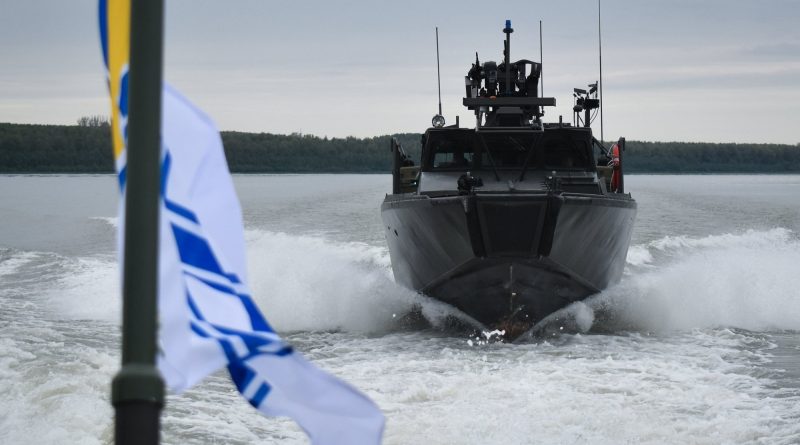
Ukrainian Naval Drone Explodes in Romanian Port After Russian Electronic Warfare Disrupts Control Systems
The Ukrainian Naval Forces have officially confirmed that a Ukrainian military vessel exploded in a Romanian port, marking an unprecedented incident that has raised concerns about the expanding reach of Russian electronic warfare capabilities and their potential impact on NATO territory. According to official statements from the Ukrainian military, the unmanned surface vessel lost control after being subjected to Russian electronic warfare (EW) systems, ultimately drifting into Romanian waters where it detonated. This incident represents one of the first publicly acknowledged cases where Russian jamming technology has directly affected military equipment ending up on NATO member state territory.
The explosion occurred in a Romanian port facility along the Black Sea coast, an area that has become increasingly strategically significant since Russia’s full-scale invasion of Ukraine in February 2022. Ukrainian naval drones, which have become a cornerstone of Kyiv’s asymmetric warfare strategy against the Russian Black Sea Fleet, operate in contested waters where both sides deploy sophisticated electronic countermeasures. The Ukrainian Navy acknowledged that their vessel was conducting operations when Russian electronic warfare systems interfered with its navigation and control mechanisms, causing it to veer off course and eventually enter Romanian territorial waters.
Electronic warfare has emerged as a critical battleground in the ongoing conflict, with both Russia and Ukraine investing heavily in systems designed to disrupt enemy communications, navigation, and weapons guidance. Russian EW capabilities, including systems like the Krasukha and Pole-21, are designed to jam GPS signals, disrupt radio communications, and interfere with drone control links. These systems create invisible barriers that can render sophisticated unmanned vehicles essentially blind, forcing them to operate on degraded autopilot modes or lose control entirely. Military analysts have noted that Russia has deployed some of its most advanced electronic warfare assets to the Black Sea region specifically to counter Ukraine’s highly effective naval drone campaign.
Ukraine’s maritime drone program has achieved remarkable success since its inception, fundamentally altering the balance of power in the Black Sea despite Ukraine lacking a traditional naval fleet. These unmanned surface vessels have been credited with damaging or destroying numerous Russian warships, including the guided-missile cruiser Moskva, and have forced the Russian Black Sea Fleet to relocate significant assets away from Crimean ports to more distant bases in Novorossiysk. The drones, often packed with explosives and guided via satellite links, have proven difficult for Russian forces to defend against, prompting Moscow to prioritize electronic warfare solutions alongside traditional kinetic defenses.
The incident raises important questions about the security implications of modern electronic warfare extending beyond immediate combat zones. Romania, as a NATO member state, hosts significant alliance military infrastructure, including the Mihail Kogălniceanu Air Base, which serves as a key logistics hub for regional operations. The presence of a malfunctioning Ukrainian weapon system in Romanian waters, regardless of the circumstances, creates diplomatic complexities and underscores the challenges of conducting military operations in close proximity to allied territory. Romanian authorities have reportedly been coordinating with Ukrainian officials regarding the incident, though detailed information about any damage or casualties has not been released.
Military experts have long warned about the escalating electronic warfare competition in the Black Sea theater. The region has become a testing ground for new technologies on both sides, with lessons learned potentially influencing future conflicts worldwide. The ability of Russian EW systems to disable a Ukrainian drone to the point where it drifted into foreign territory demonstrates both the effectiveness of these countermeasures and their unpredictable consequences. Some analysts suggest this incident may prompt Ukraine to develop more resilient control systems with improved anti-jamming capabilities, while others point to the inherent vulnerabilities of any remotely operated system in a heavily contested electromagnetic environment.
As the conflict approaches its fourth year, incidents like this explosion in Romania serve as stark reminders of how modern warfare’s effects can extend far beyond traditional front lines. The Black Sea, once considered a relatively stable maritime region, has transformed into one of the most contested bodies of water in the world, where cutting-edge technologies clash daily in ways that occasionally spill over into neighboring countries. Both Ukrainian and NATO officials will likely study this incident carefully as they assess the risks of continued drone operations and develop strategies to mitigate the impact of Russian electronic warfare on future missions.