‘Russia Still Produces More’: EU Commissioner Criticizes Member States, Urges Them to Follow Ukraine’s Example
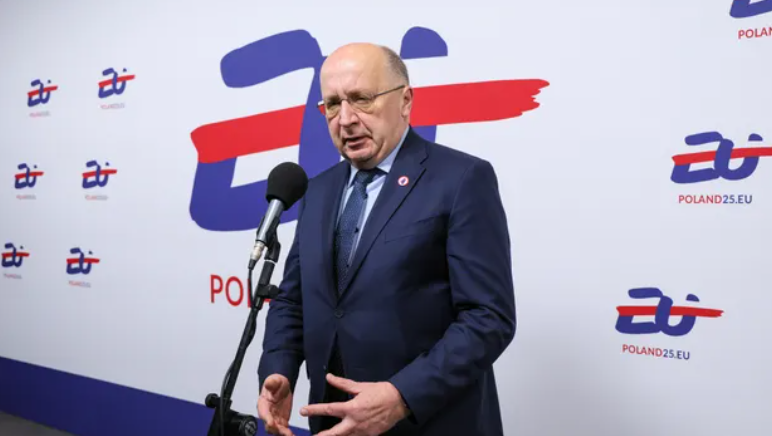
European Commissioner for Defense Andrius Kubilius has delivered a stark warning to European Union member states, pointing out that despite significant increases in defense funding, the bloc’s military industrial capacity continues to lag behind both Russia and Ukraine. The Lithuanian politician and former prime minister emphasized that European defense industries are failing to scale up production at the pace required by current geopolitical realities, leaving the continent vulnerable and increasingly dependent on external support.
Speaking about the state of European defense manufacturing, Kubilius highlighted a troubling paradox: while EU countries have collectively pledged billions of euros toward bolstering their military capabilities since Russia’s full-scale invasion of Ukraine in February 2022, the actual output of weapons, ammunition, and military equipment has not kept pace with these financial commitments. The commissioner noted that bureaucratic obstacles, fragmented supply chains, and insufficient coordination between member states continue to hamper the EU’s ability to rapidly expand its defense industrial base.
The comparison with Ukraine is particularly striking and, for European leaders, potentially embarrassing. Despite being engaged in an active war, facing constant Russian attacks on its infrastructure, and dealing with severe resource constraints, Ukraine has managed to dramatically increase its domestic weapons production. The country has scaled up manufacturing of drones, artillery shells, and various military equipment, often through innovative approaches that bypass traditional defense procurement bureaucracies. Ukrainian defense companies have demonstrated remarkable agility, converting civilian manufacturing facilities for military purposes and developing new weapon systems at unprecedented speed.
Russia, meanwhile, has fully transitioned its economy to a war footing. According to various estimates, Russian defense spending now accounts for approximately 40% of the federal budget, with factories operating around the clock to produce tanks, missiles, and ammunition. Western sanctions, while impactful, have not prevented Moscow from maintaining and even expanding its military production capabilities, partly through parallel imports and assistance from countries like North Korea and Iran. Intelligence assessments suggest Russia is currently producing more artillery ammunition per month than all NATO countries combined, a gap that European leaders have struggled to close.
The European Union’s defense spending has historically been characterized by fragmentation and duplication. With 27 member states maintaining largely separate defense industries and procurement systems, the bloc has struggled to achieve the economies of scale that would allow it to compete with major military powers. Various EU initiatives, including the European Defence Fund and the European Defence Industrial Strategy, have attempted to address these issues, but progress has been slower than many officials had hoped. The commissioner’s comments suggest growing frustration within Brussels about the pace of reform.
Historical context adds weight to Kubilius’s concerns. During the Cold War, Western European nations maintained robust defense industries capable of producing sophisticated weapons systems. However, the peace dividend following the Soviet Union’s collapse led to decades of underinvestment and industrial consolidation. Many European countries reduced their military manufacturing capabilities, assuming that major conventional warfare on the continent was a thing of the past. The war in Ukraine has brutally exposed the consequences of these assumptions, revealing critical shortages in everything from basic ammunition to advanced air defense systems.
Defense analysts have noted that scaling up military production is not simply a matter of allocating more money. It requires trained workers, specialized machinery, secure supply chains for raw materials, and years of institutional knowledge that cannot be quickly recreated once lost. Some experts estimate that even with unlimited funding, it could take European defense industries three to five years to significantly increase their output. Kubilius’s call for EU members to learn from Ukraine’s example suggests that Brussels is looking for unconventional solutions to accelerate this timeline, potentially including regulatory reforms, public-private partnerships, and greater integration of civilian manufacturing capacity into defense production networks.
The commissioner’s remarks come at a critical juncture for European security. With ongoing uncertainty about the United States’ long-term commitment to NATO and European defense, EU leaders face mounting pressure to demonstrate that the bloc can provide for its own security needs. Whether Kubilius’s call for member states to emulate Ukraine’s defense industrial mobilization will translate into concrete policy changes remains to be seen, but his public criticism signals a growing willingness within the European Commission to challenge member states on their defense industrial shortcomings.