
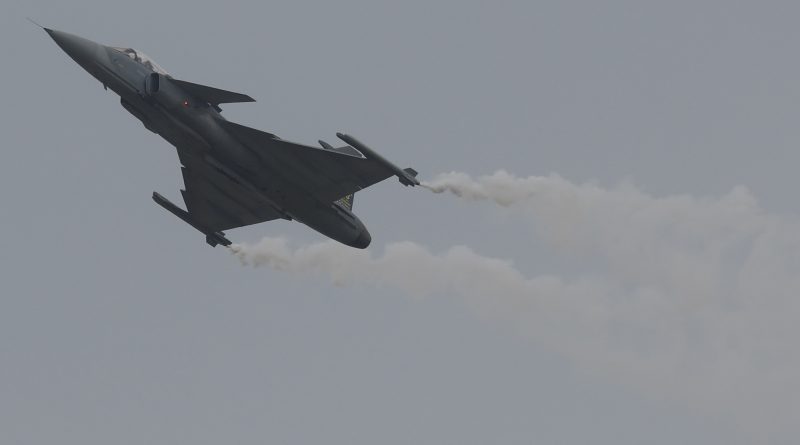
Sweden Announces Historic Transfer of Gripen Fighter Jets to Ukraine
In a landmark decision that marks a significant shift in Sweden’s military support for Ukraine, Prime Minister Ulf Kristersson has announced that his country will provide Kyiv with advanced fighter jets. The initial delivery will consist of 16 JAS 39 Gripen C/D aircraft, representing one of the most substantial military aid packages Sweden has offered since Russia’s full-scale invasion began in February 2022. This decision positions Sweden alongside other NATO allies who have committed to strengthening Ukraine’s air defense capabilities with Western-made combat aircraft.
The announcement comes at a crucial moment in the ongoing conflict, as Ukrainian forces continue to defend against Russian aerial attacks while preparing for potential offensive operations. The Gripen jets are expected to significantly enhance Ukraine’s ability to contest Russian air superiority and provide close air support for ground operations. Swedish officials emphasized that comprehensive training programs for Ukrainian pilots and ground crews will accompany the aircraft delivery, ensuring effective operational deployment of these sophisticated fighting machines.
The JAS 39 Gripen represents the pinnacle of Swedish aerospace engineering, developed by Saab AB during the late Cold War era as a cost-effective, multi-role combat aircraft. First entering service with the Swedish Air Force in 1996, the Gripen was designed with a unique philosophy emphasizing rapid deployment, minimal maintenance requirements, and the ability to operate from dispersed locations including ordinary roads and highways. These characteristics make it particularly well-suited for Ukraine’s operational environment, where infrastructure may be damaged and traditional airbases could be vulnerable to Russian missile strikes. The C/D variants being transferred feature upgraded avionics, improved radar systems, and enhanced weapons compatibility compared to earlier models.
Sweden’s decision to provide combat aircraft represents a dramatic evolution in the country’s foreign policy stance. For nearly two centuries, Sweden maintained a position of strict military neutrality, staying out of both World Wars and the Cold War military alliances. However, Russia’s invasion of Ukraine fundamentally altered Swedish security calculations, prompting the nation to abandon its long-standing neutrality and apply for NATO membership in May 2022. Sweden officially became the 32nd member of the North Atlantic Treaty Organization in March 2024, completing a historic transformation in its security posture. The Gripen transfer can be seen as a tangible expression of Sweden’s new commitment to collective defense and European security.
Military analysts have noted that the Gripen offers several tactical advantages that could prove valuable on the Ukrainian battlefield. Unlike the American F-16, which requires substantial runway infrastructure, the Gripen can take off and land on surfaces as short as 800 meters, including unpaved strips and public roads. Its relatively simple maintenance requirements mean that a small team of conscript soldiers can perform turnaround operations in under ten minutes, a critical capability in a high-threat environment. Furthermore, the aircraft’s advanced electronic warfare suite and beyond-visual-range engagement capabilities would allow Ukrainian pilots to challenge Russian air defenses more effectively than with their current Soviet-era equipment.
The international community has responded positively to Sweden’s announcement, with NATO allies expressing support for the decision. This transfer follows commitments from Denmark, the Netherlands, Belgium, and Norway to provide F-16 Fighting Falcons to Ukraine, creating a diversified fleet of Western combat aircraft that will gradually replace Ukraine’s aging Soviet-designed fighters. Experts suggest that operating multiple Western aircraft types simultaneously will present logistical challenges, but the benefits of enhanced capabilities and continued Western support outweigh these concerns. The combination of F-16s and Gripens could provide Ukrainian commanders with complementary capabilities suited to different tactical scenarios.
Looking ahead, the timeline for full operational capability remains subject to various factors, including pilot training completion, infrastructure preparation, and the establishment of maintenance and supply chains. Swedish defense officials have indicated that the transfer process will be conducted in phases, with initial deliveries potentially beginning within the coming months. The training program for Ukrainian personnel is expected to be intensive, covering not only aircraft operation but also Western tactical doctrines and integration with NATO-standard command and control systems. This knowledge transfer represents a long-term investment in Ukraine’s defense capabilities that extends well beyond the aircraft themselves.
The Gripen transfer also carries significant symbolic weight, demonstrating the continued unity of Western nations in supporting Ukraine’s defense against Russian aggression. As the conflict enters its fourth year, such commitments signal to both Kyiv and Moscow that international support for Ukraine remains robust despite the prolonged nature of the war. For Sweden, this decision completes the nation’s transformation from neutral observer to active participant in European collective security, marking a new chapter in both Swedish foreign policy and the broader Western response to Russian expansionism.