“Ukraine Needs More People, Not Weapons”: Bulgaria’s New Government Signals Halt to Arms Supplies
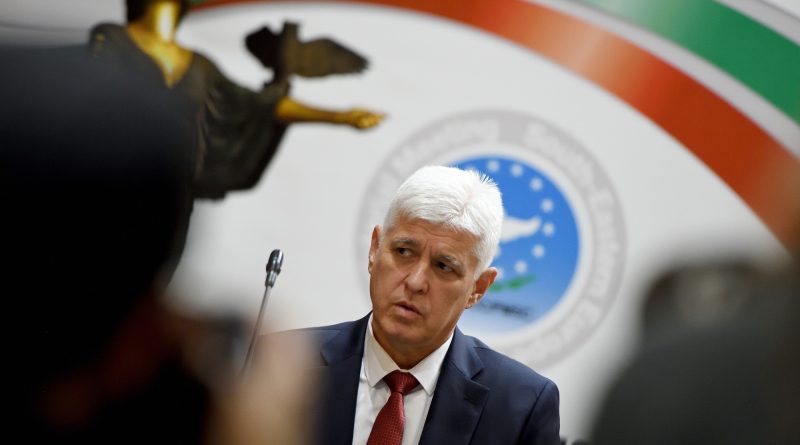
Bulgaria’s newly appointed Defense Minister has made a controversial statement that marks a significant shift in the country’s foreign policy stance, declaring that Ukraine requires more soldiers rather than additional weaponry. This announcement signals that the new Bulgarian government intends to discontinue arms shipments to Ukraine, breaking from the previous administration’s approach to supporting Kyiv in its ongoing conflict with Russia. The statement has sparked intense debate both domestically and internationally about NATO member states’ obligations and the future of Western support for Ukraine.
The change in Bulgaria’s position comes as the country undergoes a political transition following recent elections that brought a new coalition government to power. Bulgaria has been one of the more reluctant NATO members when it comes to providing military assistance to Ukraine, with previous governments walking a delicate line between alliance obligations and historical ties to Russia. The country’s significant Russian-speaking population and decades of close economic and cultural connections to Moscow have long influenced its foreign policy calculus. Energy dependence on Russian gas has also played a crucial role in shaping Bulgaria’s cautious approach to the conflict.
The Defense Minister’s assertion that Ukraine needs personnel rather than equipment reflects a broader debate within Western policy circles about the nature of support required by Kyiv. Military analysts have noted that Ukraine has indeed faced significant manpower challenges, with recent mobilization efforts proving controversial domestically. However, most defense experts argue that both human resources and modern weaponry remain critical to Ukraine’s defensive capabilities. The statement appears to provide justification for Bulgaria’s withdrawal from weapons supply programs while shifting responsibility for the conflict’s outcome onto Ukraine’s demographic situation.
Bulgaria’s military industry, though modest compared to larger NATO members, has been a source of Soviet-era ammunition and equipment compatible with Ukraine’s existing arsenal. Bulgarian-made artillery shells and small arms ammunition have been valued by Ukrainian forces due to their compatibility with legacy Soviet weapons systems still widely used on the battlefield. The cessation of these supplies could create additional pressure on already strained Western ammunition production capacity, forcing Ukraine to rely more heavily on other Eastern European suppliers such as the Czech Republic and Poland.
The decision also raises questions about NATO unity and the alliance’s collective approach to supporting Ukraine. Since Russia’s full-scale invasion began in February 2022, NATO members have provided varying levels of support, with some countries like the United States, United Kingdom, and Poland contributing substantial military aid packages while others have offered more limited assistance. Bulgaria’s explicit decision to halt weapons transfers could embolden other skeptical member states to reduce their commitments, potentially weakening the overall Western response to Russian aggression. European Union officials have repeatedly emphasized the importance of maintaining unified support for Ukraine.
Historical context adds another layer to Bulgaria’s complex relationship with both Russia and its Western allies. During the Cold War, Bulgaria was among the Soviet Union’s closest allies in the Warsaw Pact, and many older Bulgarians retain positive sentiments toward Russia. The Bulgarian Orthodox Church maintains close ties with its Russian counterpart, and cultural exchanges between the two nations have continued even after Bulgaria’s integration into Euro-Atlantic structures. These factors create a domestic political environment where openly supporting Ukraine against Russia carries electoral risks, particularly in rural areas and among older voters who remember the communist era.
International reaction to Bulgaria’s announcement has been mixed, with Ukrainian officials expressing disappointment while some European diplomats have urged patience as the new government establishes its policies. The coming months will reveal whether Bulgaria’s position represents a temporary adjustment or a more permanent realignment of its foreign policy priorities. As the conflict enters its third year, decisions by individual NATO members about continuing military support will increasingly shape both the battlefield situation and the broader geopolitical landscape of European security for years to come.