Trump Announces Historic Nuclear Agreement with Iran Set for June 14, Claims Strait of Hormuz Will Reopen
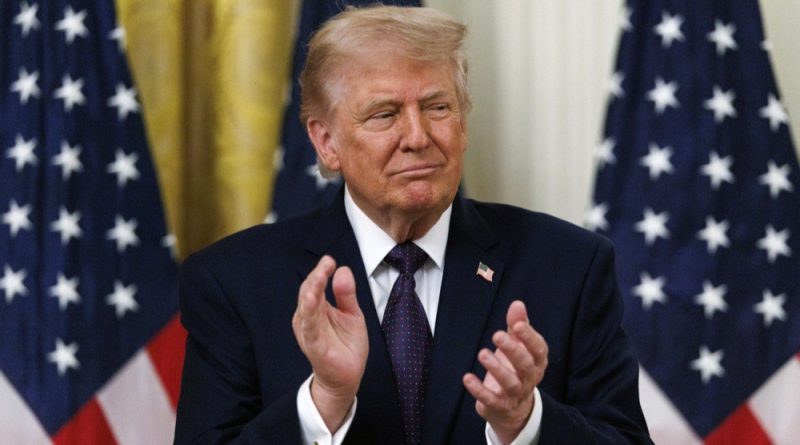
In a significant development in Middle Eastern diplomacy, President Donald Trump announced that the United States and Iran are poised to sign a landmark nuclear agreement on June 14. The American leader declared that Tehran has abandoned its intentions to develop nuclear weapons, marking what could be a dramatic shift in the decades-long standoff between the two nations. According to Trump, the signing of this agreement will lead to the reopening of the Strait of Hormuz, one of the world’s most critical maritime chokepoints for global oil transportation.
The announcement comes after months of behind-the-scenes negotiations and escalating tensions in the Persian Gulf region. The Strait of Hormuz, a narrow waterway connecting the Persian Gulf to the Gulf of Oman and the Arabian Sea, handles approximately 20-25% of the world’s daily oil shipments. Any disruption to traffic through this strategic passage has historically sent shockwaves through global energy markets, affecting fuel prices worldwide. Iran has periodically threatened to close the strait in response to international sanctions and geopolitical pressure, making Trump’s claim about its reopening particularly significant for global economic stability.
The history of U.S.-Iran nuclear negotiations stretches back over two decades, marked by periods of progress and dramatic setbacks. The most notable previous agreement was the Joint Comprehensive Plan of Action (JCPOA), commonly known as the Iran nuclear deal, signed in 2015 under President Barack Obama along with other world powers including the United Kingdom, France, Germany, Russia, and China. That agreement placed significant restrictions on Iran’s nuclear program in exchange for sanctions relief. However, Trump withdrew the United States from the JCPOA during his first term in 2018, calling it “the worst deal ever negotiated” and reimposing crippling economic sanctions on Tehran.
Iran’s nuclear program has been a source of international concern since the early 2000s when evidence emerged of undisclosed uranium enrichment activities. The International Atomic Energy Agency (IAEA) has conducted numerous inspections of Iranian nuclear facilities, including the Natanz enrichment plant and the Fordow underground facility. Following the U.S. withdrawal from the JCPOA, Iran gradually resumed enriching uranium to higher purity levels, reaching 60% enrichment — just a technical step away from weapons-grade material. Tehran has consistently maintained that its nuclear program is purely for peaceful purposes, including energy production and medical research, though Western intelligence agencies and regional adversaries, particularly Israel, have expressed serious doubts about these claims.
The potential new agreement raises numerous questions about what concessions each side has made. Previous negotiations have stumbled over issues including the scope of uranium enrichment permitted, the timeline for sanctions relief, and verification mechanisms to ensure compliance. Regional allies of the United States, particularly Israel and Saudi Arabia, have historically opposed any agreement that allows Iran to maintain significant nuclear infrastructure. Israeli officials have repeatedly stated that they consider a nuclear-armed Iran an existential threat and have not ruled out military action to prevent Tehran from obtaining such weapons. The response from these key allies to Trump’s announcement will likely shape the political reception of any final agreement.
Economic factors have played a crucial role in bringing Iran to the negotiating table. International sanctions have devastated the Iranian economy, causing the national currency to plummet, inflation to soar, and ordinary citizens to face severe hardships. Oil exports, once the lifeblood of the Iranian economy, dropped precipitously under maximum pressure sanctions. The promise of renewed access to global markets and the ability to export oil freely represents a powerful incentive for Iranian leadership. Meanwhile, the United States and its allies have grappled with volatile energy prices and supply concerns, giving both sides practical reasons to seek a diplomatic resolution to their long-standing conflict.
As the world awaits the details of this announced agreement, analysts are closely watching for specifics on verification procedures, the timeline for implementation, and the response from Congress, which has historically been skeptical of nuclear deals with Iran. The June 14 date gives diplomats limited time to finalize what would be an extraordinarily complex international agreement. If successful, this deal could fundamentally reshape the geopolitical landscape of the Middle East, potentially opening doors for broader diplomatic normalization between Iran and its regional neighbors while addressing one of the most persistent nuclear proliferation concerns of the 21st century.