“We Are Here for the Long Haul”: Canada’s Chief of Defence Staff on Supporting Ukraine and Training Ukrainian Forces
The ongoing conflict in Ukraine has become far more than a regional crisis—it has fundamentally transformed how Western nations approach defense strategy, military training, and international cooperation. As the war enters its third year, allied nations continue to demonstrate their commitment to supporting Kyiv, with Canada emerging as one of the most steadfast partners in NATO’s collective effort. The Canadian Armed Forces have not only provided military equipment and humanitarian aid but have also established comprehensive training programs that are reshaping how Ukrainian soldiers prepare for modern warfare.
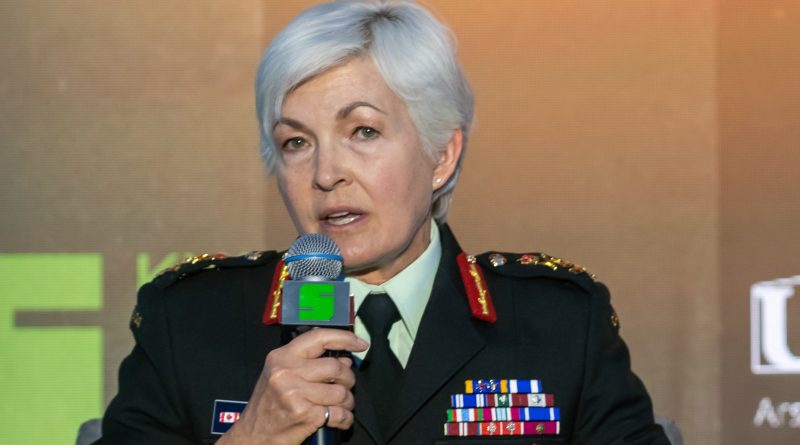
In recent statements, General Wayne Eyre, Canada’s Chief of the Defence Staff, emphasized the depth and longevity of Canadian commitment to Ukraine’s defense. “We are here for the long haul,” General Eyre declared, signaling that Canada’s support extends far beyond short-term assistance. This commitment reflects a broader understanding within NATO that Ukraine’s fight against Russian aggression represents a defining moment for European security and the international rules-based order that has governed global relations since World War II.
Canada’s military involvement with Ukraine predates the full-scale invasion of February 2022. Operation UNIFIER, launched in 2015 following Russia’s annexation of Crimea, has trained more than 40,000 Ukrainian military personnel in various combat disciplines. The program initially focused on basic infantry skills but has evolved dramatically to address the complex demands of modern hybrid warfare. Canadian instructors now provide advanced training in areas including counter-sniper operations, explosive ordnance disposal, medical evacuation procedures, and leadership development for junior officers who form the backbone of Ukraine’s fighting force.
The training programs have adapted significantly based on lessons learned directly from the battlefield. Ukrainian soldiers returning from frontline combat provide invaluable feedback about what techniques prove effective against Russian forces and what areas require additional focus. This real-time feedback loop has created a dynamic training environment where curriculum changes rapidly to address emerging threats. Canadian military planners have noted that the experience gained through this cooperation has enhanced their own understanding of contemporary warfare, particularly regarding drone operations, electronic warfare, and the integration of commercial technology into military applications.
Beyond training, Canada has contributed substantial military equipment to Ukraine’s defense efforts. The country has provided M777 howitzers, armored vehicles, and millions of rounds of ammunition. Perhaps more significantly, Canada has been instrumental in coordinating allied efforts to ensure that equipment donations are accompanied by proper training and logistical support. General Eyre has repeatedly stressed that providing weapons without comprehensive training creates limited battlefield impact—a philosophy that has guided Canada’s approach to military assistance throughout the conflict.
The Ukrainian experience has prompted serious reflection within Canadian defense circles about the nation’s own military preparedness. Observing the scale and intensity of conventional warfare in Ukraine has highlighted potential gaps in NATO members’ readiness for high-intensity conflict. The Canadian Armed Forces have begun reassessing everything from ammunition stockpiles to recruitment strategies, recognizing that the post-Cold War era of reduced military spending may have left Western nations underprepared for the current security environment. This introspection extends across the alliance, with multiple NATO members increasing defense budgets and accelerating modernization programs in response to the changed geopolitical landscape.
International military analysts have observed that the conflict in Ukraine represents the first large-scale conventional war in Europe since 1945, providing unprecedented insights into modern combat. The extensive use of drones, satellite imagery, and social media has created what some experts describe as the most documented conflict in history. These observations are being studied intensively by military academies and defense ministries worldwide, with lessons being incorporated into training doctrine across NATO. Canadian forces participating in training missions have gained firsthand exposure to tactics and technologies that may define warfare for decades to come.
Looking ahead, Canadian officials have indicated that support for Ukraine will continue regardless of how long the conflict persists. The commitment extends beyond military assistance to include support for Ukraine’s eventual reconstruction and its aspirations for closer integration with Euro-Atlantic institutions. As General Eyre’s statement makes clear, Canada views its role not merely as providing temporary assistance during a crisis but as standing alongside Ukraine as a long-term strategic partner. This perspective reflects a fundamental shift in how Western nations understand their security obligations in an era of renewed great power competition, with the defense of democratic values and territorial sovereignty taking center stage in national defense strategies.