Trump Changing the Rules: What Will Happen to NATO? Former US Special Envoy Kurt Volker Weighs In
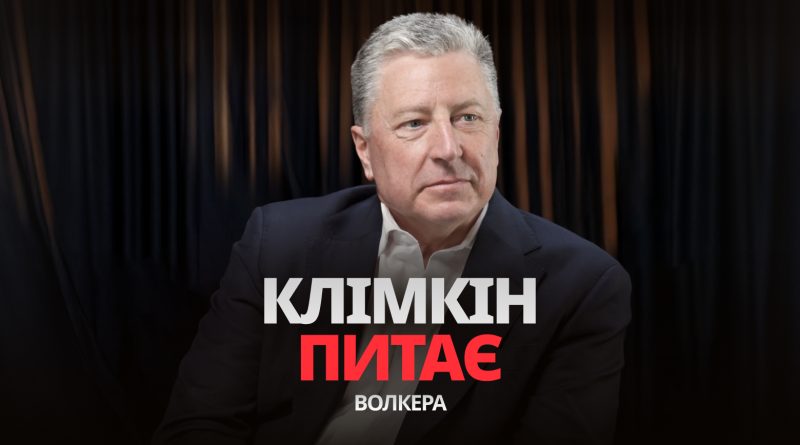
As the Trump administration continues to reshape American foreign policy, questions about the future of NATO and the broader transatlantic alliance have taken center stage in international security discussions. Former Ukrainian Foreign Minister Pavlo Klimkin recently engaged in a detailed conversation with Kurt Volker, the former U.S. Special Representative for Ukraine Negotiations, exploring the potential implications of shifting American priorities on European security and the possibility of new conflicts on the continent.
The discussion comes at a particularly sensitive time for the Western alliance. Since returning to office, President Trump has consistently questioned the value of traditional alliances and demanded that European nations shoulder a greater share of their defense burdens. This rhetoric has sent shockwaves through European capitals, where leaders have long relied on American security guarantees as the cornerstone of their defense strategies. The uncertainty has prompted urgent conversations about whether Europe can defend itself without robust U.S. commitment.
Kurt Volker, who served as U.S. Ambassador to NATO from 2008 to 2009 and later as Special Representative for Ukraine Negotiations under the first Trump administration, brings unique insight to these discussions. During his conversation with Klimkin, Volker addressed the fundamental question on many European minds: could a new military aggression occur in Europe given the changing dynamics of the transatlantic relationship? His analysis suggests that the risks are real but not insurmountable, provided European nations take concrete steps to enhance their own defense capabilities.
The historical context of NATO cannot be overlooked in this discussion. Founded in 1949 as a collective defense organization against Soviet expansion, NATO has served as the primary security architecture for Western democracies for over seven decades. Article 5 of the NATO treaty, which states that an attack on one member is an attack on all, has been invoked only once in the alliance’s history – following the September 11, 2001 terrorist attacks on the United States. This mutual defense commitment has been the bedrock of European security, deterring potential aggressors and providing a framework for military cooperation.
The ongoing war in Ukraine has dramatically underscored the importance of these security arrangements. Russia’s full-scale invasion in February 2022 marked the largest military conflict in Europe since World War II, displacing millions and fundamentally altering the continent’s security landscape. For Klimkin, who served as Ukraine’s Foreign Minister from 2014 to 2019, these issues are deeply personal. He witnessed firsthand the initial Russian aggression in Crimea and eastern Ukraine, and has been a vocal advocate for stronger Western support for his country’s defense.
Volker’s perspective on the changing world order reflects a nuanced understanding of both American domestic politics and international security dynamics. While acknowledging the Trump administration’s transactional approach to alliances, he emphasized that American interests ultimately align with European stability. A destabilized Europe would create economic disruption and security challenges that would inevitably affect the United States. However, he also stressed that the era of European dependence on American security guarantees may be coming to an end, requiring a fundamental rethinking of how the continent approaches its own defense.
European nations have already begun responding to these new realities. Germany, historically reluctant to increase military spending, announced a massive 100 billion euro defense fund following the Ukraine invasion. Poland has committed to spending 4% of its GDP on defense, far exceeding NATO’s 2% target. France has called for greater European strategic autonomy, while the United Kingdom continues to maintain its position as one of NATO’s most capable military powers. These developments suggest that Europe is taking the message about self-reliance seriously, even as uncertainty about American commitment persists.
The conversation between Klimkin and Volker ultimately points to a period of significant transition in global security arrangements. While the rules of the international order may be changing, the fundamental interests that created the Western alliance remain relevant. The challenge for both American and European leaders will be to adapt these relationships to new political realities while maintaining the deterrent effect that has kept major conflict at bay in Europe for decades. Whether they succeed may determine not only the future of NATO but the broader question of whether the post-World War II international order can survive in recognizable form.