Latvian Armed Forces Commander: ‘Ukrainians Stopped NATO Battalions. Nobody Asked What Came Next’
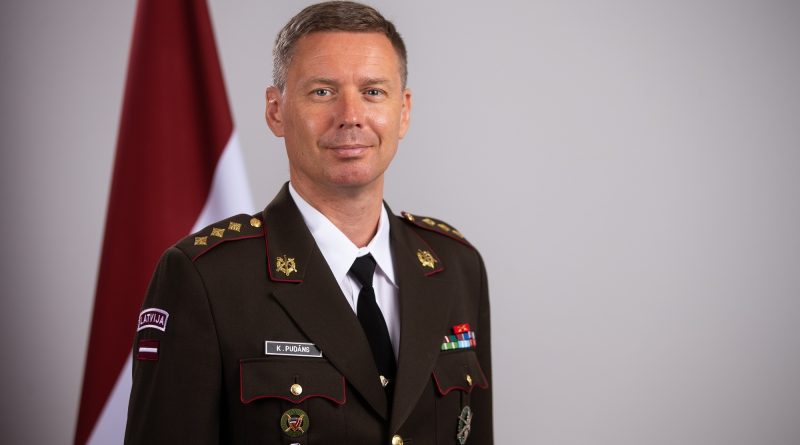
General Kaspars Pudans, the Commander of the Latvian Armed Forces, has delivered a stark assessment of NATO’s military preparedness and the crucial lessons being drawn from Ukraine’s ongoing defense against Russian aggression. In a candid interview, the general outlined how Latvia is fundamentally restructuring its defense strategy based on the harsh realities exposed by the war in Ukraine, while acknowledging uncomfortable truths about the alliance’s previous assumptions and limitations.
The Baltic nation, which shares a 214-kilometer border with Russia and has a population of just under two million people, finds itself on the frontline of European security concerns. General Pudans revealed that during NATO exercises conducted before Russia’s full-scale invasion of Ukraine in February 2022, Ukrainian forces participating in war games managed to halt NATO battalion tactical groups in simulated combat scenarios. The troubling revelation, according to Pudans, is that military planners failed to adequately explore what would happen after those initial defensive successes — a critical oversight that real-world combat in Ukraine has since brutally exposed.
Latvia’s defense transformation reflects a broader awakening across NATO’s eastern flank. The country has committed to spending over 3% of its GDP on defense by 2027, significantly exceeding NATO’s 2% guideline. This investment is being channeled into comprehensive territorial defense preparations, including the construction of fortifications along the Russian border, increased ammunition stockpiles, and the expansion of reserve forces. The Latvian military is studying Ukrainian defensive tactics extensively, particularly the innovative use of drones, electronic warfare capabilities, and the integration of civilian infrastructure into defense planning.
The historical context of Latvia’s security concerns runs deep. Having regained independence from the Soviet Union in 1991 after five decades of occupation, Latvians carry institutional memory of Russian aggression. The country joined NATO in 2004, seeking the collective defense guarantees that Article 5 provides. However, the events since 2014 — Russia’s annexation of Crimea and the subsequent eight years of conflict in eastern Ukraine — demonstrated that NATO’s presence in the Baltics needed substantial reinforcement. The alliance has since deployed multinational battlegroups to Estonia, Latvia, Lithuania, and Poland, with Canada leading the battalion stationed in Latvia.
General Pudans emphasized that Ukraine’s experience has fundamentally changed how military planners think about modern warfare. The conflict has demonstrated that wars of attrition remain possible in the 21st century, that ammunition consumption far exceeds peacetime projections, and that industrial base capacity is as crucial as frontline capabilities. Latvia is now working to ensure its defense industry can sustain prolonged conflict, partnering with other Baltic states and NATO allies to establish regional ammunition production facilities and maintenance hubs.
The commander’s comments also touched on the psychological dimension of national defense. Latvia has implemented comprehensive resilience programs aimed at preparing civilians for potential crisis scenarios, including information warfare and hybrid threats. Schools now include national defense education, and the government has distributed guidelines on emergency preparedness to households across the country. This approach mirrors Finland’s total defense concept, which has long integrated civilian society into the nation’s defense architecture.
Critics within NATO have sometimes questioned whether smaller alliance members can meaningfully contribute to collective defense. General Pudans’s remarks suggest Latvia is determined to prove otherwise, transforming its military from a symbolic tripwire into a genuine defensive force capable of imposing significant costs on any potential aggressor. The lessons from Ukraine — where a nation dismissed by many as incapable of resistance has fought the Russian military to a standstill — provide both inspiration and a sobering template for what such defense actually requires in terms of sacrifice, preparation, and sustained commitment.
As NATO continues to adapt to the new European security environment, Latvia’s preparations represent a microcosm of the alliance’s broader transformation. The questions General Pudans raised about what happens after initial defensive success speak to fundamental issues of strategic planning, alliance coordination, and the political will necessary to sustain military operations over extended periods. For Latvia and its Baltic neighbors, these are not abstract theoretical concerns but existential questions that shape daily policy decisions and national priorities.