Putin’s PR Missile: How the ‘Oreshnik’ Lost Its Scare Factor in Europe and What This Means for Ukraine
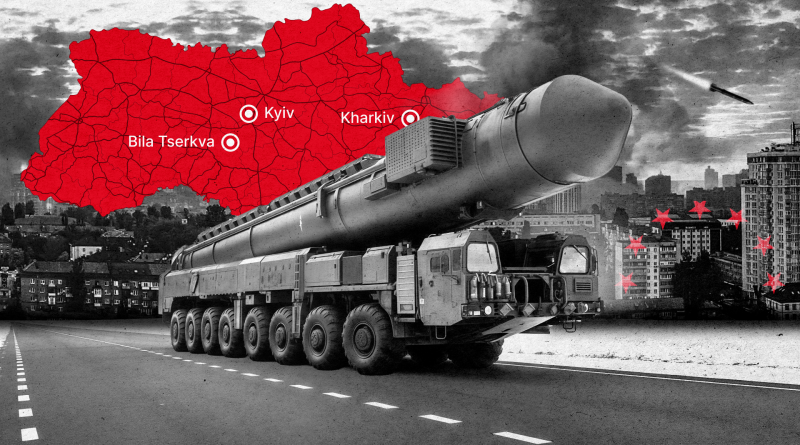
When Russian President Vladimir Putin unveiled the Oreshnik ballistic missile in November 2024, the Kremlin clearly intended it to serve as a psychological weapon of mass intimidation. The dramatic announcement, complete with footage of the missile striking the Ukrainian city of Dnipro, was designed to send shockwaves through European capitals and force Western leaders to reconsider their support for Kyiv. Instead, what followed has been a masterclass in how modern Europe has learned to respond to Russian nuclear saber-rattling with cold calculation rather than panic – marking a significant shift in the geopolitical dynamics of the ongoing conflict.
The Oreshnik, a medium-range ballistic missile capable of carrying nuclear warheads, was presented by Putin as a game-changing weapon that Western air defense systems could not intercept. Russian state media amplified the message, suggesting that European cities could be reduced to rubble within minutes. The timing was deliberate – it came shortly after Ukraine received permission from the United States and United Kingdom to use long-range missiles against targets inside Russia. Putin explicitly framed the Oreshnik demonstration as a response to this escalation, warning of “consequences” for any nation that continued supporting Ukraine’s military capabilities.
However, the European response defied Kremlin expectations entirely. Rather than expressing the “deep concern” that typically accompanies Russian threats, European leaders responded with a mixture of dismissiveness and accelerated military planning. French President Emmanuel Macron characterized the missile test as “theatrical posturing,” while German Defense Minister Boris Pistorius announced expedited timelines for strengthening NATO’s eastern flank. Poland immediately increased its defense budget allocation, and the Baltic states collectively requested additional NATO air defense deployments. The message from Brussels was unmistakable: Europe had grown immune to Russian intimidation tactics.
This shift in European attitudes did not happen overnight. Since Russia’s full-scale invasion of Ukraine in February 2022, Western nations have undergone what analysts describe as a “threat recalibration process.” Repeated Russian warnings about red lines – regarding NATO expansion, weapons deliveries to Ukraine, and sanctions – have consistently failed to materialize into the catastrophic responses Moscow promised. Each unfulfilled threat has eroded Russian credibility and desensitized European publics and policymakers to nuclear rhetoric. Military experts point out that the Oreshnik, while technically advanced, adds little to Russia’s existing strategic capabilities. Moscow already possesses intercontinental ballistic missiles and hypersonic weapons; another medium-range system changes nothing fundamental about the nuclear balance.
The practical implications for Ukraine are significant and largely positive. The failed intimidation campaign has actually strengthened the resolve of Ukraine’s Western backers. In the weeks following the Oreshnik announcement, several European nations announced new military aid packages. The United Kingdom confirmed additional Storm Shadow cruise missiles, France pledged advanced air defense systems, and Germany finally approved the delivery of Taurus missiles after months of hesitation. The very weapon Putin hoped would freeze Western support has apparently had the opposite effect, galvanizing allies who now see Russian threats as desperate rather than credible.
Historical context illuminates why Putin’s strategy has backfired so dramatically. Throughout the Cold War, nuclear deterrence operated on principles of mutual assured destruction and carefully calibrated ambiguity. Both superpowers understood that nuclear weapons were tools of last resort, never to be brandished casually. Putin’s frequent nuclear references – from putting forces on heightened alert in 2022 to the Oreshnik demonstration – have violated these unwritten rules so thoroughly that the threats have lost their power. Western intelligence agencies assess that Russia’s nuclear doctrine has not actually changed; only the rhetoric has intensified. This disconnect between words and policy has been noted and internalized by European decision-makers.
Defense analysts suggest that the Kremlin now faces a strategic dilemma of its own creation. Having deployed its most dramatic rhetorical weapons without achieving the desired effect, Russia has limited options for further escalation short of actions that would trigger direct NATO involvement. The Oreshnik has joined a long list of Russian “wonder weapons” – from the Kinzhal hypersonic missile to the Poseidon nuclear torpedo – that have failed to deliver the psychological impact Moscow anticipated. Meanwhile, Ukraine continues receiving sophisticated Western armaments, its forces continue striking targets inside Russia, and European defense industries are ramping up production to levels not seen since the Cold War.
For Ukraine specifically, this evolution represents a crucial development in its long-term security calculus. President Volodymyr Zelensky’s government has consistently argued that Russia responds only to strength, not concessions. The muted European reaction to the Oreshnik appears to validate this approach. Ukrainian officials have noted that Western partners now engage in substantive military planning rather than endless debates about potential Russian responses. The psychological barrier that once prevented certain weapons transfers has largely collapsed, replaced by practical considerations about production capacity and training requirements. As one senior Ukrainian diplomat reportedly observed, Putin’s PR missile may have inadvertently achieved what years of Ukrainian advocacy could not – convincing Europe that Russian threats are paper tigers best ignored rather than appeased.