‘We Stand Completely with Ukraine’: Tsikhanouskaya Explains Key Differences Between Belarusian and Russian Opposition Movements
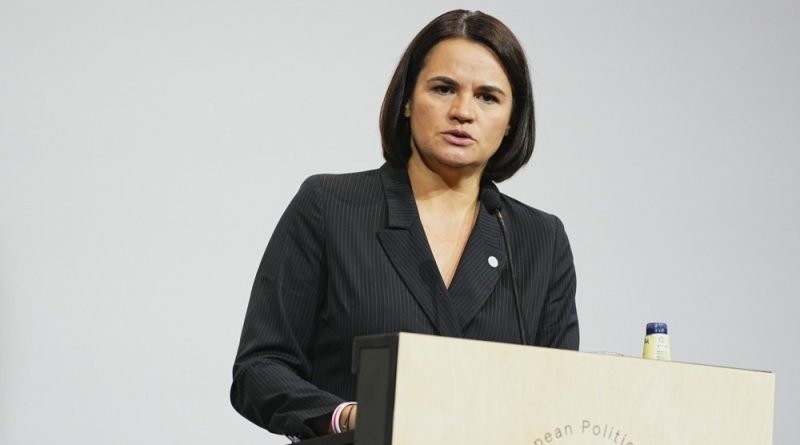
Belarusian opposition leader Sviatlana Tsikhanouskaya has drawn a clear line between her country’s democratic movement and Russian opposition forces, emphasizing her unequivocal support for Ukraine in an exclusive interview with LIGA.net. The distinction, she argues, goes beyond mere political positioning and reflects fundamentally different approaches to the ongoing war and the future of the region.
“We stand completely on Ukraine’s side,” Tsikhanouskaya stated firmly, addressing questions about how Belarusian opposition differs from its Russian counterpart. This declaration comes at a critical time when international observers and Ukrainian officials have increasingly scrutinized various opposition movements from post-Soviet states, seeking to understand their genuine positions on the war that has devastated Ukraine since Russia’s full-scale invasion in February 2022.
The Belarusian opposition leader, who has been living in exile since fleeing her homeland following the disputed 2020 presidential election, has consistently maintained a pro-Ukrainian stance since the beginning of the conflict. Her position stands in contrast to some Russian opposition figures who have faced criticism for ambiguous statements regarding Crimea, territorial integrity, and Russian imperial ambitions. While certain Russian dissidents have condemned Putin’s war, questions remain about their views on Ukraine’s sovereignty over all its internationally recognized territories, including Crimea, which Russia illegally annexed in 2014.
Tsikhanouskaya’s journey from an English teacher and stay-at-home mother to one of Europe’s most prominent democratic activists began in 2020 when she entered the presidential race after her husband, popular blogger Siarhei Tsikhanouski, was arrested and prevented from registering as a candidate. The subsequent election, widely condemned as fraudulent by Western governments and international observers, saw incumbent Alexander Lukashenko claim victory with an implausible 80 percent of the vote. Mass protests erupted across Belarus, representing the largest demonstrations in the country’s post-Soviet history, with hundreds of thousands taking to the streets demanding fair elections and democratic reforms.
The relationship between the Belarusian opposition and Russian dissidents has been complex and sometimes fraught with tension. While both groups oppose authoritarian rule in their respective countries, their approaches to Ukraine have diverged significantly. Tsikhanouskaya has repeatedly acknowledged Belarus’s role in facilitating Russia’s invasion, with Lukashenko allowing Russian forces to launch attacks from Belarusian territory. She has apologized to Ukrainians for this complicity while emphasizing that the Belarusian people did not choose this path. The Belarusian opposition has also supported the formation of volunteer battalions fighting alongside Ukrainian forces, including the Kastus Kalinouski Regiment, which has attracted Belarusians willing to take up arms against Russian aggression.
The interaction between Belarusian and Russian opposition movements continues despite these differences, though Tsikhanouskaya’s comments suggest a careful and measured approach to cooperation. Both groups share common goals of democratization and ending authoritarian rule, yet the Ukrainian question remains a significant point of divergence. Russian opposition figures have faced increasing pressure to clarify their positions on Ukrainian territorial integrity, with some activists and politicians expressing views that fall short of full support for Ukraine’s internationally recognized borders. This ambiguity has created obstacles to building unified anti-authoritarian coalitions in the region.
International support for the Belarusian democratic movement has remained strong, with Tsikhanouskaya meeting regularly with world leaders and addressing international forums. The European Union, United States, and other Western nations have imposed extensive sanctions on the Lukashenko regime while providing political and material support to opposition structures operating in exile. Lithuania, where Tsikhanouskaya is based, has become a hub for Belarusian civil society organizations, independent media outlets, and opposition coordination efforts. These exile communities continue to maintain connections with activists inside Belarus despite severe repression, with thousands of political prisoners currently held in Belarusian detention facilities.
Looking ahead, Tsikhanouskaya and the Belarusian opposition face significant challenges in maintaining relevance and preparing for potential political transitions. The war in Ukraine has fundamentally altered the geopolitical landscape, making the future of Belarus increasingly tied to the conflict’s outcome. A Ukrainian victory could create conditions for democratic change in Belarus, while continued Russian dominance would likely cement Lukashenko’s authoritarian rule. By firmly aligning with Ukraine, Tsikhanouskaya has staked out a clear moral and strategic position that distinguishes her movement from more ambivalent opposition forces elsewhere in the region.