‘This Is Putin’s Problem, Not Ours’: Former Trump Diplomat Addresses Ukraine’s Battlefield Position
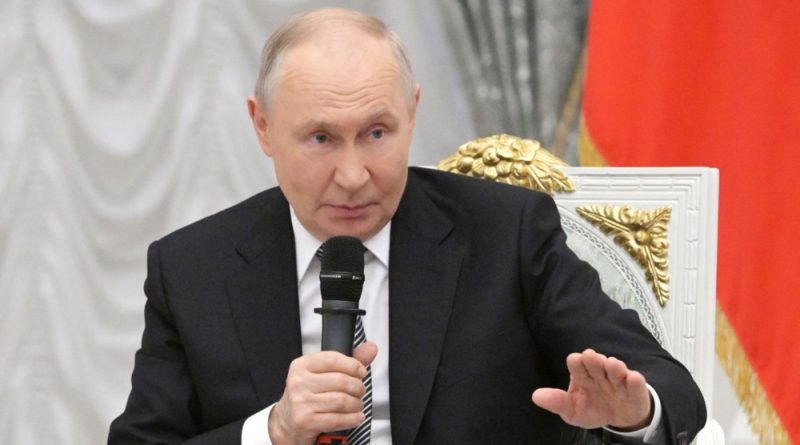
A senior diplomat from Donald Trump’s first administration has offered a pointed assessment of the ongoing conflict in Ukraine, suggesting that the burden of the war’s consequences falls squarely on Russian President Vladimir Putin rather than on Western nations supporting Kyiv. The comments, made in an interview with LIGA.net, come at a critical juncture in the conflict as both sides prepare for what many analysts believe could be a decisive phase in the fighting.
The diplomat’s remarks reflect a perspective that has gained traction in certain American foreign policy circles – that regardless of the day-to-day fluctuations on the battlefield, Russia faces insurmountable long-term challenges that make its position increasingly untenable. This view emphasizes the economic toll of Western sanctions, Russia’s diplomatic isolation, and the significant military losses Moscow has sustained since launching its full-scale invasion in February 2022.
The question of whether Ukraine is ‘winning’ the war has been a subject of intense debate among military analysts and policymakers since the conflict began. Ukraine’s successful defense of Kyiv in the early weeks of the invasion, followed by dramatic counteroffensives that liberated significant territory in the Kharkiv and Kherson regions in late 2022, initially suggested momentum was on Kyiv’s side. However, the much-anticipated 2023 counteroffensive failed to achieve breakthrough results, and the conflict has since settled into a grinding war of attrition along a largely static front line stretching over 1,000 kilometers.
Military experts note that measuring success in this conflict requires looking beyond simple territorial metrics. While Russia has made incremental gains in the Donbas region, particularly around cities like Bakhmut and Avdiivka, these advances have come at an extraordinarily high cost in men and equipment. Western intelligence estimates suggest Russia has suffered over 300,000 casualties since the war began, with some assessments putting the figure even higher. The Russian military has lost thousands of tanks, armored vehicles, and artillery pieces – losses that have forced Moscow to pull aging Soviet-era equipment from storage facilities across the country.
The economic dimension of the conflict also supports the diplomat’s assertion that Putin faces mounting problems. Western sanctions have cut Russia off from advanced technology crucial for its military and civilian industries, forced major international companies to exit the Russian market, and frozen hundreds of billions of dollars in Russian central bank assets held abroad. While Russia’s economy has proven more resilient than some initially predicted – partly due to continued energy sales to countries like China and India – the long-term structural damage is becoming increasingly apparent. Inflation remains elevated, the ruble has weakened significantly, and Russia’s federal budget is under severe strain from military spending that now consumes an estimated one-third of all government expenditure.
From a geopolitical standpoint, the invasion has backfired spectacularly for the Kremlin. NATO, which Putin cited as a threat justifying his actions, has expanded to include Finland and Sweden – adding over 1,300 kilometers to the alliance’s border with Russia. European nations have dramatically increased their defense spending and reduced their dependence on Russian energy, changes that will outlast the current conflict. Ukraine itself, once divided on the question of Western integration, is now firmly committed to joining both the European Union and NATO, with formal membership processes underway for both organizations.
However, the situation remains precarious for Ukraine as well. The country is heavily dependent on Western military and financial support, and political dynamics in both the United States and Europe create uncertainty about the sustainability of that assistance. Ammunition shortages have at times limited Ukraine’s ability to conduct offensive operations, and manpower has become a growing concern as the war enters its fourth year. The upcoming period will likely be shaped by diplomatic negotiations, with various peace proposals being floated by international actors including the incoming Trump administration, which has signaled interest in bringing the conflict to a rapid conclusion.
The diplomat’s framing of the conflict as ‘Putin’s problem’ ultimately reflects a strategic calculation that time and resources favor the West and Ukraine, provided that support continues. While the daily reality of war brings immense suffering to the Ukrainian people and the outcome remains far from certain, the argument holds that Russia’s fundamental objectives – subjugating Ukraine and fracturing the Western alliance – have already failed. Whether this assessment proves accurate will depend on decisions made in capitals from Washington to Brussels to Kyiv in the months ahead.