Diplomatic Tensions Unfold: Zelensky and Nawrocki Hold Brief Exchange at NATO Summit Amid Ukraine-Poland Standoff
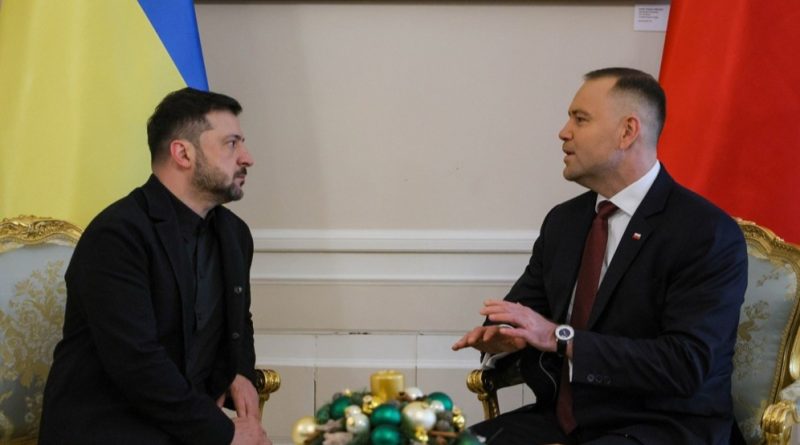
A significant diplomatic encounter took place on the sidelines of the recent NATO summit when Ukrainian President Volodymyr Zelensky and Polish President-elect Karol Nawrocki engaged in a brief but consequential conversation. The exchange comes at a critical juncture in bilateral relations between the two neighboring nations, which have experienced increasing strain over historical grievances and contemporary political disputes. Ukrainian Foreign Minister Andrii Sybiha subsequently outlined Kyiv’s official position toward Warsaw, signaling Ukraine’s willingness to address contentious issues while maintaining its core principles.
The meeting between the two leaders, though short, represents a potential turning point in what has become one of the most complicated diplomatic relationships in Central Europe. Relations between Ukraine and Poland have deteriorated significantly over the past year, with disagreements ranging from agricultural trade disputes to deeply rooted historical controversies surrounding World War II-era events. The Volyn tragedy of 1943-1944, in which Ukrainian nationalist forces killed tens of thousands of Polish civilians, remains a particularly sensitive topic that continues to poison diplomatic discourse between the two nations.
Poland has historically been one of Ukraine’s most vocal supporters since Russia’s full-scale invasion began in February 2022. Warsaw has accepted millions of Ukrainian refugees, provided substantial military assistance, and advocated strongly for Ukraine’s integration into European and Euro-Atlantic structures. However, this solidarity has been tested by agricultural disputes that emerged in 2023, when Polish farmers blocked border crossings to protest what they viewed as unfair competition from Ukrainian grain imports. The transit blockades caused significant economic damage to Ukraine and highlighted underlying tensions that had been simmering beneath the surface of the wartime alliance.
Foreign Minister Sybiha’s statement outlining Kyiv’s official position reflects Ukraine’s delicate balancing act between addressing Polish concerns and maintaining national dignity. Ukrainian officials have expressed willingness to engage in dialogue on historical issues, including the sensitive matter of exhuming Polish victims of World War II-era violence on Ukrainian territory. However, Kyiv has consistently maintained that any such discussions must be conducted on a basis of mutual respect and cannot involve unilateral concessions that might be perceived domestically as capitulation to external pressure.
The election of Karol Nawrocki as Poland’s new president has introduced fresh dynamics into the bilateral relationship. Nawrocki, who previously served as director of Poland’s Institute of National Remembrance, has been particularly focused on historical memory issues and has taken strong positions on Polish-Ukrainian historical disputes. His background suggests that historical reconciliation will likely remain a priority in Polish foreign policy toward Ukraine, potentially complicating efforts to reset relations purely on the basis of contemporary security cooperation.
Analysts observing the situation note that both countries face significant pressure to resolve their differences. For Ukraine, maintaining strong relations with Poland is strategically essential given Warsaw’s role as a crucial transit hub for Western military aid and its political influence within the European Union. For Poland, the deterioration of relations with Ukraine risks undermining its own security interests, as a weakened or defeated Ukraine would bring Russian forces directly to NATO’s eastern border. This mutual interdependence creates powerful incentives for diplomatic compromise, even as domestic political considerations in both countries complicate reconciliation efforts.
The NATO summit setting for this encounter was particularly symbolic, as it underscored the broader alliance context within which both nations operate. NATO member states have repeatedly emphasized the importance of unity in supporting Ukraine’s defense against Russian aggression, and prolonged disputes between a key NATO ally and Ukraine risk weakening this collective response. Senior alliance officials have reportedly encouraged both sides to find common ground, recognizing that internal divisions serve only to benefit Moscow’s strategic objectives.
Looking ahead, the trajectory of Polish-Ukrainian relations will likely depend on both sides’ willingness to engage in sustained diplomatic dialogue rather than public confrontations. Ukraine’s proposal, as outlined by Foreign Minister Sybiha, appears to offer a framework for structured negotiations that could address Polish concerns while protecting Ukrainian interests. Whether this approach will prove acceptable to the new Polish leadership remains to be seen, but the brief conversation between Zelensky and Nawrocki at least suggests that direct communication channels remain open despite the current tensions.