Putin Loses Armenia: What Pashinyan’s Third Electoral Victory Means for the South Caucasus
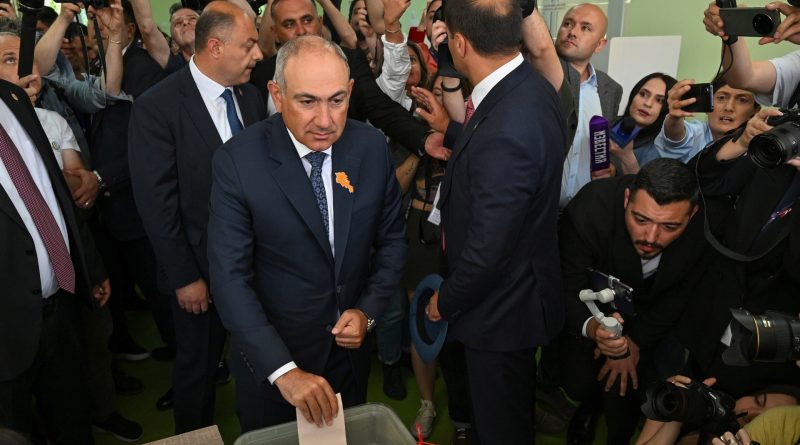
Armenian Prime Minister Nikol Pashinyan has secured a decisive third electoral victory, marking a pivotal moment not only for Armenian domestic politics but for the entire geopolitical landscape of the South Caucasus. The results signal a fundamental shift in Armenia’s foreign policy orientation, as the country increasingly distances itself from its traditional ally Russia and moves closer to Western institutions, particularly the European Union. This transformation represents one of the most significant realignments in the post-Soviet space since the collapse of the Soviet Union.
Pashinyan’s Civil Contract party achieved a commanding victory, demonstrating that despite the traumatic loss in the 2020 Nagorno-Karabakh war and the subsequent displacement of ethnic Armenians from the region in 2023, the Armenian electorate continues to support his vision of what he calls “Real Armenia” – a pragmatic approach that prioritizes building functional state institutions and pursuing peace with Azerbaijan over irredentist claims to historically disputed territories. This mandate gives Pashinyan the political capital to continue his controversial but transformative foreign policy agenda.
The geopolitical implications of this election extend far beyond Armenia’s borders. For over three decades, Armenia served as Russia’s most reliable ally in the South Caucasus, hosting a Russian military base in Gyumri and participating in Moscow-led security organizations including the Collective Security Treaty Organization (CSTO). However, the relationship began deteriorating after Russian peacekeepers failed to prevent Azerbaijan’s military operations in Nagorno-Karabakh. Many Armenians felt betrayed when Moscow, consumed by its invasion of Ukraine, was unable or unwilling to fulfill its security guarantees. Pashinyan has since suspended Armenia’s participation in the CSTO and announced intentions to seek alternative security arrangements with Western partners.
Western analysts have drawn three key conclusions from the election results and Armenia’s evolving foreign policy trajectory. First, Yerevan appears committed to reaching a comprehensive peace agreement with Baku, accepting the territorial realities on the ground. This pragmatic approach, while painful for many Armenians, is seen as a necessary precondition for economic development and regional stability. The normalization of relations with Azerbaijan could potentially open trade routes through the South Caucasus, benefiting all parties involved and reducing Armenia’s geographic isolation.
Second, Armenia’s path toward European integration has gained significant momentum. The European Union has expressed strong interest in deepening ties with Yerevan, viewing Armenia as a potential success story for its Eastern Partnership program at a time when that initiative desperately needs positive examples. Brussels has offered substantial financial assistance packages and has begun preliminary discussions about Armenia’s potential EU membership aspirations. For the EU, bringing Armenia into its sphere of influence would demonstrate that countries can successfully pivot away from Russian dependency, sending a powerful message to other post-Soviet states.
Third, and perhaps most significantly, Putin’s influence in the South Caucasus is visibly waning. The Kremlin’s failure to protect Armenia during the Karabakh crisis exposed the limitations of Russian security guarantees, a lesson that has not been lost on other nations in Moscow’s traditional sphere of influence. Russia’s resources and attention remain heavily committed to the war in Ukraine, leaving little capacity for managing peripheral conflicts. The erosion of Russian influence in Armenia represents a strategic setback for Moscow, potentially disrupting its ability to project power in the region and maintain the network of military bases that extend Russian reach toward the Middle East and beyond.
The road ahead for Armenia remains challenging. Negotiating a lasting peace with Azerbaijan requires addressing contentious issues including border demarcation, the status of transport corridors, and the rights of remaining Armenian populations in border regions. Turkey, which closed its border with Armenia in 1993 in solidarity with Azerbaijan, has indicated willingness to normalize relations, but this process remains tied to progress in Armenian-Azerbaijani negotiations. Meanwhile, Russia retains significant economic leverage over Armenia and could potentially disrupt the country’s Western pivot through various pressure tactics.
Nevertheless, Pashinyan’s third victory demonstrates that the Armenian public, despite the trauma of recent years, supports the fundamental reorientation of their country’s foreign policy. The transition from a Russian security client to a nation seeking integration with European institutions represents a historic shift that will reshape the geopolitical map of the South Caucasus for decades to come. As one European diplomat noted, Armenia’s transformation could serve as a template for other post-Soviet states seeking to escape Moscow’s orbit, making the success or failure of this transition a matter of significance far beyond the country’s three million inhabitants.