Ukraine Eyes Swedish Gripen Jets: Could the Meteor Missile Become a Game-Changer in the Air War?
Ukrainian Air Force spokesperson Yuriy Ihnat has offered a measured assessment of the potential deployment of Swedish JAS 39 Gripen fighter jets, cautioning against excessive optimism while acknowledging that the aircraft’s advanced Meteor missile could significantly shift the balance of power in Ukrainian skies. Speaking to media, Ihnat drew parallels with the earlier anticipation surrounding American F-16 fighters, reminding observers that sophisticated weapons systems alone do not guarantee battlefield dominance without proper tactical implementation and support infrastructure.
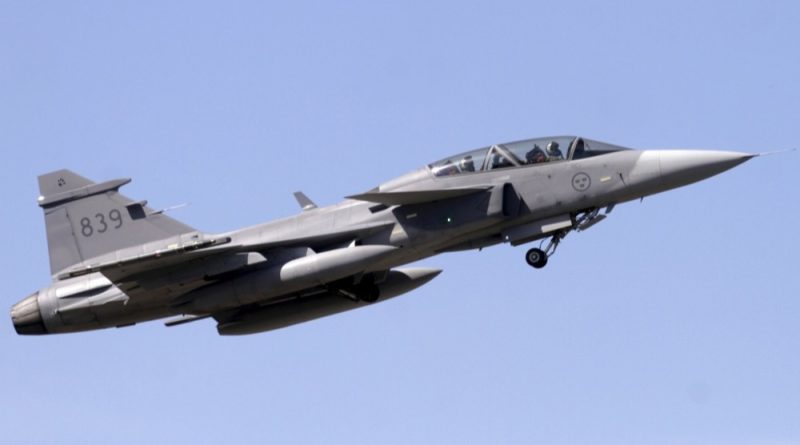
The discussion around Gripen acquisition comes as Ukraine continues to diversify its Western military partnerships beyond the much-publicized F-16 program. Sweden, which abandoned its centuries-long neutrality to join NATO following Russia’s 2022 invasion, has emerged as a potential supplier of advanced military hardware. The Gripen, manufactured by Saab, represents one of Europe’s most capable fourth-generation fighters, designed specifically for rapid deployment from dispersed locations including highways — a characteristic that could prove invaluable given Russia’s persistent targeting of Ukrainian airfields.
At the heart of Ihnat’s cautious optimism lies the MBDA Meteor missile, widely considered one of the most advanced beyond-visual-range air-to-air missiles in existence. Unlike conventional rocket-powered missiles that burn their fuel quickly and then coast toward their targets, the Meteor uses a ramjet propulsion system that allows it to maintain thrust throughout its flight envelope. This gives the missile an effective range exceeding 100 kilometers with the energy to maneuver aggressively even at maximum distance — a capability that could force Russian aircraft to operate far from the front lines or risk destruction.
The potential impact of the Meteor cannot be understated when considering the current air combat dynamics over Ukraine. Russian Su-34 fighter-bombers and Su-35 air superiority fighters have been launching glide bombs and long-range missiles from positions well within their own territory, staying beyond the reach of Ukrainian air defenses and the AIM-120 AMRAAM missiles equipping the incoming F-16s. The Meteor’s extended range and no-escape zone — the distance within which a target cannot outrun the missile — could fundamentally alter these calculations, potentially pushing Russian aviation assets back by dozens of additional kilometers.
However, Ihnat emphasized that weapons systems must be integrated within a comprehensive tactical framework to achieve their potential. The F-16 program has demonstrated the complexity of introducing Western aircraft into Ukrainian service, requiring extensive pilot training, maintenance infrastructure development, and the establishment of secure logistics chains for spare parts and munitions. Similar challenges would accompany any Gripen deployment, though Swedish officials have noted their aircraft was designed for austere operating conditions and requires fewer maintenance hours per flight hour than many Western alternatives.
Historical context provides important perspective on the integration of new fighter aircraft during active conflicts. During previous conflicts, the introduction of superior air platforms often required months of adaptation before their capabilities could be fully exploited. Ukrainian pilots, many trained on Soviet-era aircraft with fundamentally different avionics and combat philosophies, face steep learning curves when transitioning to Western systems. The success of any Gripen deployment would depend not only on the aircraft and missiles themselves but on intelligence sharing, coordination with ground-based air defenses, and the development of tactics suited to Ukraine’s specific operational environment.
Sweden has not officially committed to providing Gripen fighters to Ukraine, though discussions have reportedly taken place at various governmental levels. Any such transfer would require careful consideration of Sweden’s own defense needs, training timelines, and the broader NATO alliance strategy for supporting Ukraine. What remains clear from Ihnat’s comments is that Ukrainian military planners are thinking carefully about how advanced Western systems could be employed to maximum effect, tempering public expectations while recognizing genuine potential. If the tactical pieces fall into place, the combination of Gripen’s operational flexibility and Meteor’s unmatched range could indeed become the game-changer that Ukraine’s defenders have been seeking in their struggle for air superiority.