Pentagon’s Drone Dilemma, The War Against AI, and Gates’ Fall From Grace: This Week’s Top Global Stories
In an era of rapidly evolving technology and shifting power dynamics, this week’s most compelling international stories reveal the complex challenges facing governments, tech giants, and influential figures worldwide. From the Pentagon’s urgent search for drone solutions to growing resistance against artificial intelligence and the dramatic decline of one of technology’s most prominent figures, these narratives paint a picture of a world grappling with unprecedented change and uncertainty.
The United States Department of Defense finds itself in an increasingly precarious position as it scrambles to address critical gaps in its drone capabilities. The Pentagon has launched an extensive search for unmanned aerial vehicles that can match the effectiveness of systems currently deployed by both allies and adversaries around the globe. This urgent quest comes amid growing concerns that American military drone technology has fallen behind competitors, particularly in the realm of small, affordable, and rapidly deployable unmanned systems. Defense officials have acknowledged that the conflict in Ukraine has served as a wake-up call, demonstrating how commercially available drones can be modified for military purposes with devastating effectiveness.
The lessons learned from the Ukrainian battlefield have fundamentally altered how military strategists view drone warfare. Ukrainian forces have successfully employed everything from modified consumer quadcopters to sophisticated long-range systems, creating a new paradigm in modern combat. Pentagon officials are now exploring partnerships with both established defense contractors and innovative startups to rapidly develop and deploy similar capabilities. The challenge lies not only in the technology itself but in the bureaucratic processes that have historically slowed military procurement. Some experts estimate that the United States needs to produce drones at a rate ten to twenty times higher than current levels to maintain strategic superiority in future conflicts.
Meanwhile, a different kind of battle is unfolding in the technology sector, where resistance to artificial intelligence is gaining unprecedented momentum. What began as scattered concerns among academics and ethicists has evolved into a broader movement questioning the rapid deployment of AI systems across virtually every sector of society. Critics argue that the rush to implement artificial intelligence has outpaced our understanding of its implications, creating potential risks ranging from mass unemployment to existential threats to humanity. Major technology companies have faced increasing pressure from employees, regulators, and the public to slow down AI development and implement more robust safety measures.
The anti-AI movement draws strength from diverse sources, including labor unions worried about automation displacing workers, artists concerned about copyright infringement by generative AI systems, and privacy advocates alarmed by the surveillance capabilities of intelligent machines. Several prominent AI researchers have joined the chorus of concern, calling for international regulations similar to those governing nuclear weapons or biological research. Some countries have already begun implementing restrictions on AI deployment, with the European Union leading the charge through its comprehensive AI Act. However, critics of these efforts argue that regulation could stifle innovation and cede technological leadership to nations with fewer restrictions.
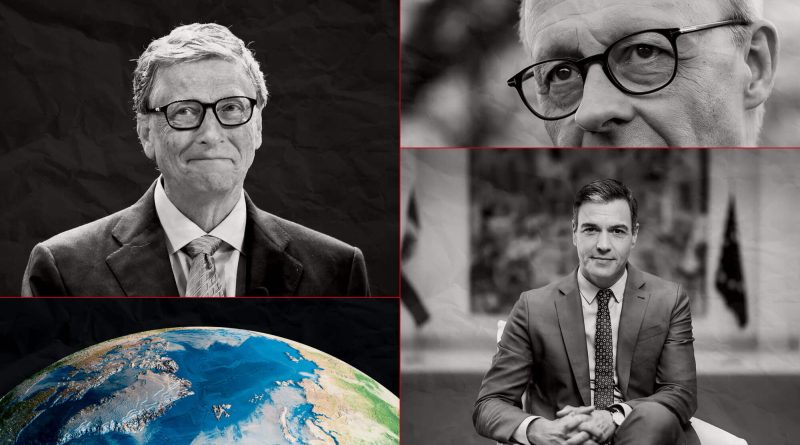
Perhaps no story this week captured public attention quite like the continued scrutiny of Bill Gates, whose reputation has undergone a dramatic transformation in recent years. Once celebrated as a visionary entrepreneur and generous philanthropist, the Microsoft co-founder now faces persistent questions about his personal conduct and business practices. The revelations that emerged following his 2021 divorce from Melinda French Gates have continued to reverberate, with new details periodically surfacing about his relationships and behavior during his years leading the technology giant. His association with the late Jeffrey Epstein, which Gates initially downplayed, has proven particularly damaging to his carefully cultivated image as a force for global good.
The fall of Gates represents a broader reckoning within the technology industry, where the behavior of powerful executives is receiving unprecedented scrutiny. For decades, Silicon Valley operated under an unofficial code that tolerated, even celebrated, the eccentricities of successful founders. That era appears to be ending as employees, investors, and the public demand greater accountability from those who wield enormous economic and social influence. The Bill and Melinda Gates Foundation, which controls assets exceeding fifty billion dollars and shapes global health and education policy, now operates under intensified examination, with observers questioning whether the organization’s work can be separated from its founder’s personal controversies.
These three stories, while seemingly disparate, share common threads that define our current moment. They reflect a world where technological advancement often outpaces ethical frameworks, where military power increasingly depends on innovation rather than traditional strength, and where the public demands greater accountability from those who shape our collective future. As governments, corporations, and individuals navigate these challenges, the decisions made in the coming months and years will have profound implications for generations to come. The intersection of military technology, artificial intelligence, and concentrated power in the hands of tech billionaires represents perhaps the defining challenge of our age.