
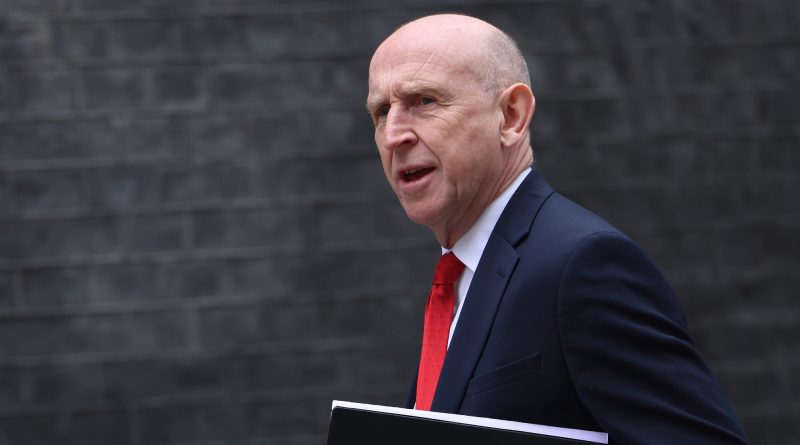
British Defence Secretary Resigns Over Military Spending Dispute with Treasury
In a dramatic development that exposes deep rifts within the British government over national security priorities, Defence Secretary John Healey has announced his resignation following an escalating dispute with the Treasury over military funding. In his resignation letter addressed to Prime Minister Keir Starmer, Healey stated that the Treasury had refused to allocate the necessary resources required to increase defence spending, leaving him no choice but to step down from his position. The departure marks a significant blow to the Labour government and raises serious questions about Britain’s commitment to strengthening its military capabilities during an increasingly volatile period in global security.
The resignation comes at a particularly sensitive time for the United Kingdom, as European nations grapple with the ongoing security implications of Russia’s invasion of Ukraine and growing pressure from NATO allies to meet or exceed the alliance’s defence spending targets. Britain, traditionally one of NATO’s most capable military powers, has faced mounting criticism for allowing its armed forces to deteriorate through years of budget constraints. The current NATO guideline calls for member states to spend at least 2% of their GDP on defence, though many analysts argue this threshold is insufficient given the current threat environment, with some calling for spending levels to reach 2.5% or even 3% of GDP.
John Healey’s tenure as Defence Secretary, though relatively brief, had been marked by his vocal advocacy for increased military investment. Before entering government, Healey had spent years in opposition developing Labour’s defence policy and building relationships with military leaders and defence industry executives. His resignation letter reportedly detailed specific shortfalls in equipment procurement, personnel retention, and modernization programs that he believed were being jeopardized by the Treasury’s reluctance to open the purse strings. Sources close to the former minister suggest he had been engaged in increasingly tense negotiations with Treasury officials for weeks before ultimately deciding that his position had become untenable.
The dispute highlights a fundamental tension that has plagued British governments of all political stripes for decades: balancing the competing demands of domestic spending priorities against the need to maintain credible military capabilities. The Treasury, responsible for managing the nation’s finances, has traditionally taken a cautious approach to defence expenditure, often viewing military budgets as areas where savings can be found. This institutional friction has intensified in recent years as the cost of advanced military technology has skyrocketed, with modern fighter jets, warships, and missile systems requiring enormous capital outlays that strain even wealthy nations’ budgets.
Historical context adds weight to Healey’s concerns about British military readiness. Since the end of the Cold War, the UK’s armed forces have undergone repeated rounds of cuts and restructuring, reducing the size of the army to its smallest level since the Napoleonic era. The Royal Navy, once the world’s most powerful maritime force, now operates fewer than 20 major surface vessels. Equipment procurement programs have been plagued by delays and cost overruns, while recruitment and retention problems have left many units understaffed. Defence analysts have warned that these trends, if not reversed, risk leaving Britain unable to fulfill its NATO commitments or project power independently in defence of its interests.
The political ramifications of Healey’s departure could prove significant for Prime Minister Starmer’s government. Defence policy has traditionally been an area where Labour has faced skepticism from voters, with the party sometimes perceived as less committed to military strength than its Conservative opponents. Starmer had sought to neutralize this vulnerability by appointing Healey, a respected figure with strong credentials on defence issues. Losing him over a budgetary dispute risks reinforcing negative perceptions and could provide ammunition for opposition critics who argue the government is not taking national security seriously enough. The Prime Minister will now face pressure to appoint a successor who can credibly advocate for military priorities while working constructively with Treasury colleagues.
Looking ahead, the resignation is likely to intensify the broader debate about Britain’s role in global security and its willingness to invest in hard power capabilities. With the war in Ukraine showing no signs of resolution and tensions rising in other regions, including the Indo-Pacific, many experts argue that Western nations must fundamentally reassess their approach to defence spending. Germany has already announced a dramatic increase in military investment following Russia’s invasion, while other European nations are following suit. Whether Britain will join this trend or continue to prioritize fiscal restraint remains an open question, one that Healey’s dramatic exit has thrust firmly into the spotlight of national political discourse.
}